 Movie
Movie Controller


+ Open data

- Basic information
| Entry | Database: PDB / ID: 10pf | |||||||||
|---|---|---|---|---|---|---|---|---|---|---|
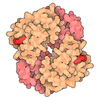
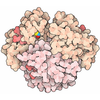
| Title | TASK-2 at pH 8.5 with 100 uM Bupivacaine | |||||||||
 Components Components |
| |||||||||
 Keywords Keywords | TRANSPORT PROTEIN / POTASSIUM ION CHANNEL / K2P CHANNEL | |||||||||
| Function / homology |  Function and homology information Function and homology informationPhase 4 - resting membrane potential / Defective ABCA1 causes TGD / high-density lipoprotein particle receptor binding / peptidyl-methionine modification / HDL clearance / spherical high-density lipoprotein particle / negative regulation of response to cytokine stimulus / protein oxidation / vitamin transport / cholesterol import ...Phase 4 - resting membrane potential / Defective ABCA1 causes TGD / high-density lipoprotein particle receptor binding / peptidyl-methionine modification / HDL clearance / spherical high-density lipoprotein particle / negative regulation of response to cytokine stimulus / protein oxidation / vitamin transport / cholesterol import / negative regulation of heterotypic cell-cell adhesion / Scavenging by Class B Receptors / apolipoprotein A-I receptor binding / apolipoprotein receptor binding / negative regulation of cell adhesion molecule production / ABC transporters in lipid homeostasis / negative regulation of cytokine production involved in immune response / HDL assembly / high-density lipoprotein particle binding / phosphatidylcholine biosynthetic process / negative regulation of very-low-density lipoprotein particle remodeling / potassium ion export across plasma membrane / regulation of resting membrane potential / acylglycerol homeostasis / phosphatidylcholine-sterol O-acyltransferase activator activity / positive regulation of phospholipid efflux / cholesterol transport / Chylomicron remodeling / lipoprotein metabolic process / cellular response to lipoprotein particle stimulus / phospholipid homeostasis / Chylomicron assembly / potassium ion leak channel activity / high-density lipoprotein particle clearance / chylomicron / phospholipid efflux / high-density lipoprotein particle remodeling / reverse cholesterol transport / very-low-density lipoprotein particle / positive regulation of cholesterol metabolic process / high-density lipoprotein particle assembly / low-density lipoprotein particle / high-density lipoprotein particle / chemorepellent activity / cholesterol transfer activity / outward rectifier potassium channel activity / regulation of Cdc42 protein signal transduction / cholesterol efflux / HDL remodeling / triglyceride homeostasis / negative chemotaxis / Scavenging by Class A Receptors / negative regulation of interleukin-1 beta production / amyloid-beta formation / positive regulation of Rho protein signal transduction / potassium ion import across plasma membrane / cholesterol binding / cholesterol metabolic process / positive regulation of cholesterol efflux / positive regulation of substrate adhesion-dependent cell spreading / potassium channel activity / positive regulation of stress fiber assembly / negative regulation of tumor necrosis factor-mediated signaling pathway / Scavenging of heme from plasma / endocytic vesicle / voltage-gated potassium channel activity / Retinoid metabolism and transport / Dengue virus activates/modulates innate and adaptive immune responses / heat shock protein binding / endocytic vesicle lumen / cholesterol homeostasis / positive regulation of phagocytosis / integrin-mediated signaling pathway / potassium ion transmembrane transport / Post-translational protein phosphorylation / Heme signaling / Maturation of DENV proteins / PPARA activates gene expression / negative regulation of inflammatory response / phospholipid binding / Regulation of Insulin-like Growth Factor (IGF) transport and uptake by Insulin-like Growth Factor Binding Proteins (IGFBPs) / Platelet degranulation / amyloid-beta binding / extracellular vesicle / Dengue Virus-Host Interactions / secretory granule lumen / cytoplasmic vesicle / blood microparticle / early endosome / protein stabilization / G protein-coupled receptor signaling pathway / protein heterodimerization activity / receptor ligand activity / endoplasmic reticulum lumen / Amyloid fiber formation / signaling receptor binding / enzyme binding / protein homodimerization activity / extracellular exosome / extracellular region Similarity search - Function | |||||||||
| Biological species |   Mus musculus (house mouse) Mus musculus (house mouse) Homo sapiens (human) Homo sapiens (human) | |||||||||
| Method | ELECTRON MICROSCOPY / single particle reconstruction / cryo EM / Resolution: 3.06 Å | |||||||||
 Authors Authors | Docter, T. / Li, B. / Brohawn, S.G. | |||||||||
| Funding support |  United States, 1items United States, 1items
| |||||||||
 Citation Citation | Journal: To Be Published Title: A shared site for lipid and anesthetic block of the two-pore domain K+ channel TASK-2 Authors: Docter, T. / Sorum, B. / Li, B. / Rietmeijer, R.A. / Cook, A.S.I. / Kotecha, A. / Brohawn, S.G. | |||||||||
| History |
|
- Structure visualization
| Structure viewer | Molecule: MolmilJmol/JSmol |
|---|
- Downloads & links
-Download
| PDBx/mmCIF format | 10pf.cif.gz | 139.7 KB | Display | PDBx/mmCIF format |
|---|---|---|---|---|
| PDB format | pdb10pf.ent.gz | Display | PDB format | |
| PDBx/mmJSON format | 10pf.json.gz | Tree view | PDBx/mmJSON format | |
| Others |  Other downloads Other downloads |
-Validation report
| Arichive directory | https://data.pdbj.org/pub/pdb/validation_reports/0p/10pfftp://data.pdbj.org/pub/pdb/validation_reports/0p/10pf | HTTPS FTP |
|---|
-Related structure data
| Related structure data |  75371MC  10oyC  10pbC  10pcC  10pdC C: citing same article ( M: map data used to model this data |
|---|---|
| Similar structure data |


-Links
 PDBj
PDBj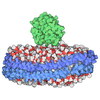
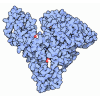
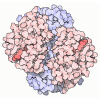
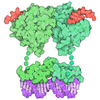
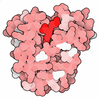
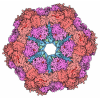

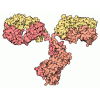
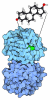
- Assembly
| Deposited unit | 
|
|---|---|
| 1 |
|
-Components
-Protein , 2 types, 3 molecules ABD
| #1: Protein | Mass: 38661.832 Da / Num. of mol.: 2 Source method: isolated from a genetically manipulated source Source: (gene. exp.) Mus musculus (house mouse) / Gene: Kcnk5 / Production host:  Komagataella pastoris (fungus) / References: UniProt: Q9JK62 Komagataella pastoris (fungus) / References: UniProt: Q9JK62#2: Protein | | Mass: 24704.729 Da / Num. of mol.: 1 Source method: isolated from a genetically manipulated source Source: (gene. exp.) Homo sapiens (human) / Gene: APOA1 / Production host:   Escherichia coli (E. coli) / References: UniProt: P02647 Escherichia coli (E. coli) / References: UniProt: P02647 |
|---|
-Non-polymers , 5 types, 41 molecules 

| #3: Chemical | ChemComp-K /  Mass: 39.098 Da / Num. of mol.: 4 / Source method: obtained synthetically / Formula: K Mass: 39.098 Da / Num. of mol.: 4 / Source method: obtained synthetically / Formula: K#4: Chemical | ChemComp-A1C7A / | Mass: 288.428 Da / Num. of mol.: 1 / Source method: obtained synthetically / Formula: C18H28N2O / Feature type: SUBJECT OF INVESTIGATION #5: Chemical | ChemComp-PEE / 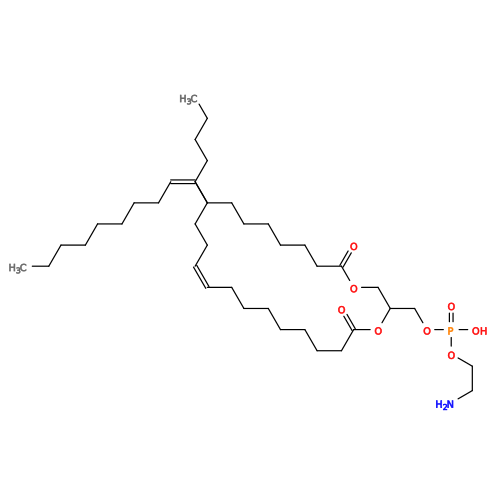 Mass: 744.034 Da / Num. of mol.: 14 / Source method: isolated from a natural source / Formula: C41H78NO8P / Comment: DOPE, phospholipid*YM Mass: 744.034 Da / Num. of mol.: 14 / Source method: isolated from a natural source / Formula: C41H78NO8P / Comment: DOPE, phospholipid*YM#6: Chemical | ChemComp-OJ0 / | 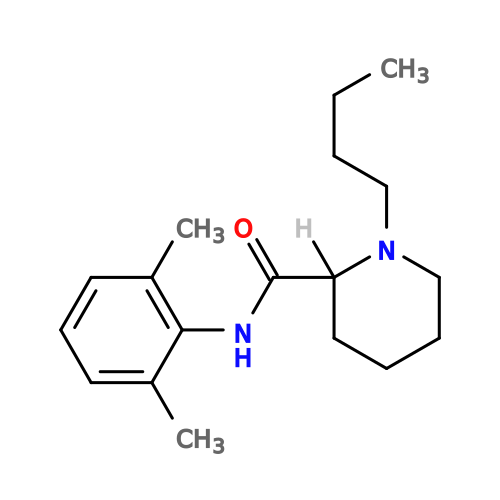 Mass: 288.428 Da / Num. of mol.: 1 / Source method: obtained synthetically / Formula: C18H28N2O Mass: 288.428 Da / Num. of mol.: 1 / Source method: obtained synthetically / Formula: C18H28N2O#7: Water | ChemComp-HOH / | Mass: 18.015 Da / Num. of mol.: 21 / Source method: isolated from a natural source / Formula: H2O |
|---|
-Details
| Has ligand of interest | Y |
|---|---|
| Has protein modification | Y |
-Experimental details
-Experiment
| Experiment | Method: ELECTRON MICROSCOPY |
|---|---|
| EM experiment | Aggregation state: PARTICLE / 3D reconstruction method: single particle reconstruction |
- Sample preparation
| Component | Name: TASK-2 at pH 8.5 with 100 uM Bupivacaine / Type: COMPLEX / Entity ID: #1-#2 / Source: MULTIPLE SOURCES |
|---|---|
| Molecular weight | Value: 0.077 MDa / Experimental value: NO |
| Source (natural) | Organism: Mus musculus (house mouse) |
| Source (recombinant) | Organism: Komagataella pastoris (fungus) |
| Buffer solution | pH: 8.5 |
| Specimen | Embedding applied: NO / Shadowing applied: NO / Staining applied: NO / Vitrification applied: YES |
| Vitrification | Cryogen name: ETHANE |
- Electron microscopy imaging
| Experimental equipment |  Model: Titan Krios / Image courtesy: FEI Company |
|---|---|
| Microscopy | Model: TFS KRIOS |
| Electron gun | Electron source:  FIELD EMISSION GUN / Accelerating voltage: 300 kV / Illumination mode: FLOOD BEAM FIELD EMISSION GUN / Accelerating voltage: 300 kV / Illumination mode: FLOOD BEAM |
| Electron lens | Mode: BRIGHT FIELD / Nominal defocus max: 1500 nm / Nominal defocus min: 500 nm |
| Image recording | Electron dose: 50 e/Å2 / Film or detector model: TFS FALCON 4i (4k x 4k) |
- Processing
| EM software |
| ||||||||||||||||
|---|---|---|---|---|---|---|---|---|---|---|---|---|---|---|---|---|---|
| CTF correction | Type: PHASE FLIPPING AND AMPLITUDE CORRECTION | ||||||||||||||||
| 3D reconstruction | Resolution: 3.06 Å / Resolution method: FSC 0.143 CUT-OFF / Num. of particles: 29149 / Symmetry type: POINT | ||||||||||||||||
| Refinement | Highest resolution: 3.06 Å Stereochemistry target values: REAL-SPACE (WEIGHTED MAP SUM AT ATOM CENTERS) |
