National Institutes of Health/National Institute of General Medical Sciences (NIH/NIGMS)
R35GM154859
米国
American Cancer Society
IRG-16-186-21
米国
引用
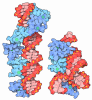
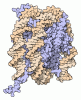
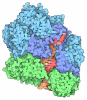
ジャーナル: J Mol Biol / 年: 2026 タイトル: High-Yield Production of Modified DNA Enables Structural Analysis of PARP2 Recognition of Nucleosomal Single-Strand Breaks. 著者: Chathuni Jayathilake / Clare E Mewhinney / Emily R Gregory-Lott / Rajbinder K Virk / Riya Nair / Junseo Yang / Eun Cho / Alexander G Day / Derek J Taylor / Tae Hun Kim / 要旨: Preparation of high-quality nucleosomal DNA substrates in milligram quantities remains a major bottleneck for mechanistic studies of chromatin-associated processes. Here, we present an optimized ...Preparation of high-quality nucleosomal DNA substrates in milligram quantities remains a major bottleneck for mechanistic studies of chromatin-associated processes. Here, we present an optimized large-scale PCR workflow that enables rapid, low-cost production of diverse nucleosomal DNAs suitable for biochemical assays and high-resolution cryo-EM. Systematic optimization of amplification conditions yields milligram quantities of homogeneous DNA that can be fluorescently or biotin-labeled and enzymatically modified to introduce site-specific single-strand breaks (SSBs) or epigenetic marks. We also engineered an improved Nt.BsmAI nickase variant (R386D) that minimizes undesired double-strand cleavage while maintaining robust nicking activity. Using nucleosomes reconstituted with these engineered DNAs, we demonstrate the versatility of this platform across EMSA, biolayer interferometry, and cryo-EM. Structural analysis reveals how the PARP2 WGR domain engages an SSB within the nucleosome and uncovers associated shifts in H2B tail conformation that facilitate access to lesions positioned near the tail. Overall, this workflow provides a robust and scalable method for generating precisely modified nucleosomal substrates, enabling quantitative and structural dissection of PARP2-mediated DNA damage recognition and the coupled histone H2B tail rearrangements that facilitate lesion accessibility in chromatin.
 ムービー
ムービー コントローラー


 データを開く
 基本情報
基本情報
 マップデータ
 試料
試料 キーワード
キーワード 機能・相同性情報
 Drosophila melanogaster (キイロショウジョウバエ) /
 Mus musculus (ハツカネズミ) /
  Homo sapiens (ヒト) / synthetic construct (人工物)
 データ登録者
 米国, 2件
  引用
引用 構造の表示
構造の表示
 ダウンロードとリンク
 emd_74564.png
 http://ftp.pdbj.org/pub/emdb/structures/EMD-74564



 Z (Sec.)
 Y (Row.)
 X (Col.)


 試料の構成要素
 Escherichia coli (大腸菌)
 解析
解析 電子顕微鏡法
 FIELD EMISSION GUN

