 Movie
Movie Controller


+ Open data

- Basic information
| Entry |  | |||||||||
|---|---|---|---|---|---|---|---|---|---|---|
| Title | Cryo-EM structure of the BTNL3-BTNL8-TCR complex | |||||||||
 Map data Map data | ||||||||||
 Sample Sample |
| |||||||||
 Keywords Keywords | Cryo-EM / immune / IMMUNE SYSTEM | |||||||||
| Function / homology |  Function and homology information Function and homology informationextrathymic T cell selection / Butyrophilin (BTN) family interactions / regulation of cytokine production / T cell receptor signaling pathway / adaptive immune response / external side of plasma membrane / signaling receptor binding / plasma membrane Similarity search - Function | |||||||||
| Biological species |  Homo sapiens (human) Homo sapiens (human) | |||||||||
| Method | single particle reconstruction / cryo EM / Resolution: 3.1 Å | |||||||||
 Authors Authors | Dong D / Zhu Y / Huang Z | |||||||||
| Funding support |  China, 1 items China, 1 items
| |||||||||
 Citation Citation | Journal: Immunity / Year: 2026 Title: Butyrophilin-like 3 and 8 tetramers clamp Vγ4Vδ1 T cell receptors for antigen-independent activation. Authors: De Dong / Huiling Li / Yuwei Zhu / Zebin Lu / Junliang Zhu / Xinyu Tian / Zhiwei Huang / Abstract: BTNL3 and BTNL8, butyrophilin-like (BTNL) family receptors, are predominantly expressed on intestinal epithelial cells. The BTNL3-BTNL8 complex selectively activates human Vγ4⁺ T cells, which play ...BTNL3 and BTNL8, butyrophilin-like (BTNL) family receptors, are predominantly expressed on intestinal epithelial cells. The BTNL3-BTNL8 complex selectively activates human Vγ4⁺ T cells, which play critical roles in intestinal immune homeostasis and tissue damage repair. Here, we report the structure of the BTNL3-BTNL8-Vγ4Vδ1 T cell receptor (TCR) complex. The structure reveals that BTNL3-BTNL8 forms an antigen-independent tetramer, in contrast to the phosphoantigen-driven association of BTN2A1-BTN3A1. Two BTNL3-BTNL8 heterodimers clamp a head-to-head TCR homodimer to form a 2:2:2 BTNL3:BTNL8:Vγ4Vδ1 TCR complex, with the Vγ4 HV4 and CDR2 loops jointly engaging BTNL3. Structural alignment indicates that the CD1d binding site on TCR overlaps spatially with one monomer within a TCR dimer, suggesting that TCR dimerization sterically precludes simultaneous engagement of CD1d molecules. Together, our results elucidate the structural mechanism of BTNL3-BTNL8-mediated engagement and activation of Vγ4Vδ1 TCR, offering insights into γδ TCR signaling initiation. | |||||||||
| History |
|
- Structure visualization
| Supplemental images |
|---|

- Downloads & links
-EMDB archive
| Map data | emd_68398.map.gz | 122 MB | EMDB map data format | |
|---|---|---|---|---|
| Header (meta data) | emd-68398-v30.xmlemd-68398.xml | 18.3 KB 18.3 KB | Display Display | EMDB header |
| Images |  emd_68398.png emd_68398.png | 96.5 KB | ||
| Filedesc metadata | emd-68398.cif.gz | 6.2 KB | ||
| Others | emd_68398_half_map_1.map.gzemd_68398_half_map_2.map.gz | 226.4 MB 226.4 MB | ||
| Archive directory |  http://ftp.pdbj.org/pub/emdb/structures/EMD-68398ftp://ftp.pdbj.org/pub/emdb/structures/EMD-68398 http://ftp.pdbj.org/pub/emdb/structures/EMD-68398ftp://ftp.pdbj.org/pub/emdb/structures/EMD-68398 | HTTPS FTP |
-Related structure data
| Related structure data |  22kkMC M: atomic model generated by this map C: citing same article ( |
|---|---|
| Similar structure data |
-Links
| EMDB pages | EMDB (EBI/PDBe) / EMDataResource |
|---|---|
| Related items in Molecule of the Month |
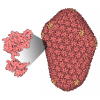
-Map
| File | Download / File: emd_68398.map.gz / Format: CCP4 / Size: 244.1 MB / Type: IMAGE STORED AS FLOATING POINT NUMBER (4 BYTES) | ||||||||||||||||||||||||||||||||||||
|---|---|---|---|---|---|---|---|---|---|---|---|---|---|---|---|---|---|---|---|---|---|---|---|---|---|---|---|---|---|---|---|---|---|---|---|---|---|
| Projections & slices | Image control
Images are generated by Spider. | ||||||||||||||||||||||||||||||||||||
| Voxel size | X=Y=Z: 1.0773 Å | ||||||||||||||||||||||||||||||||||||
| Density |
| ||||||||||||||||||||||||||||||||||||
| Symmetry | Space group: 1 | ||||||||||||||||||||||||||||||||||||
| Details | EMDB XML:
|
 Z (Sec.)
 Y (Row.)
 X (Col.)


-Supplemental data
-Half map: #2
| File | emd_68398_half_map_1.map | ||||||||||||
|---|---|---|---|---|---|---|---|---|---|---|---|---|---|
| Projections & Slices |
| ||||||||||||
| Density Histograms |


-Half map: #1
| File | emd_68398_half_map_2.map | ||||||||||||
|---|---|---|---|---|---|---|---|---|---|---|---|---|---|
| Projections & Slices |
| ||||||||||||
| Density Histograms |


- Sample components
-Entire : BTNL3-BTNL8-TCR
| Entire | Name: BTNL3-BTNL8-TCR |
|---|---|
| Components |
|
-Supramolecule #1: BTNL3-BTNL8-TCR
| Supramolecule | Name: BTNL3-BTNL8-TCR / type: complex / ID: 1 / Parent: 0 / Macromolecule list: all |
|---|---|
| Source (natural) | Organism: Homo sapiens (human) |
-Macromolecule #1: Butyrophilin-like protein 3
| Macromolecule | Name: Butyrophilin-like protein 3 / type: protein_or_peptide / ID: 1 / Number of copies: 2 / Enantiomer: LEVO |
|---|---|
| Source (natural) | Organism: Homo sapiens (human) |
| Molecular weight | Theoretical: 52.305293 KDa |
| Recombinant expression | Organism: Homo sapiens (human) |
| Sequence | String: MAFVLILVLS FYELVSGQWQ VTGPGKFVQA LVGEDAVFSC SLFPETSAEA MEVRFFRNQF HAVVHLYRDG EDWESKQMPQ YRGRTEFVK DSIAGGRVSL RLKNITPSDI GLYGCWFSSQ IYDEEATWEL RVAALGSLPL ISIVGYVDGG IQLLCLSSGW F PQPTAKWK ...String: MAFVLILVLS FYELVSGQWQ VTGPGKFVQA LVGEDAVFSC SLFPETSAEA MEVRFFRNQF HAVVHLYRDG EDWESKQMPQ YRGRTEFVK DSIAGGRVSL RLKNITPSDI GLYGCWFSSQ IYDEEATWEL RVAALGSLPL ISIVGYVDGG IQLLCLSSGW F PQPTAKWK GPQGQDLSSD SRANADGYSL YDVEISIIVQ ENAGSILCSI HLAEQSHEVE SKVLIGETFF QPSPWRLASI LL GLLCGAL CGVVMGMIIV FFKSKGKIQA ELDWRRKHGQ AELRDARKHA VEVTLDPETA HPKLCVSDLK TVTHRKAPQE VPH SEKRFT RKSVVASQGF QAGKHYWEVD VGQNVGWYVG VCRDDVDRGK NNVTLSPNNG YWVLRLTTEH LYFTFNPHFI SLPP STPPT RVGVFLDYEG GTISFFNTND QSLIYTLLTC QFEGLLRPYI QHAMYDEEKG TPIFICPVSW G UniProtKB: Butyrophilin-like protein 3 |
-Macromolecule #2: Butyrophilin-like protein 8
| Macromolecule | Name: Butyrophilin-like protein 8 / type: protein_or_peptide / ID: 2 / Number of copies: 2 / Enantiomer: LEVO |
|---|---|
| Source (natural) | Organism: Homo sapiens (human) |
| Molecular weight | Theoretical: 56.819516 KDa |
| Recombinant expression | Organism: Homo sapiens (human) |
| Sequence | String: MALMLSLVLS LLKLGSGQWQ VFGPDKPVQA LVGEDAAFSC FLSPKTNAEA MEVRFFRGQF SSVVHLYRDG KDQPFMQMPQ YQGRTKLVK DSIAEGRISL RLENITVLDA GLYGCRISSQ SYYQKAIWEL QVSALGSVPL ISITGYVDRD IQLLCQSSGW F PRPTAKWK ...String: MALMLSLVLS LLKLGSGQWQ VFGPDKPVQA LVGEDAAFSC FLSPKTNAEA MEVRFFRGQF SSVVHLYRDG KDQPFMQMPQ YQGRTKLVK DSIAEGRISL RLENITVLDA GLYGCRISSQ SYYQKAIWEL QVSALGSVPL ISITGYVDRD IQLLCQSSGW F PRPTAKWK GPQGQDLSTD SRTNRDMHGL FDVEISLTVQ ENAGSISCSM RHAHLSREVE SRVQIGDTFF EPISWHLATK VL GILCCGL FFGIVGLKIF FSKFQWKIQA ELDWRRKHGQ AELRDARKHA VEVTLDPETA HPKLCVSDLK TVTHRKAPQE VPH SEKRFT RKSVVASQSF QAGKHYWEVD GGHNKRWRVG VCRDDVDRRK EYVTLSPDHG YWVLRLNGEH LYFTLNPRFI SVFP RTPPT KIGVFLDYEC GTISFFNIND QSLIYTLTCR FEGLLRPYIE YPSYNEQNGT PIVICPVTQE SEKEASWQRA SAIPE TSNS ESSSQATTPF LPRGEM UniProtKB: Butyrophilin-like protein 8 |
-Macromolecule #3: TCR
| Macromolecule | Name: TCR / type: protein_or_peptide / ID: 3 / Number of copies: 2 / Enantiomer: LEVO |
|---|---|
| Source (natural) | Organism: Homo sapiens (human) |
| Molecular weight | Theoretical: 32.590609 KDa |
| Recombinant expression | Organism: Homo sapiens (human) |
| Sequence | String: MLFSSLLCVF VAFSYSGSSV AQKVTQAQSS VSMPVRKAVT LNCLYETSWW SYYIFWYKQL PSKEMIFLIR QGSDEQNAKS GRYSVNFKK AAKSVALTIS ALQLEDSAKY FCALGDPGGL NTDKLIFGKG TRVTVEPRSQ PHTKPSVFVM KNGTNVACLV K EFYPKDIR ...String: MLFSSLLCVF VAFSYSGSSV AQKVTQAQSS VSMPVRKAVT LNCLYETSWW SYYIFWYKQL PSKEMIFLIR QGSDEQNAKS GRYSVNFKK AAKSVALTIS ALQLEDSAKY FCALGDPGGL NTDKLIFGKG TRVTVEPRSQ PHTKPSVFVM KNGTNVACLV K EFYPKDIR INLVSSKKIT EFDPAIVISP SGKYNAVKLG KYEDSNSVTC SVQHDNKTVH STDFEVKTDS TDHVKPKETE NT KQPSKSC HKPKAIVHTE KVNMMSLTVL GLRMLFAKTV AVNFLLTAKL FFLGSG |
-Macromolecule #4: TCR
| Macromolecule | Name: TCR / type: protein_or_peptide / ID: 4 / Number of copies: 2 / Enantiomer: LEVO |
|---|---|
| Source (natural) | Organism: Homo sapiens (human) |
| Molecular weight | Theoretical: 36.531496 KDa |
| Recombinant expression | Organism: Homo sapiens (human) |
| Sequence | String: MQWALAVLLA FLSPASQKSS NLEGRTKSVI RQTGSSAEIT CDLAEGSTGY IHWYLHQEGK APQRLLYYDS YTSSVVLESG ISPGKYDTY GSTRKNLRMI LRNLIENDSG VYYCATWDGY YKKLFGSGTT LVVTDKQLDA DVSPKPTIFL PSIAETKLQK A GTYLCLLE ...String: MQWALAVLLA FLSPASQKSS NLEGRTKSVI RQTGSSAEIT CDLAEGSTGY IHWYLHQEGK APQRLLYYDS YTSSVVLESG ISPGKYDTY GSTRKNLRMI LRNLIENDSG VYYCATWDGY YKKLFGSGTT LVVTDKQLDA DVSPKPTIFL PSIAETKLQK A GTYLCLLE KFFPDIIKIH WQEKKSNTIL GSQEGNTMKT NDTYMKFSWL TVPEESLDKE HRCIVRHENN KNGIDQEIIF PP IKTDVTT VDPKYNYSKD ANDVITMDPK DNWSKDANDT LLLQLTNTSA YYTYLLLLLK SVVYFAIITC CLLRRTAFCC NGE KS |
-Experimental details
-Structure determination
| Method | cryo EM |
|---|---|
 Processing Processing | single particle reconstruction |
| Aggregation state | particle |
-Sample preparation
| Buffer | pH: 7 |
|---|---|
| Vitrification | Cryogen name: NITROGEN |
- Electron microscopy
| Microscope | FEI TALOS ARCTICA |
|---|---|
| Image recording | Film or detector model: FEI FALCON III (4k x 4k) / Average electron dose: 50.0 e/Å2 |
| Electron beam | Acceleration voltage: 300 kV / Electron source:  FIELD EMISSION GUN FIELD EMISSION GUN |
| Electron optics | Illumination mode: FLOOD BEAM / Imaging mode: BRIGHT FIELD / Nominal defocus max: 2.5 µm / Nominal defocus min: 1.2 µm |
| Experimental equipment | 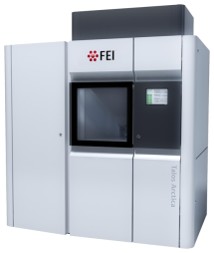 Model: Talos Arctica / Image courtesy: FEI Company |
