 Movie
Movie Controller

[English] 日本語
 Yorodumi
- EMDB-66773: Cryo-EM structure of asimadoline-BMS-986187-bound KOR-Gi1 complex -
+ Open data

- Basic information
| Entry |  | |||||||||
|---|---|---|---|---|---|---|---|---|---|---|
| Title | Cryo-EM structure of asimadoline-BMS-986187-bound KOR-Gi1 complex | |||||||||
 Map data Map data | ||||||||||
 Sample Sample |
| |||||||||
 Keywords Keywords | Complex / Agonist / MEMBRANE PROTEIN | |||||||||
| Function / homology |  Function and homology information Function and homology informationAdenylate cyclase inhibitory pathway / response to acrylamide / dynorphin receptor activity / regulation of saliva secretion / sensory perception of temperature stimulus / positive regulation of eating behavior / adenylate cyclase-inhibiting opioid receptor signaling pathway / negative regulation of luteinizing hormone secretion / G protein-coupled opioid receptor activity / maternal behavior ...Adenylate cyclase inhibitory pathway / response to acrylamide / dynorphin receptor activity / regulation of saliva secretion / sensory perception of temperature stimulus / positive regulation of eating behavior / adenylate cyclase-inhibiting opioid receptor signaling pathway / negative regulation of luteinizing hormone secretion / G protein-coupled opioid receptor activity / maternal behavior / G protein-coupled opioid receptor signaling pathway / positive regulation of dopamine secretion / positive regulation of potassium ion transmembrane transport / receptor serine/threonine kinase binding / positive regulation of p38MAPK cascade / neuropeptide binding / ADP signalling through P2Y purinoceptor 12 / Adrenaline,noradrenaline inhibits insulin secretion / Extra-nuclear estrogen signaling / sensory perception / eating behavior / G alpha (i) signalling events / estrous cycle / conditioned place preference / MECP2 regulates neuronal receptors and channels / behavioral response to cocaine / sensory perception of pain / positive regulation of protein localization to cell cortex / T-tubule / G protein-coupled serotonin receptor binding / locomotory behavior / axon terminus / cellular response to forskolin / regulation of mitotic spindle organization / Peptide ligand-binding receptors / electron transport chain / sarcoplasmic reticulum / response to nicotine / cellular response to glucose stimulus / neuropeptide signaling pathway / response to insulin / response to estrogen / G protein-coupled receptor binding / G-protein beta/gamma-subunit complex binding / adenylate cyclase-inhibiting G protein-coupled receptor signaling pathway / adenylate cyclase-modulating G protein-coupled receptor signaling pathway / phospholipase C-activating G protein-coupled receptor signaling pathway / Olfactory Signaling Pathway / Activation of the phototransduction cascade / G protein-coupled acetylcholine receptor signaling pathway / G beta:gamma signalling through PLC beta / Presynaptic function of Kainate receptors / Thromboxane signalling through TP receptor / Activation of G protein gated Potassium channels / Inhibition of voltage gated Ca2+ channels via Gbeta/gamma subunits / G-protein activation / Glucagon signaling in metabolic regulation / G beta:gamma signalling through CDC42 / Prostacyclin signalling through prostacyclin receptor / Synthesis, secretion, and inactivation of Glucagon-like Peptide-1 (GLP-1) / GDP binding / photoreceptor disc membrane / G beta:gamma signalling through BTK / synaptic vesicle membrane / ADP signalling through P2Y purinoceptor 12 / Glucagon-type ligand receptors / Sensory perception of sweet, bitter, and umami (glutamate) taste / Adrenaline,noradrenaline inhibits insulin secretion / Vasopressin regulates renal water homeostasis via Aquaporins / G alpha (z) signalling events / Glucagon-like Peptide-1 (GLP1) regulates insulin secretion / ADP signalling through P2Y purinoceptor 1 / cellular response to catecholamine stimulus / G beta:gamma signalling through PI3Kgamma / ADORA2B mediated anti-inflammatory cytokines production / adenylate cyclase-activating dopamine receptor signaling pathway / cellular response to prostaglandin E stimulus / Cooperation of PDCL (PhLP1) and TRiC/CCT in G-protein beta folding / GPER1 signaling / cellular response to lipopolysaccharide / heterotrimeric G-protein complex / Inactivation, recovery and regulation of the phototransduction cascade / G alpha (12/13) signalling events / G-protein beta-subunit binding / extracellular vesicle / Thrombin signalling through proteinase activated receptors (PARs) / signaling receptor complex adaptor activity / GTPase binding / midbody / presynaptic membrane / chemical synaptic transmission / Ca2+ pathway / cell cortex / High laminar flow shear stress activates signaling by PIEZO1 and PECAM1:CDH5:KDR in endothelial cells / defense response to virus / G alpha (i) signalling events / G alpha (s) signalling events / response to ethanol / G alpha (q) signalling events / Hydrolases; Acting on acid anhydrides; Acting on GTP to facilitate cellular and subcellular movement Similarity search - Function | |||||||||
| Biological species |  Homo sapiens (human) / Homo sapiens (human) /  Oplophorus gracilirostris (arthropod) / synthetic construct (others) Oplophorus gracilirostris (arthropod) / synthetic construct (others) | |||||||||
| Method | single particle reconstruction / cryo EM / Resolution: 2.58 Å | |||||||||
 Authors Authors | Zhao C / Fu H / Tian XW / Cheng L / Shao ZH | |||||||||
| Funding support |  China, 2 items China, 2 items
| |||||||||
 Citation Citation | Journal: Signal Transduct Target Ther / Year: 2026 Title: Molecular mechanism of allosteric modulation of opioid receptors. Authors: Heli Wang / Zhuang Miao / Chang Zhao / Hong Fu / Xiaowen Tian / Xinlei Liu / Lei Wang / Yuan Liu / Xingyu Liu / Xihao Yong / Lantian Su / Wei Yan / Lin Cheng / Renjie Chai / Zhenhua Shao / Bowen Ke / Abstract: Opioid analgesics provide potent pain relief but are limited by severe adverse effects, tolerance, and interindividual genetic variability in response. Poly-pharmacology and allosteric modulation of ...Opioid analgesics provide potent pain relief but are limited by severe adverse effects, tolerance, and interindividual genetic variability in response. Poly-pharmacology and allosteric modulation of opioid receptors offer promising strategies to enhance analgesic efficacy while mitigating these limitations. Pan-positive allosteric modulators (pan-PAMs), which simultaneously potentiate multiple opioid receptor subtypes, integrate the advantages of both approaches and represent an emerging therapeutic paradigm for pain management. However, the molecular mechanisms underlying pan-PAM activity at opioid receptors remain poorly understood. Here, we characterize BMS-986187 as a pan-PAM of opioid receptors and report the cryo-electron microscopy (cryo-EM) structures of multiple opioid receptor subtypes bound to this modulator, revealing a previously unidentified allosteric pocket. Structural and functional analyses revealed a conserved binding motif that mediates PAM recognition across the opioid receptor family and revealed the essential contributions of key opioid receptor residues to allosteric modulation by BMS-986187. Functionally, BMS-986187 enhances analgesic efficacy through an opioid-sparing effect, allowing lower opioid doses and reducing side effects, while restoring activity in loss-of-function (LOF) μ-opioid receptor variants. These findings define a previously unrecognized allosteric site in opioid receptors and establish a structural framework for the rational design of safer and more effective opioid therapeutics through allosteric modulation. | |||||||||
| History |
|
- Structure visualization
| Supplemental images |
|---|

- Downloads & links
-EMDB archive
| Map data | emd_66773.map.gz | 96.7 MB | EMDB map data format | |
|---|---|---|---|---|
| Header (meta data) | emd-66773-v30.xmlemd-66773.xml | 18.1 KB 18.1 KB | Display Display | EMDB header |
| Images |  emd_66773.png emd_66773.png | 53.5 KB | ||
| Filedesc metadata | emd-66773.cif.gz | 7 KB | ||
| Archive directory |  http://ftp.pdbj.org/pub/emdb/structures/EMD-66773ftp://ftp.pdbj.org/pub/emdb/structures/EMD-66773 http://ftp.pdbj.org/pub/emdb/structures/EMD-66773ftp://ftp.pdbj.org/pub/emdb/structures/EMD-66773 | HTTPS FTP |
-Related structure data
| Related structure data |  9xdrMC  9xc6C  9xdqC  9xf4C C: citing same article ( M: atomic model generated by this map |
|---|---|
| Similar structure data |


-Links
| EMDB pages | EMDB (EBI/PDBe) / EMDataResource |
|---|---|
| Related items in Molecule of the Month |




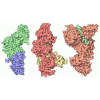
-Map
| File | Download / File: emd_66773.map.gz / Format: CCP4 / Size: 103 MB / Type: IMAGE STORED AS FLOATING POINT NUMBER (4 BYTES) | ||||||||||||||||||||||||||||||||||||
|---|---|---|---|---|---|---|---|---|---|---|---|---|---|---|---|---|---|---|---|---|---|---|---|---|---|---|---|---|---|---|---|---|---|---|---|---|---|
| Projections & slices | Image control
Images are generated by Spider. | ||||||||||||||||||||||||||||||||||||
| Voxel size | X=Y=Z: 0.76 Å | ||||||||||||||||||||||||||||||||||||
| Density |
| ||||||||||||||||||||||||||||||||||||
| Symmetry | Space group: 1 | ||||||||||||||||||||||||||||||||||||
| Details | EMDB XML:
|
 Z (Sec.)
 Y (Row.)
 X (Col.)


-Supplemental data
- Sample components
-Entire : MOR in complex with Gi heterotrimer
| Entire | Name: MOR in complex with Gi heterotrimer |
|---|---|
| Components |
|
-Supramolecule #1: MOR in complex with Gi heterotrimer
| Supramolecule | Name: MOR in complex with Gi heterotrimer / type: complex / ID: 1 / Parent: 0 / Macromolecule list: #1-#4 |
|---|---|
| Source (natural) | Organism: Homo sapiens (human) |
-Macromolecule #1: Guanine nucleotide-binding protein G(i) subunit alpha-1
| Macromolecule | Name: Guanine nucleotide-binding protein G(i) subunit alpha-1 type: protein_or_peptide / ID: 1 / Number of copies: 1 / Enantiomer: LEVO EC number: Hydrolases; Acting on acid anhydrides; Acting on GTP to facilitate cellular and subcellular movement |
|---|---|
| Source (natural) | Organism: Oplophorus gracilirostris (arthropod) |
| Molecular weight | Theoretical: 40.414047 KDa |
| Recombinant expression | Organism:  Spodoptera frugiperda (fall armyworm) Spodoptera frugiperda (fall armyworm) |
| Sequence | String: MGCTLSAEDK AAVERSKMID RNLREDGEKA AREVKLLLLG AGESGKNTIV KQMKIIHEAG YSEEECKQYK AVVYSNTIQS IIAIIRAMG RLKIDFGDSA RADDARQLFV LAGAAEEGFM TAELAGVIKR LWKDSGVQAC FNRSREYQLN DSAAYYLNDL D RIAQPNYI ...String: MGCTLSAEDK AAVERSKMID RNLREDGEKA AREVKLLLLG AGESGKNTIV KQMKIIHEAG YSEEECKQYK AVVYSNTIQS IIAIIRAMG RLKIDFGDSA RADDARQLFV LAGAAEEGFM TAELAGVIKR LWKDSGVQAC FNRSREYQLN DSAAYYLNDL D RIAQPNYI PTQQDVLRTR VKTTGIVETH FTFKDLHFKM FDVGAQRSER KKWIHCFEGV TAIIFCVALS DYDLVLAEDE EM NRMHASM KLFDSICNNK WFTDTSIILF LNKKDLFEEK IKKSPLTICY PEYAGSNTYE EAAAYIQCQF EDLNKRKDTK EIY THFTCS TDTKNVQFVF DAVTDVIIKN NLKDCGLF UniProtKB: Guanine nucleotide-binding protein G(i) subunit alpha-1 |
-Macromolecule #2: Guanine nucleotide-binding protein G(I)/G(S)/G(T) subunit beta-1
| Macromolecule | Name: Guanine nucleotide-binding protein G(I)/G(S)/G(T) subunit beta-1 type: protein_or_peptide / ID: 2 / Number of copies: 1 / Enantiomer: LEVO |
|---|---|
| Source (natural) | Organism: Homo sapiens (human) |
| Molecular weight | Theoretical: 41.729582 KDa |
| Recombinant expression | Organism: Spodoptera frugiperda (fall armyworm) |
| Sequence | String: MHHHHHHLEV LFQGPGSSGS ELDQLRQEAE QLKNQIRDAR KACADATLSQ ITNNIDPVGR IQMRTRRTLR GHLAKIYAMH WGTDSRLLV SASQDGKLII WDSYTTNKVH AIPLRSSWVM TCAYAPSGNY VACGGLDNIC SIYNLKTREG NVRVSRELAG H TGYLSCCR ...String: MHHHHHHLEV LFQGPGSSGS ELDQLRQEAE QLKNQIRDAR KACADATLSQ ITNNIDPVGR IQMRTRRTLR GHLAKIYAMH WGTDSRLLV SASQDGKLII WDSYTTNKVH AIPLRSSWVM TCAYAPSGNY VACGGLDNIC SIYNLKTREG NVRVSRELAG H TGYLSCCR FLDDNQIVTS SGDTTCALWD IETGQQTTTF TGHTGDVMSL SLAPDTRLFV SGACDASAKL WDVREGMCRQ TF TGHESDI NAICFFPNGN AFATGSDDAT CRLFDLRADQ ELMTYSHDNI ICGITSVSFS KSGRLLLAGY DDFNCNVWDA LKA DRAGVL AGHDNRVSCL GVTDDGMAVA TGSWDSFLKI WNGGSGGGGS GGSSSGGVSG WRLFKKIS UniProtKB: Guanine nucleotide-binding protein G(I)/G(S)/G(T) subunit beta-1 |
-Macromolecule #3: Guanine nucleotide-binding protein G(I)/G(S)/G(O) subunit gamma-2
| Macromolecule | Name: Guanine nucleotide-binding protein G(I)/G(S)/G(O) subunit gamma-2 type: protein_or_peptide / ID: 3 / Number of copies: 1 / Enantiomer: LEVO |
|---|---|
| Source (natural) | Organism: Homo sapiens (human) |
| Molecular weight | Theoretical: 7.861143 KDa |
| Recombinant expression | Organism: Spodoptera frugiperda (fall armyworm) |
| Sequence | String: MASNNTASIA QARKLVEQLK MEANIDRIKV SKAAADLMAY CEAHAKEDPL LTPVPASENP FREKKFFCAI L UniProtKB: Guanine nucleotide-binding protein G(I)/G(S)/G(O) subunit gamma-2 |
-Macromolecule #4: Soluble cytochrome b562,Kappa-type opioid receptor,Soluble cytoch...
| Macromolecule | Name: Soluble cytochrome b562,Kappa-type opioid receptor,Soluble cytochrome b562,Kappa-type opioid receptor,Oplophorus-luciferin 2-monooxygenase catalytic subunit type: protein_or_peptide / ID: 4 / Number of copies: 1 / Enantiomer: LEVO |
|---|---|
| Source (natural) | Organism: synthetic construct (others) |
| Molecular weight | Theoretical: 67.793484 KDa |
| Recombinant expression | Organism: Spodoptera frugiperda (fall armyworm) |
| Sequence | String: MKTIIALSYI FCLVFADYKD DDDAADLEDN WETLNDNLKV IEKADNAAQV KDALTKMRAA ALDAQKATPP KLEDKSPDSP EMKDFRHGF DILVGQIDDA LKLANEGKVK EAQAAAEQLK TTRNAYIQKY LISPAIPVII TAVYSVVFVV GLVGNSLVMF V IIRYTKMK ...String: MKTIIALSYI FCLVFADYKD DDDAADLEDN WETLNDNLKV IEKADNAAQV KDALTKMRAA ALDAQKATPP KLEDKSPDSP EMKDFRHGF DILVGQIDDA LKLANEGKVK EAQAAAEQLK TTRNAYIQKY LISPAIPVII TAVYSVVFVV GLVGNSLVMF V IIRYTKMK TATNIYIFNL ALADALVTTT MPFQSTVYLM NSWPFGDVLC KIVISIDYYN MFTSIFTLTM MSVDRYIAVC HP VKALDFR TPLKAKIINI CIWLLSSSVG ISAIVLGGTK VREDVDVIEC SLQFPDDDYS WWDLFMKICV FIFAFVIPVL III VCYTLM ILRLKSVRLL SGSREKDRNL RRITRLVLVV VAVFVVCWTP IHIFILVEAL GSTSHSTAAL SSYYFCIALG YTNS SLNPI LYAFLDENFK RCFRDFCFPL KMRMERQSTS GGSGGGGSGG SSSGGVFTLE DFVGDWEQTA AYNLDQVLEQ GGVSS LLQN LAVSVTPIQR IVRSGENALK IDIHVIIPYE GLSADQMAQI EEVFKVVYPV DDHHFKVILP YGTLVIDGVT PNMLNY FGR PYEGIAVFDG KKITVTGTLW NGNKIIDERL ITPDGSMLFR VTINS UniProtKB: Soluble cytochrome b562, Kappa-type opioid receptor |
-Macromolecule #5: Asimadoline
| Macromolecule | Name: Asimadoline / type: ligand / ID: 5 / Number of copies: 1 / Formula: A1E0F |
|---|---|
| Molecular weight | Theoretical: 414.539 Da |
-Macromolecule #6: 3,3,6,6-tetramethyl-9-[4-[(2-methylphenyl)methoxy]phenyl]-4,5,7,9...
| Macromolecule | Name: 3,3,6,6-tetramethyl-9-[4-[(2-methylphenyl)methoxy]phenyl]-4,5,7,9-tetrahydro-2~{H}-xanthene-1,8-dione type: ligand / ID: 6 / Number of copies: 1 / Formula: A1D6B |
|---|---|
| Molecular weight | Theoretical: 470.599 Da |
-Experimental details
-Structure determination
| Method | cryo EM |
|---|---|
 Processing Processing | single particle reconstruction |
| Aggregation state | particle |
-Sample preparation
| Buffer | pH: 7.5 |
|---|---|
| Vitrification | Cryogen name: ETHANE |
- Electron microscopy
| Microscope | TFS KRIOS |
|---|---|
| Image recording | Film or detector model: FEI FALCON IV (4k x 4k) / Average electron dose: 50.0 e/Å2 |
| Electron beam | Acceleration voltage: 300 kV / Electron source:  FIELD EMISSION GUN FIELD EMISSION GUN |
| Electron optics | Illumination mode: FLOOD BEAM / Imaging mode: BRIGHT FIELD / Cs: 2.7 mm / Nominal defocus max: 1.4000000000000001 µm / Nominal defocus min: 0.8 µm |
| Experimental equipment |  Model: Titan Krios / Image courtesy: FEI Company |
