 Movie
Movie Controller


+ Open data

- Basic information
| Entry |  | |||||||||
|---|---|---|---|---|---|---|---|---|---|---|
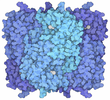
| Title | Cryo-EM structure of BMS986187 bound DOR-Gi complex | |||||||||
 Map data Map data | ||||||||||
 Sample Sample |
| |||||||||
 Keywords Keywords | Complex / PAM / Agonist / MEMBRANE PROTEIN | |||||||||
| Function / homology |  Function and homology information Function and homology informationG protein-coupled enkephalin receptor activity / spine apparatus / negative regulation of adenylate cyclase-activating adrenergic receptor signaling pathway / negative regulation of calcium ion-dependent exocytosis / G protein-coupled opioid receptor activity / G protein-coupled opioid receptor signaling pathway / negative regulation of adenylate cyclase activity / G protein-coupled adenosine receptor signaling pathway / receptor serine/threonine kinase binding / cellular response to toxic substance ...G protein-coupled enkephalin receptor activity / spine apparatus / negative regulation of adenylate cyclase-activating adrenergic receptor signaling pathway / negative regulation of calcium ion-dependent exocytosis / G protein-coupled opioid receptor activity / G protein-coupled opioid receptor signaling pathway / negative regulation of adenylate cyclase activity / G protein-coupled adenosine receptor signaling pathway / receptor serine/threonine kinase binding / cellular response to toxic substance / positive regulation of neural precursor cell proliferation / negative regulation of synaptic transmission / neuropeptide binding / positive regulation of urine volume / gamma-aminobutyric acid signaling pathway / eating behavior / regulation of calcium ion transport / negative regulation of apoptotic signaling pathway / G protein-coupled receptor signaling pathway, coupled to cyclic nucleotide second messenger / positive regulation of vascular associated smooth muscle cell proliferation / negative regulation of protein-containing complex assembly / neuronal dense core vesicle / positive regulation of superoxide anion generation / response to nutrient / Adenylate cyclase inhibitory pathway / regulation of mitochondrial membrane potential / dendrite membrane / axon terminus / hippocampal mossy fiber to CA3 synapse / Peptide ligand-binding receptors / electron transport chain / response to nicotine / neuropeptide signaling pathway / Regulation of insulin secretion / cellular response to growth factor stimulus / postsynaptic density membrane / G protein-coupled receptor binding / G-protein beta/gamma-subunit complex binding / adenylate cyclase-inhibiting G protein-coupled receptor signaling pathway / phospholipase C-activating G protein-coupled receptor signaling pathway / Olfactory Signaling Pathway / Activation of the phototransduction cascade / G protein-coupled acetylcholine receptor signaling pathway / G beta:gamma signalling through PLC beta / Presynaptic function of Kainate receptors / Thromboxane signalling through TP receptor / Activation of G protein gated Potassium channels / Inhibition of voltage gated Ca2+ channels via Gbeta/gamma subunits / G-protein activation / Glucagon signaling in metabolic regulation / G beta:gamma signalling through CDC42 / Prostacyclin signalling through prostacyclin receptor / Synthesis, secretion, and inactivation of Glucagon-like Peptide-1 (GLP-1) / photoreceptor disc membrane / G beta:gamma signalling through BTK / synaptic vesicle membrane / ADP signalling through P2Y purinoceptor 12 / Glucagon-type ligand receptors / Sensory perception of sweet, bitter, and umami (glutamate) taste / Adrenaline,noradrenaline inhibits insulin secretion / Vasopressin regulates renal water homeostasis via Aquaporins / G alpha (z) signalling events / Glucagon-like Peptide-1 (GLP1) regulates insulin secretion / ADP signalling through P2Y purinoceptor 1 / cellular response to catecholamine stimulus / G beta:gamma signalling through PI3Kgamma / ADORA2B mediated anti-inflammatory cytokines production / adenylate cyclase-activating dopamine receptor signaling pathway / cellular response to prostaglandin E stimulus / Cooperation of PDCL (PhLP1) and TRiC/CCT in G-protein beta folding / GPER1 signaling / heterotrimeric G-protein complex / Inactivation, recovery and regulation of the phototransduction cascade / G alpha (12/13) signalling events / G-protein beta-subunit binding / angiogenesis / extracellular vesicle / Thrombin signalling through proteinase activated receptors (PARs) / adenylate cyclase-activating G protein-coupled receptor signaling pathway / signaling receptor complex adaptor activity / ciliary basal body / Interleukin-4 and Interleukin-13 signaling / cell body / GTPase binding / midbody / presynaptic membrane / cellular response to hypoxia / Ca2+ pathway / High laminar flow shear stress activates signaling by PIEZO1 and PECAM1:CDH5:KDR in endothelial cells / G alpha (i) signalling events / G alpha (s) signalling events / response to ethanol / G alpha (q) signalling events / Hydrolases; Acting on acid anhydrides; Acting on GTP to facilitate cellular and subcellular movement / Ras protein signal transduction / positive regulation of ERK1 and ERK2 cascade / electron transfer activity / periplasmic space / Extra-nuclear estrogen signaling / neuron projection Similarity search - Function | |||||||||
| Biological species |  Homo sapiens (human) / synthetic construct (others) Homo sapiens (human) / synthetic construct (others) | |||||||||
| Method | single particle reconstruction / cryo EM / Resolution: 2.79 Å | |||||||||
 Authors Authors | Zhao C / Fu H / Tian XW / Cheng L / Yan W / Shao ZH | |||||||||
| Funding support |  China, 2 items China, 2 items
| |||||||||
 Citation Citation | Journal: Signal Transduct Target Ther / Year: 2026 Title: Molecular mechanism of allosteric modulation of opioid receptors. Authors: Heli Wang / Zhuang Miao / Chang Zhao / Hong Fu / Xiaowen Tian / Xinlei Liu / Lei Wang / Yuan Liu / Xingyu Liu / Xihao Yong / Lantian Su / Wei Yan / Lin Cheng / Renjie Chai / Zhenhua Shao / Bowen Ke / Abstract: Opioid analgesics provide potent pain relief but are limited by severe adverse effects, tolerance, and interindividual genetic variability in response. Poly-pharmacology and allosteric modulation of ...Opioid analgesics provide potent pain relief but are limited by severe adverse effects, tolerance, and interindividual genetic variability in response. Poly-pharmacology and allosteric modulation of opioid receptors offer promising strategies to enhance analgesic efficacy while mitigating these limitations. Pan-positive allosteric modulators (pan-PAMs), which simultaneously potentiate multiple opioid receptor subtypes, integrate the advantages of both approaches and represent an emerging therapeutic paradigm for pain management. However, the molecular mechanisms underlying pan-PAM activity at opioid receptors remain poorly understood. Here, we characterize BMS-986187 as a pan-PAM of opioid receptors and report the cryo-electron microscopy (cryo-EM) structures of multiple opioid receptor subtypes bound to this modulator, revealing a previously unidentified allosteric pocket. Structural and functional analyses revealed a conserved binding motif that mediates PAM recognition across the opioid receptor family and revealed the essential contributions of key opioid receptor residues to allosteric modulation by BMS-986187. Functionally, BMS-986187 enhances analgesic efficacy through an opioid-sparing effect, allowing lower opioid doses and reducing side effects, while restoring activity in loss-of-function (LOF) μ-opioid receptor variants. These findings define a previously unrecognized allosteric site in opioid receptors and establish a structural framework for the rational design of safer and more effective opioid therapeutics through allosteric modulation. | |||||||||
| History |
|
- Structure visualization
| Supplemental images |
|---|

- Downloads & links
-EMDB archive
| Map data | emd_66771.map.gz | 96.7 MB | EMDB map data format | |
|---|---|---|---|---|
| Header (meta data) | emd-66771-v30.xmlemd-66771.xml | 17.7 KB 17.7 KB | Display Display | EMDB header |
| Images |  emd_66771.png emd_66771.png | 25.2 KB | ||
| Filedesc metadata | emd-66771.cif.gz | 6.8 KB | ||
| Archive directory |  http://ftp.pdbj.org/pub/emdb/structures/EMD-66771ftp://ftp.pdbj.org/pub/emdb/structures/EMD-66771 http://ftp.pdbj.org/pub/emdb/structures/EMD-66771ftp://ftp.pdbj.org/pub/emdb/structures/EMD-66771 | HTTPS FTP |
-Related structure data
| Related structure data |  9xdqMC  9xc6C  9xdrC  9xf4C C: citing same article ( M: atomic model generated by this map |
|---|---|
| Similar structure data |


-Links
| EMDB pages | EMDB (EBI/PDBe) / EMDataResource |
|---|---|
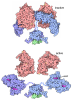
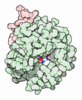
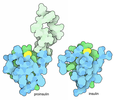
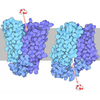
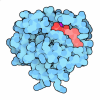
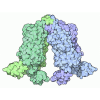
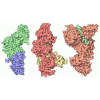
| Related items in Molecule of the Month |
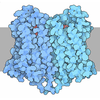
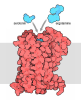
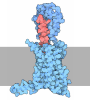
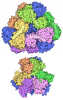



-Map
| File | Download / File: emd_66771.map.gz / Format: CCP4 / Size: 103 MB / Type: IMAGE STORED AS FLOATING POINT NUMBER (4 BYTES) | ||||||||||||||||||||||||||||||||||||
|---|---|---|---|---|---|---|---|---|---|---|---|---|---|---|---|---|---|---|---|---|---|---|---|---|---|---|---|---|---|---|---|---|---|---|---|---|---|
| Projections & slices | Image control
Images are generated by Spider. | ||||||||||||||||||||||||||||||||||||
| Voxel size | X=Y=Z: 0.76 Å | ||||||||||||||||||||||||||||||||||||
| Density |
| ||||||||||||||||||||||||||||||||||||
| Symmetry | Space group: 1 | ||||||||||||||||||||||||||||||||||||
| Details | EMDB XML:
|
 Z (Sec.)
 Y (Row.)
 X (Col.)


-Supplemental data
- Sample components
-Entire : DOR in complex with Gi heterotrimer
| Entire | Name: DOR in complex with Gi heterotrimer |
|---|---|
| Components |
|
-Supramolecule #1: DOR in complex with Gi heterotrimer
| Supramolecule | Name: DOR in complex with Gi heterotrimer / type: complex / ID: 1 / Parent: 0 / Macromolecule list: #1-#4 |
|---|---|
| Source (natural) | Organism: Homo sapiens (human) |
-Macromolecule #1: Soluble cytochrome b562,Delta-type opioid receptor,Soluble cytoch...
| Macromolecule | Name: Soluble cytochrome b562,Delta-type opioid receptor,Soluble cytochrome b562,Delta-type opioid receptor,Oplophorus-luciferin 2-monooxygenase catalytic subunit type: protein_or_peptide / ID: 1 / Number of copies: 1 / Enantiomer: LEVO |
|---|---|
| Source (natural) | Organism: synthetic construct (others) |
| Molecular weight | Theoretical: 66.442445 KDa |
| Recombinant expression | Organism:   Spodoptera frugiperda (fall armyworm) Spodoptera frugiperda (fall armyworm) |
| Sequence | String: MKTIIALSYI FCLVFADYKD DDDAADLEDN WETLNDNLKV IEKADNAAQV KDALTKMRAA ALDAQKATPP KLEDKSPDSP EMKDFRHGF DILVGQIDDA LKLANEGKVK EAQAAAEQLK TTRNAYIQKY LRSASSLALA IAITALYSAV CAVGLLGNVL V MFGIVRYT ...String: MKTIIALSYI FCLVFADYKD DDDAADLEDN WETLNDNLKV IEKADNAAQV KDALTKMRAA ALDAQKATPP KLEDKSPDSP EMKDFRHGF DILVGQIDDA LKLANEGKVK EAQAAAEQLK TTRNAYIQKY LRSASSLALA IAITALYSAV CAVGLLGNVL V MFGIVRYT KMKTATNIYI FNLALADALA TSTLPFQSAK YLMETWPFGE LLCKAVLSID YYNMFTSIFT LTMMSVDRYI AV CHPVKAL DFRTPAKAKL INICIWVLAS GVGVPIMVMA VTRPRDGAVV CMLQFPSPSW YWDTVTKICV FLFAFVVPIL IIT VCYGLM LLRLRSVRLL SGSKEKDRSL RRITRMVLVV VGAFVVCWAP IHIFVIVWTL VDIDRRDPLV VAALHLCIAL GYAN SSLNP VLYAFLDENF KRCFRQLCRK PCGRPDPSSF SRVFTLEDFV GDWEQTAAYN LDQVLEQGGV SSLLQNLAVS VTPIQ RIVR SGENALKIDI HVIIPYEGLS ADQMAQIEEV FKVVYPVDDH HFKVILPYGT LVIDGVTPNM LNYFGRPYEG IAVFDG KKI TVTGTLWNGN KIIDERLITP DGSMLFRVTI NS UniProtKB: Soluble cytochrome b562, Delta-type opioid receptor |
-Macromolecule #2: Guanine nucleotide-binding protein G(I)/G(S)/G(T) subunit beta-1
| Macromolecule | Name: Guanine nucleotide-binding protein G(I)/G(S)/G(T) subunit beta-1 type: protein_or_peptide / ID: 2 / Number of copies: 1 / Enantiomer: LEVO |
|---|---|
| Source (natural) | Organism: Homo sapiens (human) |
| Molecular weight | Theoretical: 41.729582 KDa |
| Recombinant expression | Organism: Spodoptera frugiperda (fall armyworm) |
| Sequence | String: MHHHHHHLEV LFQGPGSSGS ELDQLRQEAE QLKNQIRDAR KACADATLSQ ITNNIDPVGR IQMRTRRTLR GHLAKIYAMH WGTDSRLLV SASQDGKLII WDSYTTNKVH AIPLRSSWVM TCAYAPSGNY VACGGLDNIC SIYNLKTREG NVRVSRELAG H TGYLSCCR ...String: MHHHHHHLEV LFQGPGSSGS ELDQLRQEAE QLKNQIRDAR KACADATLSQ ITNNIDPVGR IQMRTRRTLR GHLAKIYAMH WGTDSRLLV SASQDGKLII WDSYTTNKVH AIPLRSSWVM TCAYAPSGNY VACGGLDNIC SIYNLKTREG NVRVSRELAG H TGYLSCCR FLDDNQIVTS SGDTTCALWD IETGQQTTTF TGHTGDVMSL SLAPDTRLFV SGACDASAKL WDVREGMCRQ TF TGHESDI NAICFFPNGN AFATGSDDAT CRLFDLRADQ ELMTYSHDNI ICGITSVSFS KSGRLLLAGY DDFNCNVWDA LKA DRAGVL AGHDNRVSCL GVTDDGMAVA TGSWDSFLKI WNGGSGGGGS GGSSSGGVSG WRLFKKIS UniProtKB: Guanine nucleotide-binding protein G(I)/G(S)/G(T) subunit beta-1 |
-Macromolecule #3: Guanine nucleotide-binding protein G(I)/G(S)/G(O) subunit gamma-2
| Macromolecule | Name: Guanine nucleotide-binding protein G(I)/G(S)/G(O) subunit gamma-2 type: protein_or_peptide / ID: 3 / Number of copies: 1 / Enantiomer: LEVO |
|---|---|
| Source (natural) | Organism: Homo sapiens (human) |
| Molecular weight | Theoretical: 7.861143 KDa |
| Recombinant expression | Organism: Spodoptera frugiperda (fall armyworm) |
| Sequence | String: MASNNTASIA QARKLVEQLK MEANIDRIKV SKAAADLMAY CEAHAKEDPL LTPVPASENP FREKKFFCAI L UniProtKB: Guanine nucleotide-binding protein G(I)/G(S)/G(O) subunit gamma-2 |
-Macromolecule #4: Guanine nucleotide-binding protein G(i) subunit alpha-2
| Macromolecule | Name: Guanine nucleotide-binding protein G(i) subunit alpha-2 type: protein_or_peptide / ID: 4 / Number of copies: 1 / Enantiomer: LEVO |
|---|---|
| Source (natural) | Organism: Homo sapiens (human) |
| Molecular weight | Theoretical: 40.502863 KDa |
| Recombinant expression | Organism: Spodoptera frugiperda (fall armyworm) |
| Sequence | String: MGCTVSAEDK AAAERSKMID KNLREDGEKA AREVKLLLLG AGESGKNTIV KQMKIIHEDG YSEEECRQYR AVVYSNTIQS IMAIVKAMG NLQIDFADPS RADDARQLFA LSCTAEEQGV LPDDLSGVIR RLWADHGVQA CFGRSREYQL NDSAAYYLND L ERIAQSDY ...String: MGCTVSAEDK AAAERSKMID KNLREDGEKA AREVKLLLLG AGESGKNTIV KQMKIIHEDG YSEEECRQYR AVVYSNTIQS IMAIVKAMG NLQIDFADPS RADDARQLFA LSCTAEEQGV LPDDLSGVIR RLWADHGVQA CFGRSREYQL NDSAAYYLND L ERIAQSDY IPTQQDVLRT RVKTTGIVET HFTFKDLHFK MFDVGAQRSE RKKWIHCFEG VTAIIFCVAL SAYDLVLAED EE MNRMHAS MKLFDSICNN KWFTDTSIIL FLNKKDLFEE KITHSPLTIC FPEYTGANKY DEAASYIQSK FEDLNKRKDT KEI YTHFTC STDTKNVQFV FDAVTDVIIK NNLKDCGLF UniProtKB: Guanine nucleotide-binding protein G(i) subunit alpha-2 |
-Macromolecule #5: 3,3,6,6-tetramethyl-9-[4-[(2-methylphenyl)methoxy]phenyl]-4,5,7,9...
| Macromolecule | Name: 3,3,6,6-tetramethyl-9-[4-[(2-methylphenyl)methoxy]phenyl]-4,5,7,9-tetrahydro-2~{H}-xanthene-1,8-dione type: ligand / ID: 5 / Number of copies: 1 / Formula: A1D6B |
|---|---|
| Molecular weight | Theoretical: 470.599 Da |
-Experimental details
-Structure determination
| Method | cryo EM |
|---|---|
 Processing Processing | single particle reconstruction |
| Aggregation state | particle |
-Sample preparation
| Buffer | pH: 7.5 |
|---|---|
| Vitrification | Cryogen name: ETHANE |
- Electron microscopy
| Microscope | TFS KRIOS |
|---|---|
| Image recording | Film or detector model: FEI FALCON IV (4k x 4k) / Average electron dose: 50.0 e/Å2 |
| Electron beam | Acceleration voltage: 300 kV / Electron source:  FIELD EMISSION GUN FIELD EMISSION GUN |
| Electron optics | Illumination mode: FLOOD BEAM / Imaging mode: BRIGHT FIELD / Cs: 2.7 mm / Nominal defocus max: 1.4000000000000001 µm / Nominal defocus min: 0.8 µm |
| Experimental equipment |  Model: Titan Krios / Image courtesy: FEI Company |
