[English] 日本語
Yorodumi
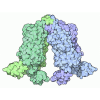
- EMDB-66632: Human GPR30 -Gq complex -

+
Open data


ID or keywords:

Loading...

-
Basic information

Entry
Database: EMDB / ID: EMD-66632
TitleHuman GPR30 -Gq complex
Map data
Sample
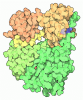
  • Complex: Human GPR30 -Gq complex
    • Complex: Guanine nucleotide-binding protein G(I)/G(S)/G(T) subunit beta-1
      • Protein or peptide: Guanine nucleotide-binding protein G(I)/G(S)/G(T) subunit beta-1
    • Complex: Guanine nucleotide-binding protein G(I)/G(S)/G(O) subunit gamma-2
      • Protein or peptide: Guanine nucleotide-binding protein G(I)/G(S)/G(O) subunit gamma-2
    • Complex: Guanine nucleotide-binding protein G(I)/G(S)/G(O) subunit gamma-2,Guanine nucleotide-binding protein G(i) subunit alpha-2,Guanine nucleotide-binding protein G(s) subunit alpha isoforms XLas
      • Protein or peptide: Guanine nucleotide-binding protein G(i) subunit alpha-2,Guanine nucleotide-binding protein G(s) subunit alpha isoforms short
    • Complex: GPR30, LgBiT, EGFP
      • Protein or peptide: G-protein coupled estrogen receptor 1
    • Complex: scFv16
      • Protein or peptide: scFv16
KeywordsReceptor / GPCR / Complex / MEMBRANE PROTEIN
Function / homology
Function and homology information


negative regulation of leukocyte activation / nuclear fragmentation involved in apoptotic nuclear change / G protein-coupled estrogen receptor activity / positive regulation of cardiac vascular smooth muscle cell differentiation / negative regulation of cell cycle process / keratin filament / positive regulation of inositol trisphosphate biosynthetic process / apoptotic chromosome condensation / positive regulation of uterine smooth muscle contraction / negative regulation of lipid biosynthetic process ...negative regulation of leukocyte activation / nuclear fragmentation involved in apoptotic nuclear change / G protein-coupled estrogen receptor activity / positive regulation of cardiac vascular smooth muscle cell differentiation / negative regulation of cell cycle process / keratin filament / positive regulation of inositol trisphosphate biosynthetic process / apoptotic chromosome condensation / positive regulation of uterine smooth muscle contraction / negative regulation of lipid biosynthetic process / negative regulation of adenylate cyclase-activating adrenergic receptor signaling pathway / negative regulation of calcium ion-dependent exocytosis / positive regulation of neurotransmitter secretion / steroid hormone binding / cellular response to mineralocorticoid stimulus / sensory perception of chemical stimulus / positive regulation of G protein-coupled receptor signaling pathway / negative regulation of adenylate cyclase activity / mu-type opioid receptor binding / G protein-coupled adenosine receptor signaling pathway / corticotropin-releasing hormone receptor 1 binding / positive regulation of neural precursor cell proliferation / G-protein activation / Activation of the phototransduction cascade / Glucagon-type ligand receptors / Thromboxane signalling through TP receptor / Sensory perception of sweet, bitter, and umami (glutamate) taste / G beta:gamma signalling through PI3Kgamma / G beta:gamma signalling through CDC42 / Cooperation of PDCL (PhLP1) and TRiC/CCT in G-protein beta folding / Activation of G protein gated Potassium channels / Inhibition of voltage gated Ca2+ channels via Gbeta/gamma subunits / Ca2+ pathway / negative regulation of synaptic transmission / G alpha (z) signalling events / High laminar flow shear stress activates signaling by PIEZO1 and PECAM1:CDH5:KDR in endothelial cells / Glucagon-like Peptide-1 (GLP1) regulates insulin secretion / Vasopressin regulates renal water homeostasis via Aquaporins / Adrenaline,noradrenaline inhibits insulin secretion / ADP signalling through P2Y purinoceptor 12 / positive regulation of extrinsic apoptotic signaling pathway / positive regulation of neurogenesis / G alpha (q) signalling events / dendritic spine membrane / beta-2 adrenergic receptor binding / negative regulation of fat cell differentiation / G alpha (i) signalling events / positive regulation of urine volume / Thrombin signalling through proteinase activated receptors (PARs) / steroid hormone receptor signaling pathway / cellular response to peptide hormone stimulus / presynaptic active zone / dendritic spine head / nuclear estrogen receptor activity / gamma-aminobutyric acid signaling pathway / photoreceptor outer segment membrane / spectrin binding / positive regulation of epidermal growth factor receptor signaling pathway / sensory perception of taste / alkylglycerophosphoethanolamine phosphodiesterase activity / regulation of calcium ion transport / positive regulation of release of cytochrome c from mitochondria / negative regulation of apoptotic signaling pathway / retina development in camera-type eye / negative regulation of vascular associated smooth muscle cell proliferation / neuronal action potential / nuclear receptor-mediated steroid hormone signaling pathway / positive regulation of endothelial cell apoptotic process / cardiac muscle cell apoptotic process / photoreceptor outer segment / D1 dopamine receptor binding / positive regulation of vascular associated smooth muscle cell proliferation / regulation of cytosolic calcium ion concentration / neuronal dense core vesicle / adenylate cyclase-activating adrenergic receptor signaling pathway / steroid binding / insulin-like growth factor receptor binding / positive regulation of superoxide anion generation / response to nutrient / photoreceptor inner segment / Adenylate cyclase inhibitory pathway / ionotropic glutamate receptor binding / cytoplasmic vesicle membrane / positive regulation of release of sequestered calcium ion into cytosol / axon terminus / negative regulation of phosphatidylinositol 3-kinase/protein kinase B signal transduction / adenylate cyclase activator activity / hippocampal mossy fiber to CA3 synapse / Peptide ligand-binding receptors / dendritic shaft / cellular response to estradiol stimulus / positive regulation of protein localization to plasma membrane / cellular response to tumor necrosis factor / cellular response to glucose stimulus / positive regulation of insulin secretion / trans-Golgi network / Regulation of insulin secretion / negative regulation of ERK1 and ERK2 cascade / negative regulation of inflammatory response / vasodilation
Similarity search - Function
: / G-protein alpha subunit, group S / G-protein alpha subunit, group I / G protein alpha subunit, helical insertion / G protein alpha subunit / Guanine nucleotide binding protein (G-protein), alpha subunit / G-protein alpha subunit / G-alpha domain profile. / G-protein, gamma subunit / G-protein gamma subunit domain profile. ...: / G-protein alpha subunit, group S / G-protein alpha subunit, group I / G protein alpha subunit, helical insertion / G protein alpha subunit / Guanine nucleotide binding protein (G-protein), alpha subunit / G-protein alpha subunit / G-alpha domain profile. / G-protein, gamma subunit / G-protein gamma subunit domain profile. / G-protein gamma-like domain / G-protein gamma-like domain superfamily / GGL domain / G protein gamma subunit-like motifs / GGL domain / G protein beta WD-40 repeat protein / Guanine nucleotide-binding protein, beta subunit / G-protein, beta subunit / G-protein coupled receptors family 1 signature. / 7 transmembrane receptor (rhodopsin family) / G protein-coupled receptor, rhodopsin-like / GPCR, rhodopsin-like, 7TM / G-protein coupled receptors family 1 profile. / G-protein beta WD-40 repeat / WD40 repeat, conserved site / Trp-Asp (WD) repeats signature. / Trp-Asp (WD) repeats profile. / Trp-Asp (WD) repeats circular profile. / WD40 repeats / WD40 repeat / WD40-repeat-containing domain superfamily / WD40/YVTN repeat-like-containing domain superfamily / P-loop containing nucleoside triphosphate hydrolase
Similarity search - Domain/homology
Guanine nucleotide-binding protein G(s) subunit alpha isoforms short / Guanine nucleotide-binding protein G(i) subunit alpha-2 / Guanine nucleotide-binding protein G(I)/G(S)/G(T) subunit beta-1 / Guanine nucleotide-binding protein G(I)/G(S)/G(O) subunit gamma-2 / G protein-coupled estrogen receptor 1
Similarity search - Component
Biological speciesHomo sapiens (human) / Rattus norvegicus (Norway rat) / Mus musculus (house mouse) / Bos taurus (domestic cattle)
Methodsingle particle reconstruction / cryo EM / Resolution: 3.15 Å
AuthorsKaneda S / Oshima HS / Akasaka H / Shihoya W / Nureki O
Funding support Japan, 1 items
OrganizationGrant numberCountry
Japan Society for the Promotion of Science (JSPS)21H05037 Japan
CitationJournal: Elife / Year: 2026
Title: Cryo-EM structure of the bicarbonate receptor GPR30.
Authors: Shota Kaneda / Airi Jo-Watanabe / Hiroaki Akasaka / Hidetaka S Oshima / Takehiko Yokomizo / Wataru Shihoya / Osamu Nureki /
Abstract: G-protein-coupled receptor 30 (GPR30) is a bicarbonate receptor that plays a vital role in cellular responses to extracellular pH and ion homeostasis. Despite its significance, the mechanisms by ...G-protein-coupled receptor 30 (GPR30) is a bicarbonate receptor that plays a vital role in cellular responses to extracellular pH and ion homeostasis. Despite its significance, the mechanisms by which GPR30 interacts with bicarbonate ions remain elusive. There is no consensus on a drug that targets GPR30, and difficulties in pharmacological analyses have limited biological and drug discovery research on GPR30. Here, we present the cryo-electron microscopy structure of human GPR30 in the presence of bicarbonate ions at 3.15 Å resolution. Our structure reveals unique extracellular pockets and critical residues for bicarbonate binding and activation. Functional assays demonstrate that mutations in these residues impair bicarbonate-induced GPR30 activation, underscoring their importance in receptor function. This study also provides insights into G-protein coupling, highlighting the structural divergence between GPR30 and other G-protein-coupled receptors (GPCRs). Our findings not only advance the understanding of the role of GPR30 in pH homeostasis but also pave the way for the development of high-affinity drugs targeting GPR30 for therapeutic interventions in diseases associated with acid-base imbalance.
History
DepositionOct 16, 2025-
Header (metadata) releaseAug 26, 2026-
Map releaseAug 26, 2026-
UpdateAug 26, 2026-
Current statusAug 26, 2026Processing site: PDBj / Status: Released

-
Structure visualization

Supplemental images

Downloads & links

-
Map

FileDownload / File: emd_66632.map.gz / Format: CCP4 / Size: 30.5 MB / Type: IMAGE STORED AS FLOATING POINT NUMBER (4 BYTES)
Projections & slices

Image control

Size
Brightness
Contrast
Others
AxesX (Sec.)Y (Row.)Z (Col.)
1.16 Å/pix.
x 200 pix.
= 232. Å
1.16 Å/pix.
x 200 pix.
= 232. Å
1.16 Å/pix.
x 200 pix.
= 232. Å

Surface

Projections

Slices (1/3)

Slices (1/2)

Slices (2/3)

Images are generated by Spider.

Voxel sizeX=Y=Z: 1.16 Å
Density
Contour LevelBy AUTHOR: 3.44
Minimum - Maximum-36.792834999999997 - 56.088250000000002
Average (Standard dev.)0.000000000004763 (±1.0)
SymmetrySpace group: 1
Details

EMDB XML:

Map geometry
Axis orderZYX
Origin000
Dimensions200200200
Spacing200200200
CellA=B=C: 232.0 Å
α=β=γ: 90.0 °

-
Supplemental data

-
Sample components

+
Entire : Human GPR30 -Gq complex

EntireName: Human GPR30 -Gq complex
Components
  • Complex: Human GPR30 -Gq complex
    • Complex: Guanine nucleotide-binding protein G(I)/G(S)/G(T) subunit beta-1
      • Protein or peptide: Guanine nucleotide-binding protein G(I)/G(S)/G(T) subunit beta-1
    • Complex: Guanine nucleotide-binding protein G(I)/G(S)/G(O) subunit gamma-2
      • Protein or peptide: Guanine nucleotide-binding protein G(I)/G(S)/G(O) subunit gamma-2
    • Complex: Guanine nucleotide-binding protein G(I)/G(S)/G(O) subunit gamma-2,Guanine nucleotide-binding protein G(i) subunit alpha-2,Guanine nucleotide-binding protein G(s) subunit alpha isoforms XLas
      • Protein or peptide: Guanine nucleotide-binding protein G(i) subunit alpha-2,Guanine nucleotide-binding protein G(s) subunit alpha isoforms short
    • Complex: GPR30, LgBiT, EGFP
      • Protein or peptide: G-protein coupled estrogen receptor 1
    • Complex: scFv16
      • Protein or peptide: scFv16

+
Supramolecule #1: Human GPR30 -Gq complex

SupramoleculeName: Human GPR30 -Gq complex / type: complex / ID: 1 / Parent: 0 / Macromolecule list: all

+
Supramolecule #2: Guanine nucleotide-binding protein G(I)/G(S)/G(T) subunit beta-1

SupramoleculeName: Guanine nucleotide-binding protein G(I)/G(S)/G(T) subunit beta-1
type: complex / ID: 2 / Parent: 1 / Macromolecule list: #1
Source (natural)Organism: Homo sapiens (human)

+
Supramolecule #3: Guanine nucleotide-binding protein G(I)/G(S)/G(O) subunit gamma-2

SupramoleculeName: Guanine nucleotide-binding protein G(I)/G(S)/G(O) subunit gamma-2
type: complex / ID: 3 / Parent: 1 / Macromolecule list: #2
Source (natural)Organism: Rattus norvegicus (Norway rat)

+
Supramolecule #4: Guanine nucleotide-binding protein G(I)/G(S)/G(O) subunit gamma-2...

SupramoleculeName: Guanine nucleotide-binding protein G(I)/G(S)/G(O) subunit gamma-2,Guanine nucleotide-binding protein G(i) subunit alpha-2,Guanine nucleotide-binding protein G(s) subunit alpha isoforms XLas
type: complex / ID: 4 / Parent: 1 / Macromolecule list: #3
Source (natural)Organism: Homo sapiens (human)

+
Supramolecule #5: GPR30, LgBiT, EGFP

SupramoleculeName: GPR30, LgBiT, EGFP / type: complex / ID: 5 / Parent: 1 / Macromolecule list: #4
Source (natural)Organism: Homo sapiens (human)

+
Supramolecule #6: scFv16

SupramoleculeName: scFv16 / type: complex / ID: 6 / Parent: 1 / Macromolecule list: #5
Source (natural)Organism: Mus musculus (house mouse)

+
Macromolecule #1: Guanine nucleotide-binding protein G(I)/G(S)/G(T) subunit beta-1

MacromoleculeName: Guanine nucleotide-binding protein G(I)/G(S)/G(T) subunit beta-1
type: protein_or_peptide / ID: 1 / Number of copies: 1 / Enantiomer: LEVO
Source (natural)Organism: Rattus norvegicus (Norway rat)
Molecular weightTheoretical: 40.470105 KDa
Recombinant expressionOrganism: Spodoptera frugiperda (fall armyworm)
SequenceString: GSQLQSELDQ LRQEAEQLKN QIRDARKACA DATLSQITNN IDPVGRIQMR TRRTLRGHLA KIYAMHWGTD SRLLVSASQD GKLIIWDSY TTNKVHAIPL RSSWVMTCAY APSGNYVACG GLDNICSIYN LKTREGNVRV SRELAGHTGY LSCCRFLDDN Q IVTSSGDT ...String:
GSQLQSELDQ LRQEAEQLKN QIRDARKACA DATLSQITNN IDPVGRIQMR TRRTLRGHLA KIYAMHWGTD SRLLVSASQD GKLIIWDSY TTNKVHAIPL RSSWVMTCAY APSGNYVACG GLDNICSIYN LKTREGNVRV SRELAGHTGY LSCCRFLDDN Q IVTSSGDT TCALWDIETG QQTTTFTGHT GDVMSLSLAP DTRLFVSGAC DASAKLWDVR EGMCRQTFTG HESDINAICF FP NGNAFAT GSDDATCRLF DLRADQELMT YSHDNIICGI TSVSFSKSGR LLLAGYDDFN CNVWDALKAD RAGVLAGHDN RVS CLGVTD DGMAVATGSW DSFLKIWNGA SGGGSGGNSG SSGGSSGVSG WRLFKKIS

UniProtKB: Guanine nucleotide-binding protein G(I)/G(S)/G(T) subunit beta-1

+
Macromolecule #2: Guanine nucleotide-binding protein G(I)/G(S)/G(O) subunit gamma-2

MacromoleculeName: Guanine nucleotide-binding protein G(I)/G(S)/G(O) subunit gamma-2
type: protein_or_peptide / ID: 2 / Number of copies: 1 / Enantiomer: LEVO
Source (natural)Organism: Homo sapiens (human)
Molecular weightTheoretical: 7.56375 KDa
Recombinant expressionOrganism: Spodoptera frugiperda (fall armyworm)
SequenceString:
MASNNTASIA QARKLVEQLK MEANIDRIKV SKAAADLMAY CEAHAKEDPL LTPVPASENP FREKKFFC

UniProtKB: Guanine nucleotide-binding protein G(I)/G(S)/G(O) subunit gamma-2

+
Macromolecule #3: Guanine nucleotide-binding protein G(i) subunit alpha-2,Guanine n...

MacromoleculeName: Guanine nucleotide-binding protein G(i) subunit alpha-2,Guanine nucleotide-binding protein G(s) subunit alpha isoforms short
type: protein_or_peptide / ID: 3 / Number of copies: 1 / Enantiomer: LEVO
EC number: Hydrolases; Acting on acid anhydrides; Acting on GTP to facilitate cellular and subcellular movement
Source (natural)Organism: Bos taurus (domestic cattle)
Molecular weightTheoretical: 29.027848 KDa
Recombinant expressionOrganism: Spodoptera frugiperda (fall armyworm)
SequenceString: AILGSAGSAG SAMGSTVSAE DKAAAERSKM IDKNLREDGE KARRTLRLLL LGADNSGKST IVKQMRILHG GSGGSGGTSG IFETKFQVD KVNFHMFDVG GQRDERRKWI QCFNDVTAII FVVDSSDYNR LQEALNDFKS IWNNRWLRTI SVILFLNKQD L LAEKVLAG ...String:
AILGSAGSAG SAMGSTVSAE DKAAAERSKM IDKNLREDGE KARRTLRLLL LGADNSGKST IVKQMRILHG GSGGSGGTSG IFETKFQVD KVNFHMFDVG GQRDERRKWI QCFNDVTAII FVVDSSDYNR LQEALNDFKS IWNNRWLRTI SVILFLNKQD L LAEKVLAG KSKIEDYFPE FARYTTPEDA TPEPGEDPRV TRAKYFIRKE FVDISTASGD GRHICYPHFT CAVDTENARR IF NDCKDII LQMNLREYNL V

UniProtKB: Guanine nucleotide-binding protein G(i) subunit alpha-2, Guanine nucleotide-binding protein G(s) subunit alpha isoforms short

+
Macromolecule #4: G-protein coupled estrogen receptor 1

MacromoleculeName: G-protein coupled estrogen receptor 1 / type: protein_or_peptide / ID: 4 / Number of copies: 1 / Enantiomer: LEVO
Source (natural)Organism: Homo sapiens (human)
Molecular weightTheoretical: 94.326938 KDa
Recombinant expressionOrganism: Spodoptera frugiperda (fall armyworm)
SequenceString: MKTIIALSYI FCLVFADYKD DDDKDVTSQA RGVGLEMYPG TAQPAAPNTT SPELNLSHPL LGTALANGTG ELSEHQQYVI GLFLSCLYT IFLFPIGFVG NILILVVNIS FREKMTIPDL YFINLAVADL ILVADSLIEV FNLHERYYDI AVLCTFMSLF L QVNMYSSV ...String:
MKTIIALSYI FCLVFADYKD DDDKDVTSQA RGVGLEMYPG TAQPAAPNTT SPELNLSHPL LGTALANGTG ELSEHQQYVI GLFLSCLYT IFLFPIGFVG NILILVVNIS FREKMTIPDL YFINLAVADL ILVADSLIEV FNLHERYYDI AVLCTFMSLF L QVNMYSSV FFLTWMSFDR YIALARAMRC SLFRTKHHAR LSCGLIWMAS VSATLVPFTA VHLQHTDEAC FCFADVREVQ WL EVTLGFI VPFAIIGLCY SLIVRVLVRA HRHRGLRPRR QKALRMILAV VLVFFVCWLP ENVFISVHLL QRTQPGAAPC KQS FRHAHP LTGHIVNLAA FSNSCLNPLI YSFLGETFRD KLRLYIEQKT NLPALNRFCH AALKAVIPDS TEQSDVRFSS AVGS GGGGS GGSSSGGVFT LEDFVGDWEQ TAAYNLDQVL EQGGVSSLLQ NLAVSVTPIQ RIVRSGENAL KIDIHVIIPY EGLSA DQMA QIEEVFKVVY PVDDHHFKVI LPYGTLVIDG VTPNMLNYFG RPYEGIAVFD GKKITVTGTL WNGNKIIDER LITPDG SML FRVTINSGGS GGGGSGGSSS GGLEVLFQGP GSAAAAVSKG EELFTGVVPI LVELDGDVNG HKFSVSGEGE GDATYGK LT LKFICTTGKL PVPWPTLVTT LTYGVQCFSR YPDHMKQHDF FKSAMPEGYV QERTIFFKDD GNYKTRAEVK FEGDTLVN R IELKGIDFKE DGNILGHKLE YNYNSHNVYI MADKQKNGIK VNFKIRHNIE DGSVQLADHY QQNTPIGDGP VLLPDNHYL STQSKLSKDP NEKRDHMVLL EFVTAAGITL GMDELYKSGL RSHHHHHHHH

UniProtKB: G protein-coupled estrogen receptor 1

+
Macromolecule #5: scFv16

MacromoleculeName: scFv16 / type: protein_or_peptide / ID: 5 / Number of copies: 1 / Enantiomer: LEVO
Source (natural)Organism: Mus musculus (house mouse)
Molecular weightTheoretical: 27.720795 KDa
Recombinant expressionOrganism: Spodoptera frugiperda (fall armyworm)
SequenceString: DVQLVESGGG LVQPGGSRKL SCSASGFAFS SFGMHWVRQA PEKGLEWVAY ISSGSGTIYY ADTVKGRFTI SRDDPKNTLF LQMTSLRSE DTAMYYCVRS IYYYGSSPFD FWGQGTTLTV SSGGGGSGGG GSGGGGSDIV MTQATSSVPV TPGESVSISC R SSKSLLHS ...String:
DVQLVESGGG LVQPGGSRKL SCSASGFAFS SFGMHWVRQA PEKGLEWVAY ISSGSGTIYY ADTVKGRFTI SRDDPKNTLF LQMTSLRSE DTAMYYCVRS IYYYGSSPFD FWGQGTTLTV SSGGGGSGGG GSGGGGSDIV MTQATSSVPV TPGESVSISC R SSKSLLHS NGNTYLYWFL QRPGQSPQLL IYRMSNLASG VPDRFSGSGS GTAFTLTISR LEAEDVGVYY CMQHLEYPLT FG AGTKLEL KAAAASSEDL YFQ

-
Experimental details

-
Structure determination

Methodcryo EM
Processingsingle particle reconstruction
Aggregation stateparticle

-
Sample preparation

BufferpH: 8
VitrificationCryogen name: ETHANE

-
Electron microscopy

MicroscopeTFS KRIOS
Image recordingFilm or detector model: GATAN K3 BIOQUANTUM (6k x 4k) / Average electron dose: 50.66 e/Å2
Electron beamAcceleration voltage: 300 kV / Electron source: FIELD EMISSION GUN
Electron opticsIllumination mode: FLOOD BEAM / Imaging mode: BRIGHT FIELD / Nominal defocus max: 1.6 µm / Nominal defocus min: 0.8 µm
Experimental equipment
Model: Titan Krios / Image courtesy: FEI Company

+
Image processing

CTF correctionType: PHASE FLIPPING AND AMPLITUDE CORRECTION
Startup modelType of model: OTHER
Final reconstructionResolution.type: BY AUTHOR / Resolution: 3.15 Å / Resolution method: FSC 0.143 CUT-OFF / Software - Name: cryoSPARC (ver. 4) / Number images used: 522404
Initial angle assignmentType: MAXIMUM LIKELIHOOD
Final angle assignmentType: MAXIMUM LIKELIHOOD

+
About Yorodumi

-
News

-
Feb 9, 2022. New format data for meta-information of EMDB entries

New format data for meta-information of EMDB entries

  • Version 3 of the EMDB header file is now the official format.
  • The previous official version 1.9 will be removed from the archive.

Related info.:EMDB header

External links:wwPDB to switch to version 3 of the EMDB data model

-
Aug 12, 2020. Covid-19 info

Covid-19 info

URL: https://pdbj.org/emnavi/covid19.php

New page: Covid-19 featured information page in EM Navigator.

Related info.:Covid-19 info / Mar 5, 2020. Novel coronavirus structure data

+
Mar 5, 2020. Novel coronavirus structure data

Novel coronavirus structure data

Related info.:Yorodumi Speices / Aug 12, 2020. Covid-19 info

External links:COVID-19 featured content - PDBj / Molecule of the Month (242):Coronavirus Proteases

+
Jan 31, 2019. EMDB accession codes are about to change! (news from PDBe EMDB page)

EMDB accession codes are about to change! (news from PDBe EMDB page)

  • The allocation of 4 digits for EMDB accession codes will soon come to an end. Whilst these codes will remain in use, new EMDB accession codes will include an additional digit and will expand incrementally as the available range of codes is exhausted. The current 4-digit format prefixed with “EMD-” (i.e. EMD-XXXX) will advance to a 5-digit format (i.e. EMD-XXXXX), and so on. It is currently estimated that the 4-digit codes will be depleted around Spring 2019, at which point the 5-digit format will come into force.
  • The EM Navigator/Yorodumi systems omit the EMD- prefix.

Related info.:Q: What is EMD? / ID/Accession-code notation in Yorodumi/EM Navigator

External links:EMDB Accession Codes are Changing Soon! / Contact to PDBj

+
Jul 12, 2017. Major update of PDB

Major update of PDB

  • wwPDB released updated PDB data conforming to the new PDBx/mmCIF dictionary.
  • This is a major update changing the version number from 4 to 5, and with Remediation, in which all the entries are updated.
  • In this update, many items about electron microscopy experimental information are reorganized (e.g. em_software).
  • Now, EM Navigator and Yorodumi are based on the updated data.

External links:wwPDB Remediation / Enriched Model Files Conforming to OneDep Data Standards Now Available in the PDB FTP Archive

-
Yorodumi

Thousand views of thousand structures

  • Yorodumi is a browser for structure data from EMDB, PDB, SASBDB, etc.
  • This page is also the successor to EM Navigator detail page, and also detail information page/front-end page for Omokage search.
  • The word "yorodu" (or yorozu) is an old Japanese word meaning "ten thousand". "mi" (miru) is to see.

Related info.:EMDB / PDB / SASBDB / Comparison of 3 databanks / Yorodumi Search / Aug 31, 2016. New EM Navigator & Yorodumi / Yorodumi Papers / Jmol/JSmol / Function and homology information / Changes in new EM Navigator and Yorodumi

Read more