 Movie
Movie Controller


+ Open data

- Basic information
| Entry |  | |||||||||
|---|---|---|---|---|---|---|---|---|---|---|
| Title | A ternary complex of NUT with BAK1 and SCREW2 | |||||||||
 Map data Map data | ||||||||||
 Sample Sample |
| |||||||||
 Keywords Keywords | Complex / PLANT PROTEIN | |||||||||
| Function / homology |  Function and homology information Function and homology informationregulation of pattern recognition receptor signaling pathway / defense response to oomycetes / plant-type hypersensitive response / brassinosteroid mediated signaling pathway / apoplast / transmembrane receptor protein serine/threonine kinase activity / receptor serine/threonine kinase binding / pattern recognition receptor signaling pathway / defense response to fungus / transmembrane receptor protein tyrosine kinase activity ...regulation of pattern recognition receptor signaling pathway / defense response to oomycetes / plant-type hypersensitive response / brassinosteroid mediated signaling pathway / apoplast / transmembrane receptor protein serine/threonine kinase activity / receptor serine/threonine kinase binding / pattern recognition receptor signaling pathway / defense response to fungus / transmembrane receptor protein tyrosine kinase activity / hormone activity / receptor protein-tyrosine kinase / protein kinase activity / non-specific serine/threonine protein kinase / defense response to bacterium / endosome / endosome membrane / protein heterodimerization activity / receptor ligand activity / signaling receptor binding / protein serine kinase activity / protein serine/threonine kinase activity / protein-containing complex / ATP binding / membrane / identical protein binding / plasma membrane Similarity search - Function | |||||||||
| Biological species |   Arabidopsis thaliana (thale cress) Arabidopsis thaliana (thale cress) | |||||||||
| Method | single particle reconstruction / cryo EM / Resolution: 3.48 Å | |||||||||
 Authors Authors | Bai YF / Yu JF / Xiao Y | |||||||||
| Funding support |  China, 1 items China, 1 items
| |||||||||
 Citation Citation | Journal: To Be Published Title: A ternary complex of NUT with BAK1 and SCREW2 Authors: Bai YF / Yu JF / Xiao Y | |||||||||
| History |
|
- Structure visualization
| Supplemental images |
|---|

- Downloads & links
-EMDB archive
| Map data | emd_66264.map.gz | 59.7 MB | EMDB map data format | |
|---|---|---|---|---|
| Header (meta data) | emd-66264-v30.xmlemd-66264.xml | 17.1 KB 17.1 KB | Display Display | EMDB header |
| Images |  emd_66264.png emd_66264.png | 29.1 KB | ||
| Filedesc metadata | emd-66264.cif.gz | 6 KB | ||
| Others | emd_66264_half_map_1.map.gzemd_66264_half_map_2.map.gz | 59.4 MB 59.4 MB | ||
| Archive directory |  http://ftp.pdbj.org/pub/emdb/structures/EMD-66264ftp://ftp.pdbj.org/pub/emdb/structures/EMD-66264 http://ftp.pdbj.org/pub/emdb/structures/EMD-66264ftp://ftp.pdbj.org/pub/emdb/structures/EMD-66264 | HTTPS FTP |
-Related structure data
| Related structure data |  9wumMC M: atomic model generated by this map C: citing same article ( |
|---|---|
| Similar structure data |
-Links
| EMDB pages | EMDB (EBI/PDBe) / EMDataResource |
|---|---|
| Related items in Molecule of the Month |
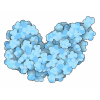
-Map
| File | Download / File: emd_66264.map.gz / Format: CCP4 / Size: 64 MB / Type: IMAGE STORED AS FLOATING POINT NUMBER (4 BYTES) | ||||||||||||||||||||||||||||||||||||
|---|---|---|---|---|---|---|---|---|---|---|---|---|---|---|---|---|---|---|---|---|---|---|---|---|---|---|---|---|---|---|---|---|---|---|---|---|---|
| Projections & slices | Image control
Images are generated by Spider. | ||||||||||||||||||||||||||||||||||||
| Voxel size | X=Y=Z: 0.85 Å | ||||||||||||||||||||||||||||||||||||
| Density |
| ||||||||||||||||||||||||||||||||||||
| Symmetry | Space group: 1 | ||||||||||||||||||||||||||||||||||||
| Details | EMDB XML:
|
 Z (Sec.)
 Y (Row.)
 X (Col.)


-Supplemental data
-Half map: #2
| File | emd_66264_half_map_1.map | ||||||||||||
|---|---|---|---|---|---|---|---|---|---|---|---|---|---|
| Projections & Slices |
| ||||||||||||
| Density Histograms |


-Half map: #1
| File | emd_66264_half_map_2.map | ||||||||||||
|---|---|---|---|---|---|---|---|---|---|---|---|---|---|
| Projections & Slices |
| ||||||||||||
| Density Histograms |


- Sample components
-Entire : A ternary complex of NUT with BAK1 and SCREW2
| Entire | Name: A ternary complex of NUT with BAK1 and SCREW2 |
|---|---|
| Components |
|
-Supramolecule #1: A ternary complex of NUT with BAK1 and SCREW2
| Supramolecule | Name: A ternary complex of NUT with BAK1 and SCREW2 / type: complex / ID: 1 / Parent: 0 / Macromolecule list: #1-#3 |
|---|---|
| Source (natural) | Organism: Arabidopsis thaliana (thale cress) |
-Macromolecule #1: AT5G25930 protein
| Macromolecule | Name: AT5G25930 protein / type: protein_or_peptide / ID: 1 / Number of copies: 1 / Enantiomer: LEVO |
|---|---|
| Source (natural) | Organism: Arabidopsis thaliana (thale cress) |
| Molecular weight | Theoretical: 70.2165 KDa |
| Recombinant expression | Organism:  Trichoplusia ni (cabbage looper) Trichoplusia ni (cabbage looper) |
| Sequence | String: MAFKSIAVLS ACIIVGSALP GSQFNDQSTL LNLKRDLGDP PSLRLWNNTS SPCNWSEITC TAGNVTGINF KNQNFTGTVP TTICDLSNL NFLDLSFNYF AGEFPTVLYN CTKLQYLDLS QNLLNGSLPV DIDRLSPELD YLDLAANGFS GDIPKSLGRI S KLKVLNLY ...String: MAFKSIAVLS ACIIVGSALP GSQFNDQSTL LNLKRDLGDP PSLRLWNNTS SPCNWSEITC TAGNVTGINF KNQNFTGTVP TTICDLSNL NFLDLSFNYF AGEFPTVLYN CTKLQYLDLS QNLLNGSLPV DIDRLSPELD YLDLAANGFS GDIPKSLGRI S KLKVLNLY QSEYDGTFPS EIGDLSELEE LRLALNDKFT PAKIPIEFGK LKKLKYMWLE EMNLIGEISP VVFENMTDLE HV DLSVNNL TGRIPDVLFG LKNLTEFYLF ANGLTGEIPK SISATNLVFL DLSANNLTGS IPVSIGNLTK LQVLNLFNNK LTG EIPPVI GKLPGLKEFK IFNNKLTGEI PAEIGVHSKL ERFEVSENQL TGKLPENLCK GGKLQGVVVY SNNLTGEIPE SLGD CGTLL TVQLQNNDFS GKFPSRIWNA SSMYSLQVSN NSFTGELPEN VAWNMSRIEI DNNRFSGEIP KKIGTWSSLV EFKAG NNQF SGEFPKELTS LSNLISIFLD ENDLTGELPD EIISWKSLIT LSLSKNKLSG EIPRALGLLP RLLNLDLSEN QFSGGI PPE IGSLKLTTFN VSSNRLTGGI PEQLDNLAYE RSFLNNSNLC ADNPVLSLPD CRKQRRGSRG FPGKILEHHH HHH UniProtKB: AT5G25930 protein |
-Macromolecule #2: BRASSINOSTEROID INSENSITIVE 1-associated receptor kinase 1
| Macromolecule | Name: BRASSINOSTEROID INSENSITIVE 1-associated receptor kinase 1 type: protein_or_peptide / ID: 2 / Number of copies: 1 / Enantiomer: LEVO / EC number: receptor protein-tyrosine kinase |
|---|---|
| Source (natural) | Organism: Arabidopsis thaliana (thale cress) |
| Molecular weight | Theoretical: 24.873441 KDa |
| Recombinant expression | Organism: Trichoplusia ni (cabbage looper) |
| Sequence | String: MERRLMIPCF FWLILVLDLV LRVSGNAEGD ALSALKNSLA DPNKVLQSWD ATLVTPCTWF HVTCNSDNSV TRVDLGNANL SGQLVMQLG QLPNLQYLEL YSNNITGTIP EQLGNLTELV SLDLYLNNLS GPIPSTLGRL KKLRFLRLNN NSLSGEIPRS L TAVLTLQV ...String: MERRLMIPCF FWLILVLDLV LRVSGNAEGD ALSALKNSLA DPNKVLQSWD ATLVTPCTWF HVTCNSDNSV TRVDLGNANL SGQLVMQLG QLPNLQYLEL YSNNITGTIP EQLGNLTELV SLDLYLNNLS GPIPSTLGRL KKLRFLRLNN NSLSGEIPRS L TAVLTLQV LDLSNNPLTG DIPVNGSFSL FTPISFANTK LTPLPASPPP PISPTPPSPA GSLEHHHHHH UniProtKB: BRASSINOSTEROID INSENSITIVE 1-associated receptor kinase 1 |
-Macromolecule #3: Transmembrane protein
| Macromolecule | Name: Transmembrane protein / type: protein_or_peptide / ID: 3 / Number of copies: 1 / Enantiomer: LEVO |
|---|---|
| Source (natural) | Organism: Arabidopsis thaliana (thale cress) |
| Molecular weight | Theoretical: 2.357619 KDa |
| Sequence | String: GPVRGSGRNG CTNIPRGSGR CHN UniProtKB: Transmembrane protein |
-Macromolecule #5: 2-acetamido-2-deoxy-beta-D-glucopyranose
| Macromolecule | Name: 2-acetamido-2-deoxy-beta-D-glucopyranose / type: ligand / ID: 5 / Number of copies: 15 / Formula: NAG |
|---|---|
| Molecular weight | Theoretical: 221.208 Da |
| Chemical component information | 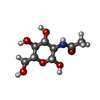 ChemComp-NAG: |
-Experimental details
-Structure determination
| Method | cryo EM |
|---|---|
 Processing Processing | single particle reconstruction |
| Aggregation state | particle |
-Sample preparation
| Buffer | pH: 6 |
|---|---|
| Vitrification | Cryogen name: ETHANE |
- Electron microscopy
| Microscope | TFS KRIOS |
|---|---|
| Image recording | Film or detector model: GATAN K3 BIOCONTINUUM (6k x 4k) / Average electron dose: 50.0 e/Å2 |
| Electron beam | Acceleration voltage: 300 kV / Electron source:  FIELD EMISSION GUN FIELD EMISSION GUN |
| Electron optics | Illumination mode: FLOOD BEAM / Imaging mode: BRIGHT FIELD / Nominal defocus max: 3.0 µm / Nominal defocus min: 1.5 µm |
| Experimental equipment |  Model: Titan Krios / Image courtesy: FEI Company |
