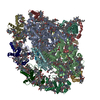
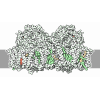
- EMDB-66073: PSI complex of A.thaliana isolated using DOC based Clear-Native-P... -
+
Open data
ID or keywords:
Loading...
-
Basic information
Entry
Database: EMDB / ID: EMD-66073
Title
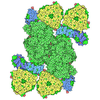
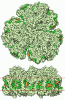
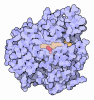
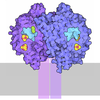
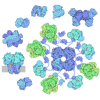
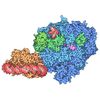
PSI complex of A.thaliana isolated using DOC based Clear-Native-PAGE method
Map data
Sample
Complex: PSI complex of A.thaliana isolated DOC based Clear-Native-PAGE method
Protein or peptide: x 17 types
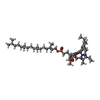
Ligand: x 13 types
Keywords
Photosystem I complex / membrane protein / PHOTOSYNTHESIS
Function / homology
Function and homology information
photosynthetic NADP+ reduction / photosystem I stabilization / chloroplast photosystem I / chloroplast stromal thylakoid / response to low light intensity stimulus / plastoglobule / chloroplast membrane / response to high light intensity / chloroplast thylakoid / photosynthesis, light harvesting in photosystem I ...photosynthetic NADP+ reduction / photosystem I stabilization / chloroplast photosystem I / chloroplast stromal thylakoid / response to low light intensity stimulus / plastoglobule / chloroplast membrane / response to high light intensity / chloroplast thylakoid / photosynthesis, light harvesting in photosystem I / chloroplast thylakoid lumen / thylakoid / chloroplast envelope / photosystem I reaction center / photosystem I / photosynthetic electron transport in photosystem I / photosystem I / plastid / chlorophyll binding / chloroplast thylakoid membrane / response to light stimulus / response to cold / photosynthesis / chloroplast / 4 iron, 4 sulfur cluster binding / calmodulin binding / electron transfer activity / oxidoreductase activity / protein stabilization / protein domain specific binding / mRNA binding / magnesium ion binding / extracellular region / metal ion binding / nucleus / plasma membrane / cytosol Similarity search - Function
Photosystem I reaction centre subunit N, chloroplastic / Photosystem I reaction centre subunit N superfamily / Photosystem I reaction centre subunit N (PSAN or PSI-N) / Photosystem I PsaH, reaction centre subunit VI / Photosystem I reaction centre subunit VI / Photosystem I reaction center subunit V / 4Fe-4S dicluster domain / Photosystem I reaction center subunit psaK, plant / Photosystem I reaction center subunit V/PsaK, plant / Photosystem I PsaG/PsaK domain, chloroplastic ...Photosystem I reaction centre subunit N, chloroplastic / Photosystem I reaction centre subunit N superfamily / Photosystem I reaction centre subunit N (PSAN or PSI-N) / Photosystem I PsaH, reaction centre subunit VI / Photosystem I reaction centre subunit VI / Photosystem I reaction center subunit V / 4Fe-4S dicluster domain / Photosystem I reaction center subunit psaK, plant / Photosystem I reaction center subunit V/PsaK, plant / Photosystem I PsaG/PsaK domain, chloroplastic / Photosystem I reaction centre subunit PsaK superfamily / Photosystem I psaG and psaK proteins signature. / Photosystem I reaction center subunit V/PsaK / Photosystem I psaG / psaK / Photosystem I PsaL, reaction centre subunit XI / Photosystem I, reaction centre subunit XI / Photosystem I PsaL, reaction centre subunit XI superfamily / Photosystem I reaction centre subunit XI / Photosystem I reaction centre subunit VIII / Photosystem I reaction centre subunit VIII / Chlorophyll A-B binding protein, plant and chromista / Chlorophyll A-B binding protein / Chlorophyll A-B binding protein / Photosystem I reaction centre subunit VIII superfamily / Photosystem I PsaF, reaction centre subunit III / Photosystem I PsaF, reaction centre subunit III superfamily / Photosystem I reaction centre subunit III / Photosystem I PsaD / Photosystem I, reaction centre subunit PsaD superfamily / PsaD / Photosystem I PsaE, reaction centre subunit IV / Photosystem I reaction centre subunit IV / PsaE / Photosystem I PsaJ, reaction centre subunit IX superfamily / Photosystem I PsaJ, reaction centre subunit IX / Photosystem I reaction centre subunit IX / PsaJ / Photosystem I PsaA / Photosystem I protein PsaC / Photosystem I PsaB / Photosystem I PsaA/PsaB, conserved site / Photosystem I psaA and psaB proteins signature. / : / Photosystem I PsaA/PsaB / Photosystem I PsaA/PsaB superfamily / Photosystem I psaA/psaB protein / Electron transport accessory-like domain superfamily / 4Fe-4S ferredoxin, iron-sulphur binding, conserved site / 4Fe-4S ferredoxin-type iron-sulfur binding region signature. / 4Fe-4S ferredoxin-type iron-sulfur binding domain profile. / 4Fe-4S ferredoxin-type, iron-sulphur binding domain Similarity search - Domain/homology
Chlorophyll a-b binding protein 4, chloroplastic / Photosystem I reaction center subunit N, chloroplastic / Photosystem I P700 chlorophyll a apoprotein A1 / Photosystem I P700 chlorophyll a apoprotein A2 / Photosystem I reaction center subunit VIII / Photosystem I reaction center subunit IX / Photosystem I iron-sulfur center / Chlorophyll a-b binding protein 6, chloroplastic / Photosystem I reaction center subunit V, chloroplastic / Photosystem I reaction center subunit IV A, chloroplastic ...Chlorophyll a-b binding protein 4, chloroplastic / Photosystem I reaction center subunit N, chloroplastic / Photosystem I P700 chlorophyll a apoprotein A1 / Photosystem I P700 chlorophyll a apoprotein A2 / Photosystem I reaction center subunit VIII / Photosystem I reaction center subunit IX / Photosystem I iron-sulfur center / Chlorophyll a-b binding protein 6, chloroplastic / Photosystem I reaction center subunit V, chloroplastic / Photosystem I reaction center subunit IV A, chloroplastic / Photosystem I reaction center subunit II-2, chloroplastic / Photosystem I reaction center subunit III, chloroplastic / Photosystem I reaction center subunit XI, chloroplastic / Photosystem I reaction center subunit psaK, chloroplastic / Photosystem I reaction center subunit VI-2, chloroplastic / Photosystem I chlorophyll a/b-binding protein 3-1, chloroplastic / Photosystem I chlorophyll a/b-binding protein 2, chloroplastic Similarity search - Component
Biological species
Arabidopsis thaliana (thale cress)
Method
single particle reconstruction / cryo EM / Resolution: 2.18 Å
Journal: Acta Crystallogr D Struct Biol / Year: 2019 Title: Macromolecular structure determination using X-rays, neutrons and electrons: recent developments in Phenix. Authors: Dorothee Liebschner / Pavel V Afonine / Matthew L Baker / Gábor Bunkóczi / Vincent B Chen / Tristan I Croll / Bradley Hintze / Li Wei Hung / Swati Jain / Airlie J McCoy / Nigel W Moriarty ...Authors: Dorothee Liebschner / Pavel V Afonine / Matthew L Baker / Gábor Bunkóczi / Vincent B Chen / Tristan I Croll / Bradley Hintze / Li Wei Hung / Swati Jain / Airlie J McCoy / Nigel W Moriarty / Robert D Oeffner / Billy K Poon / Michael G Prisant / Randy J Read / Jane S Richardson / David C Richardson / Massimo D Sammito / Oleg V Sobolev / Duncan H Stockwell / Thomas C Terwilliger / Alexandre G Urzhumtsev / Lizbeth L Videau / Christopher J Williams / Paul D Adams / Abstract: Diffraction (X-ray, neutron and electron) and electron cryo-microscopy are powerful methods to determine three-dimensional macromolecular structures, which are required to understand biological ...Diffraction (X-ray, neutron and electron) and electron cryo-microscopy are powerful methods to determine three-dimensional macromolecular structures, which are required to understand biological processes and to develop new therapeutics against diseases. The overall structure-solution workflow is similar for these techniques, but nuances exist because the properties of the reduced experimental data are different. Software tools for structure determination should therefore be tailored for each method. Phenix is a comprehensive software package for macromolecular structure determination that handles data from any of these techniques. Tasks performed with Phenix include data-quality assessment, map improvement, model building, the validation/rebuilding/refinement cycle and deposition. Each tool caters to the type of experimental data. The design of Phenix emphasizes the automation of procedures, where possible, to minimize repetitive and time-consuming manual tasks, while default parameters are chosen to encourage best practice. A graphical user interface provides access to many command-line features of Phenix and streamlines the transition between programs, project tracking and re-running of previous tasks.
Model: Quantifoil R1.2/1.3 / Material: COPPER / Mesh: 200 / Support film - Material: CARBON / Support film - topology: CONTINUOUS / Support film - Film thickness: 5 / Pretreatment - Type: GLOW DISCHARGE / Pretreatment - Atmosphere: AIR
Vitrification
Cryogen name: ETHANE / Chamber humidity: 100 % / Chamber temperature: 277 K / Instrument: FEI VITROBOT MARK IV
-
Electron microscopy
Microscope
TFS KRIOS
Specialist optics
Spherical aberration corrector: Microscope was modified with Cs corrector Energy filter - Name: GIF Bioquantum / Energy filter - Slit width: 20 eV
Image recording
Film or detector model: GATAN K3 (6k x 4k) / Number grids imaged: 1 / Number real images: 8764 / Average exposure time: 1.651 sec. / Average electron dose: 40.0 e/Å2
Electron beam
Acceleration voltage: 300 kV / Electron source: FIELD EMISSION GUN
In the structure databanks used in Yorodumi, some data are registered as the other names, "COVID-19 virus" and "2019-nCoV". Here are the details of the virus and the list of structure data.
Jan 31, 2019. EMDB accession codes are about to change! (news from PDBe EMDB page)
EMDB accession codes are about to change! (news from PDBe EMDB page)
The allocation of 4 digits for EMDB accession codes will soon come to an end. Whilst these codes will remain in use, new EMDB accession codes will include an additional digit and will expand incrementally as the available range of codes is exhausted. The current 4-digit format prefixed with “EMD-” (i.e. EMD-XXXX) will advance to a 5-digit format (i.e. EMD-XXXXX), and so on. It is currently estimated that the 4-digit codes will be depleted around Spring 2019, at which point the 5-digit format will come into force.
The EM Navigator/Yorodumi systems omit the EMD- prefix.
Related info.:Q: What is EMD? / ID/Accession-code notation in Yorodumi/EM Navigator
Yorodumi is a browser for structure data from EMDB, PDB, SASBDB, etc.
This page is also the successor to EM Navigator detail page, and also detail information page/front-end page for Omokage search.
The word "yorodu" (or yorozu) is an old Japanese word meaning "ten thousand". "mi" (miru) is to see.
Related info.:EMDB / PDB / SASBDB / Comparison of 3 databanks / Yorodumi Search / Aug 31, 2016. New EM Navigator & Yorodumi / Yorodumi Papers / Jmol/JSmol / Function and homology information / Changes in new EM Navigator and Yorodumi
 Movie
Movie Controller

 Yorodumi
 Open data
 Basic information
 Map data
 Sample
 Keywords
 Function and homology information
 Arabidopsis thaliana (thale cress)
 Authors
 Japan, 2 items
  Citation


 Structure visualization
 Downloads & links
 emd_66073.png
 http://ftp.pdbj.org/pub/emdb/structures/EMD-66073
 Z (Sec.)
 Y (Row.)
 X (Col.)


 Sample components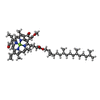

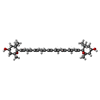
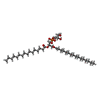
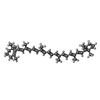
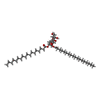
 Processing
 Electron microscopy
 FIELD EMISSION GUN