 Movie
Movie Controller

[English] 日本語
 Yorodumi
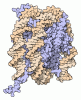
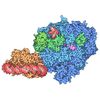
- EMDB-65714: Cryo-EM structure of a stacked human nucleosome core particle dim... -
+ Open data

- Basic information
| Entry |  | |||||||||
|---|---|---|---|---|---|---|---|---|---|---|
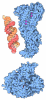
| Title | Cryo-EM structure of a stacked human nucleosome core particle dimer (type 2) assembled with DNA truncated at SHL-5.5 | |||||||||
 Map data Map data | ||||||||||
 Sample Sample |
| |||||||||
 Keywords Keywords | Nucleosome / chromatin / cryo-EM / Nucleosome stacking / GENE REGULATION/DNA / GENE REGULATION-DNA complex | |||||||||
| Function / homology |  Function and homology information Function and homology informationnegative regulation of megakaryocyte differentiation / protein localization to CENP-A containing chromatin / Chromatin modifying enzymes / Replacement of protamines by nucleosomes in the male pronucleus / Packaging Of Telomere Ends / Recognition and association of DNA glycosylase with site containing an affected purine / Cleavage of the damaged purine / telomere organization / Interleukin-7 signaling / Deposition of new CENPA-containing nucleosomes at the centromere ...negative regulation of megakaryocyte differentiation / protein localization to CENP-A containing chromatin / Chromatin modifying enzymes / Replacement of protamines by nucleosomes in the male pronucleus / Packaging Of Telomere Ends / Recognition and association of DNA glycosylase with site containing an affected purine / Cleavage of the damaged purine / telomere organization / Interleukin-7 signaling / Deposition of new CENPA-containing nucleosomes at the centromere / Recognition and association of DNA glycosylase with site containing an affected pyrimidine / Cleavage of the damaged pyrimidine / RNA Polymerase I Promoter Opening / Inhibition of DNA recombination at telomere / Assembly of the ORC complex at the origin of replication / SUMOylation of chromatin organization proteins / Regulation of endogenous retroelements by the Human Silencing Hub (HUSH) complex / Meiotic synapsis / DNA methylation / Condensation of Prophase Chromosomes / Chromatin modifications during the maternal to zygotic transition (MZT) / SIRT1 negatively regulates rRNA expression / HCMV Late Events / ERCC6 (CSB) and EHMT2 (G9a) positively regulate rRNA expression / PRC2 methylates histones and DNA / Regulation of endogenous retroelements by KRAB-ZFP proteins / Defective pyroptosis / HDACs deacetylate histones / Transcriptional regulation by small RNAs / Regulation of endogenous retroelements by Piwi-interacting RNAs (piRNAs) / RNA Polymerase I Promoter Escape / Nonhomologous End-Joining (NHEJ) / epigenetic regulation of gene expression / HDMs demethylate histones / Activated PKN1 stimulates transcription of AR (androgen receptor) regulated genes KLK2 and KLK3 / RUNX1 regulates genes involved in megakaryocyte differentiation and platelet function / Negative Regulation of CDH1 Gene Transcription / NoRC negatively regulates rRNA expression / PKMTs methylate histone lysines / G2/M DNA damage checkpoint / Formation of the beta-catenin:TCF transactivating complex / B-WICH complex positively regulates rRNA expression / DNA Damage/Telomere Stress Induced Senescence / Meiotic recombination / Pre-NOTCH Transcription and Translation / Activation of anterior HOX genes in hindbrain development during early embryogenesis / Transcriptional regulation of granulopoiesis / nucleosomal DNA binding / RMTs methylate histone arginines / Metalloprotease DUBs / innate immune response in mucosa / HCMV Early Events / structural constituent of chromatin / nucleosome / Regulation of PD-L1(CD274) transcription / UCH proteinases / nucleosome assembly / HATs acetylate histones / Recruitment and ATM-mediated phosphorylation of repair and signaling proteins at DNA double strand breaks / Factors involved in megakaryocyte development and platelet production / MLL4 and MLL3 complexes regulate expression of PPARG target genes in adipogenesis and hepatic steatosis / RUNX1 regulates transcription of genes involved in differentiation of HSCs / Dengue Virus-Host Interactions / Processing of DNA double-strand break ends / Senescence-Associated Secretory Phenotype (SASP) / antimicrobial humoral immune response mediated by antimicrobial peptide / heterochromatin formation / antibacterial humoral response / Oxidative Stress Induced Senescence / chromatin organization / Estrogen-dependent gene expression / chromosome, telomeric region / defense response to Gram-positive bacterium / Ub-specific processing proteases / cadherin binding / protein heterodimerization activity / Amyloid fiber formation / protein-containing complex / DNA binding / : / RNA binding / extracellular exosome / extracellular region / nucleoplasm / membrane / nucleus Similarity search - Function | |||||||||
| Biological species |  Homo sapiens (human) / Homo sapiens (human) /   Escherichia coli (E. coli) Escherichia coli (E. coli) | |||||||||
| Method | single particle reconstruction / cryo EM / Resolution: 6.26 Å | |||||||||
 Authors Authors | Mu Z / Huang J | |||||||||
| Funding support | 1 items
| |||||||||
 Citation Citation | Journal: To Be Published Title: Structural basis for nucleosome stacking diversity mediated by solvent-exposed histone interfaces Authors: Mu Z / Huang J | |||||||||
| History |
|
- Structure visualization
| Supplemental images |
|---|

- Downloads & links
-EMDB archive
| Map data | emd_65714.map.gz | 58.8 MB | EMDB map data format | |
|---|---|---|---|---|
| Header (meta data) | emd-65714-v30.xmlemd-65714.xml | 17.3 KB 17.3 KB | Display Display | EMDB header |
| Images |  emd_65714.png emd_65714.png | 172.8 KB | ||
| Filedesc metadata | emd-65714.cif.gz | 6.2 KB | ||
| Archive directory |  https://data.pdbj.org/pub/emdb/structures/EMD-65714ftp://data.pdbj.org/pub/emdb/structures/EMD-65714 https://data.pdbj.org/pub/emdb/structures/EMD-65714ftp://data.pdbj.org/pub/emdb/structures/EMD-65714 | HTTPS FTP |
-Related structure data
| Related structure data |  9w73MC  9w6eC  9w6fC  9w6gC  9w6hC  9w6iC  9w6jC  9w6kC  9w6lC  9w6mC  9w6nC  9w6oC  9w6pC  9w6qC  9w6tC  9w71C  9w72C C: citing same article ( M: atomic model generated by this map |
|---|---|
| Similar structure data |


-Links
| EMDB pages | EMDB (EBI/PDBe) / EMDataResource |
|---|---|
| Related items in Molecule of the Month |
-Map
| File | Download / File: emd_65714.map.gz / Format: CCP4 / Size: 64 MB / Type: IMAGE STORED AS FLOATING POINT NUMBER (4 BYTES) | ||||||||||||||||||||||||||||||||||||
|---|---|---|---|---|---|---|---|---|---|---|---|---|---|---|---|---|---|---|---|---|---|---|---|---|---|---|---|---|---|---|---|---|---|---|---|---|---|
| Projections & slices | Image control
Images are generated by Spider. | ||||||||||||||||||||||||||||||||||||
| Voxel size | X=Y=Z: 1.1 Å | ||||||||||||||||||||||||||||||||||||
| Density |
| ||||||||||||||||||||||||||||||||||||
| Symmetry | Space group: 1 | ||||||||||||||||||||||||||||||||||||
| Details | EMDB XML:
|
 Z (Sec.)
 Y (Row.)
 X (Col.)


-Supplemental data
- Sample components
-Entire : SHL-5.5 di-NCP type 2
| Entire | Name: SHL-5.5 di-NCP type 2 |
|---|---|
| Components |
|
-Supramolecule #1: SHL-5.5 di-NCP type 2
| Supramolecule | Name: SHL-5.5 di-NCP type 2 / type: complex / ID: 1 / Parent: 0 / Macromolecule list: all |
|---|---|
| Source (natural) | Organism: Homo sapiens (human) |
-Macromolecule #1: Histone H3.1
| Macromolecule | Name: Histone H3.1 / type: protein_or_peptide / ID: 1 / Number of copies: 4 / Enantiomer: LEVO |
|---|---|
| Source (natural) | Organism: Homo sapiens (human) |
| Molecular weight | Theoretical: 15.305969 KDa |
| Recombinant expression | Organism: Escherichia coli (E. coli) |
| Sequence | String: ARTKQTARKS TGGKAPRKQL ATKAARKSAP ATGGVKKPHR YRPGTVALRE IRRYQKSTEL LIRKLPFQRL VREIAQDFKT DLRFQSSAV MALQEACEAY LVGLFEDTNL CAIHAKRVTI MPKDIQLARR IRGERA UniProtKB: Histone H3.1 |
-Macromolecule #2: Histone H4
| Macromolecule | Name: Histone H4 / type: protein_or_peptide / ID: 2 / Number of copies: 4 / Enantiomer: LEVO |
|---|---|
| Source (natural) | Organism: Homo sapiens (human) |
| Molecular weight | Theoretical: 11.263231 KDa |
| Recombinant expression | Organism: Escherichia coli (E. coli) |
| Sequence | String: SGRGKGGKGL GKGGAKRHRK VLRDNIQGIT KPAIRRLARR GGVKRISGLI YEETRGVLKV FLENVIRDAV TYTEHAKRKT VTAMDVVYA LKRQGRTLYG FGG UniProtKB: Histone H4 |
-Macromolecule #3: Histone H2A type 1-D
| Macromolecule | Name: Histone H2A type 1-D / type: protein_or_peptide / ID: 3 / Number of copies: 4 / Enantiomer: LEVO |
|---|---|
| Source (natural) | Organism: Homo sapiens (human) |
| Molecular weight | Theoretical: 14.006342 KDa |
| Recombinant expression | Organism: Escherichia coli (E. coli) |
| Sequence | String: SGRGKQGGKA RAKAKTRSSR AGLQFPVGRV HRLLRKGNYS ERVGAGAPVY LAAVLEYLTA EILELAGNAA RDNKKTRIIP RHLQLAIRN DEELNKLLGK VTIAQGGVLP NIQAVLLPKK TESHHKAKGK UniProtKB: Histone H2A type 1-D |
-Macromolecule #4: Histone H2B type 2-E
| Macromolecule | Name: Histone H2B type 2-E / type: protein_or_peptide / ID: 4 / Number of copies: 4 / Enantiomer: LEVO |
|---|---|
| Source (natural) | Organism: Homo sapiens (human) |
| Molecular weight | Theoretical: 13.820045 KDa |
| Recombinant expression | Organism: Escherichia coli (E. coli) |
| Sequence | String: PEPAKSAPAP KKGSKKAVTK AQKKDGKKRK RSRKESYSIY VYKVLKQVHP DTGISSKAMG IMNSFVNDIF ERIAGEASRL AHYNKRSTI TSREIQTAVR LLLPGELAKH AVSEGTKAVT KYTSSK UniProtKB: Histone H2B type 2-E |
-Macromolecule #5: DNA (129-MER)
| Macromolecule | Name: DNA (129-MER) / type: dna / ID: 5 / Number of copies: 2 / Classification: DNA |
|---|---|
| Source (natural) | Organism: Escherichia coli (E. coli) |
| Molecular weight | Theoretical: 40.010469 KDa |
| Sequence | String: (DA)(DT)(DC)(DC)(DG)(DT)(DG)(DC)(DC)(DT) (DG)(DG)(DA)(DG)(DA)(DC)(DT)(DA)(DG)(DG) (DG)(DA)(DG)(DT)(DA)(DA)(DT)(DC)(DC) (DC)(DC)(DT)(DT)(DG)(DG)(DC)(DG)(DG)(DT) (DT) (DA)(DA)(DA)(DA)(DC)(DG) ...String: (DA)(DT)(DC)(DC)(DG)(DT)(DG)(DC)(DC)(DT) (DG)(DG)(DA)(DG)(DA)(DC)(DT)(DA)(DG)(DG) (DG)(DA)(DG)(DT)(DA)(DA)(DT)(DC)(DC) (DC)(DC)(DT)(DT)(DG)(DG)(DC)(DG)(DG)(DT) (DT) (DA)(DA)(DA)(DA)(DC)(DG)(DC)(DG) (DG)(DG)(DG)(DG)(DA)(DC)(DA)(DG)(DC)(DG) (DC)(DG) (DT)(DA)(DC)(DG)(DT)(DG)(DC) (DG)(DT)(DT)(DT)(DA)(DA)(DG)(DC)(DG)(DG) (DT)(DG)(DC) (DT)(DA)(DG)(DA)(DG)(DC) (DT)(DG)(DT)(DC)(DT)(DA)(DC)(DG)(DA)(DC) (DC)(DA)(DA)(DT) (DT)(DG)(DA)(DG)(DC) (DG)(DG)(DC)(DC)(DT)(DC)(DG)(DG)(DC)(DA) (DC)(DC)(DG)(DG)(DG) (DA)(DT)(DT)(DC) (DT)(DC)(DG)(DA)(DT) |
-Macromolecule #6: DNA (129-MER)
| Macromolecule | Name: DNA (129-MER) / type: dna / ID: 6 / Number of copies: 2 / Classification: DNA |
|---|---|
| Source (natural) | Organism: Escherichia coli (E. coli) |
| Molecular weight | Theoretical: 39.619238 KDa |
| Sequence | String: (DA)(DT)(DC)(DG)(DA)(DG)(DA)(DA)(DT)(DC) (DC)(DC)(DG)(DG)(DT)(DG)(DC)(DC)(DG)(DA) (DG)(DG)(DC)(DC)(DG)(DC)(DT)(DC)(DA) (DA)(DT)(DT)(DG)(DG)(DT)(DC)(DG)(DT)(DA) (DG) (DA)(DC)(DA)(DG)(DC)(DT) ...String: (DA)(DT)(DC)(DG)(DA)(DG)(DA)(DA)(DT)(DC) (DC)(DC)(DG)(DG)(DT)(DG)(DC)(DC)(DG)(DA) (DG)(DG)(DC)(DC)(DG)(DC)(DT)(DC)(DA) (DA)(DT)(DT)(DG)(DG)(DT)(DC)(DG)(DT)(DA) (DG) (DA)(DC)(DA)(DG)(DC)(DT)(DC)(DT) (DA)(DG)(DC)(DA)(DC)(DC)(DG)(DC)(DT)(DT) (DA)(DA) (DA)(DC)(DG)(DC)(DA)(DC)(DG) (DT)(DA)(DC)(DG)(DC)(DG)(DC)(DT)(DG)(DT) (DC)(DC)(DC) (DC)(DC)(DG)(DC)(DG)(DT) (DT)(DT)(DT)(DA)(DA)(DC)(DC)(DG)(DC)(DC) (DA)(DA)(DG)(DG) (DG)(DG)(DA)(DT)(DT) (DA)(DC)(DT)(DC)(DC)(DC)(DT)(DA)(DG)(DT) (DC)(DT)(DC)(DC)(DA) (DG)(DG)(DC)(DA) (DC)(DG)(DG)(DA)(DT) |
-Experimental details
-Structure determination
| Method | cryo EM |
|---|---|
 Processing Processing | single particle reconstruction |
| Aggregation state | particle |
-Sample preparation
| Buffer | pH: 8 |
|---|---|
| Vitrification | Cryogen name: ETHANE |
- Electron microscopy
| Microscope | FEI TALOS ARCTICA |
|---|---|
| Image recording | Film or detector model: GATAN K3 (6k x 4k) / Average electron dose: 50.0 e/Å2 |
| Electron beam | Acceleration voltage: 300 kV / Electron source:  FIELD EMISSION GUN FIELD EMISSION GUN |
| Electron optics | Illumination mode: OTHER / Imaging mode: BRIGHT FIELD / Nominal defocus max: 3.0 µm / Nominal defocus min: 0.8 µm |
| Experimental equipment | 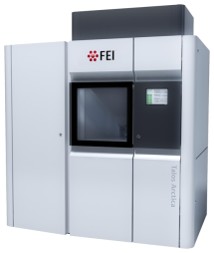 Model: Talos Arctica / Image courtesy: FEI Company |
