National Natural Science Foundation of China (NSFC)
32472567
China
Citation
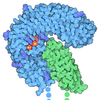
Journal: Mol Plant / Year: 2025 Title: Recognition of a phytocytokine by the DEPR1-SERK2 receptor complex confers multi-pathogen resistance in wheat. Authors: Lijun Wang / Jun Zhao / Chuanchun Yin / Hongxu Li / Yanan Xiao / Cuicui Du / Zhaoxi Lu / Yongjian Zhang / Fangshuai Jia / Jiaxin Hao / Jinghui Yan / Yi Zhang / Jian Li / Xinhua Ding / Zhifu ...Authors: Lijun Wang / Jun Zhao / Chuanchun Yin / Hongxu Li / Yanan Xiao / Cuicui Du / Zhaoxi Lu / Yongjian Zhang / Fangshuai Jia / Jiaxin Hao / Jinghui Yan / Yi Zhang / Jian Li / Xinhua Ding / Zhifu Han / Haitao Cui / Jijie Chai / Xingwang Deng / Cheng Chi / Shuguo Hou / Abstract: The recognition of plant-derived immunogenic peptides, known as phytocytokines (PCKs), by cell surface receptors triggers immune signaling pathways that bolster basal plant defense against pathogens. ...The recognition of plant-derived immunogenic peptides, known as phytocytokines (PCKs), by cell surface receptors triggers immune signaling pathways that bolster basal plant defense against pathogens. However, little is known about the molecular mechanisms that underlie PCK-mediated immune regulation in wheat. In this study, we identified a wheat PCK, delta-like PCK (DEP), that robustly activates immune responses and confers multi-pathogen resistance. DEP is perceived by the leucine-rich repeat (LRR) receptor kinases (RKs) DEP RECEPTOR 1 (DEPR1) and SOMATIC EMBRYOGENESIS RECEPTOR-LIKE KINASE 2 (SERK2) and triggers DEPR1- and SERK2-dependent immune signaling. Cryogenic electron microscopy structural analysis revealed that DEP2 binds to the extracellular LRR domain of DEPR1 and recruits SERK2 through a disulfide-bond-stabilized loop to promote DEPR1-SERK2 heterodimerization. Furthermore, we showed that the DEP2-DEPR1-SERK2 module confers wheat resistance to Xanthomonas translucens, Fusarium graminearum, and Fusarium pseudograminearum. We also demonstrated that this module enhances wheat resistance to X. translucens by antagonizing abscisic acid signaling. Collectively, our study reveals a novel PCK-mediated immune signaling pathway and suggests a promising strategy for engineering multi-pathogen resistance in wheat.
In the structure databanks used in Yorodumi, some data are registered as the other names, "COVID-19 virus" and "2019-nCoV". Here are the details of the virus and the list of structure data.
Jan 31, 2019. EMDB accession codes are about to change! (news from PDBe EMDB page)
EMDB accession codes are about to change! (news from PDBe EMDB page)
The allocation of 4 digits for EMDB accession codes will soon come to an end. Whilst these codes will remain in use, new EMDB accession codes will include an additional digit and will expand incrementally as the available range of codes is exhausted. The current 4-digit format prefixed with “EMD-” (i.e. EMD-XXXX) will advance to a 5-digit format (i.e. EMD-XXXXX), and so on. It is currently estimated that the 4-digit codes will be depleted around Spring 2019, at which point the 5-digit format will come into force.
The EM Navigator/Yorodumi systems omit the EMD- prefix.
Related info.:Q: What is EMD? / ID/Accession-code notation in Yorodumi/EM Navigator
Yorodumi is a browser for structure data from EMDB, PDB, SASBDB, etc.
This page is also the successor to EM Navigator detail page, and also detail information page/front-end page for Omokage search.
The word "yorodu" (or yorozu) is an old Japanese word meaning "ten thousand". "mi" (miru) is to see.
Related info.:EMDB / PDB / SASBDB / Comparison of 3 databanks / Yorodumi Search / Aug 31, 2016. New EM Navigator & Yorodumi / Yorodumi Papers / Jmol/JSmol / Function and homology information / Changes in new EM Navigator and Yorodumi
 Movie
Movie Controller


 Open data
 Basic information
 Map data
 Sample
 Keywords
 Function and homology information
 Triticum aestivum (bread wheat)
 Authors
 China, 1 items
  Citation
 Structure visualization
 Downloads & links
 emd_64376.png
 http://ftp.pdbj.org/pub/emdb/structures/EMD-64376
 Z (Sec.)
 Y (Row.)
 X (Col.)


 Sample components
 Trichoplusia ni (cabbage looper)
 Processing
 Electron microscopy
 FIELD EMISSION GUN
