National Natural Science Foundation of China (NSFC)
China
Citation
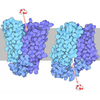
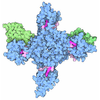
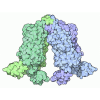
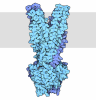
Journal: Proc Natl Acad Sci U S A / Year: 2026 Title: Molecular basis of the higher-order assembly of CatSper. Authors: Qikui Xu / Shiyi Lin / Qingqing Zhao / Yanfei Ru / Hang Kang / Xuhui Zeng / Min Jiang / Zhen Yan / Jianping Wu / Abstract: CatSper serves as the primary Ca entry pathway in the principal piece of sperm flagellum and is crucial for sperm motility and fertility. Sperm lacking functional CatSper channels fail to undergo ...CatSper serves as the primary Ca entry pathway in the principal piece of sperm flagellum and is crucial for sperm motility and fertility. Sperm lacking functional CatSper channels fail to undergo hyperactivation during fertilization, leading to complete male infertility. Along the longitudinal axis of the sperm flagellum, staggered CatSper complexes align in a hand-in-hand arrangement, forming a distinctive quadrilinear zigzag arrays known as CatSper nanodomains. However, the molecular details of how CatSper oligomerizes to form such higher-order assembly remain unclear. In this study, we present the cryoelectron microscopy (cryo-EM) structures of native CatSper dimer (~1.5 MDa) and trimer (~2.3 MDa) megacomplexes, which represent the fundamental units of the zigzag array. We reveal the overall configuration of the zigzag assembly by characterizing the two distinct dimer interfaces that mediate CatSper oligomerization. Specifically, we elucidate the interaction details of two extracellular interfaces formed by CATSPERβ and CATSPERγ at the two dimer interfaces, respectively, and find that CATSPERη, a recently identified component of CatSper, constitutes the transmembrane interface within one of these dimer interfaces. Functional studies in mice demonstrate that CATSPERη is essential for the formation of functional CatSper on the sperm flagellum, and CATSPERη-deficient sperm fail to hyperactivate during fertilization, resulting in male infertility both in vivo and in vitro. Our data provide insights into the higher-order assembly of CatSper at the molecular level, offering clues for the development of male contraceptives.
In the structure databanks used in Yorodumi, some data are registered as the other names, "COVID-19 virus" and "2019-nCoV". Here are the details of the virus and the list of structure data.
Jan 31, 2019. EMDB accession codes are about to change! (news from PDBe EMDB page)
EMDB accession codes are about to change! (news from PDBe EMDB page)
The allocation of 4 digits for EMDB accession codes will soon come to an end. Whilst these codes will remain in use, new EMDB accession codes will include an additional digit and will expand incrementally as the available range of codes is exhausted. The current 4-digit format prefixed with “EMD-” (i.e. EMD-XXXX) will advance to a 5-digit format (i.e. EMD-XXXXX), and so on. It is currently estimated that the 4-digit codes will be depleted around Spring 2019, at which point the 5-digit format will come into force.
The EM Navigator/Yorodumi systems omit the EMD- prefix.
Related info.:Q: What is EMD? / ID/Accession-code notation in Yorodumi/EM Navigator
Yorodumi is a browser for structure data from EMDB, PDB, SASBDB, etc.
This page is also the successor to EM Navigator detail page, and also detail information page/front-end page for Omokage search.
The word "yorodu" (or yorozu) is an old Japanese word meaning "ten thousand". "mi" (miru) is to see.
Related info.:EMDB / PDB / SASBDB / Comparison of 3 databanks / Yorodumi Search / Aug 31, 2016. New EM Navigator & Yorodumi / Yorodumi Papers / Jmol/JSmol / Function and homology information / Changes in new EM Navigator and Yorodumi
 Movie
Movie Controller


 Open data
 Basic information
 Map data
 Sample
 Keywords
 Function and homology information
 Mus musculus (house mouse)
 Authors
 China, 1 items
  Citation
 Structure visualization
 Downloads & links
 emd_64017.png
 http://ftp.pdbj.org/pub/emdb/structures/EMD-64017


 Z (Sec.)
 Y (Row.)
 X (Col.)


 Sample components
 Processing
 Electron microscopy
 FIELD EMISSION GUN
