National Natural Science Foundation of China (NSFC)
31871449
China
Citation
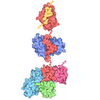
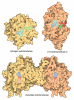
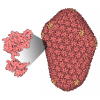
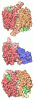
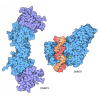
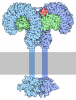
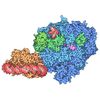
Journal: Nat Struct Mol Biol / Year: 2026 Title: The maternal PADI6-UHRF1-UBE2D complex regulates ubiquitination during oocyte maturation and embryogenesis. Authors: Jinhong Li / Yuechao Lu / Zhili Xia / Pengliang Chi / Qianqian Qi / Sibei Liu / Sicheng Ju / Jialu Li / Zihan Zhang / Zhuo Han / Qingting Liu / Wenbo Meng / Jing Chen / Xiang Wang / Li Guo / ...Authors: Jinhong Li / Yuechao Lu / Zhili Xia / Pengliang Chi / Qianqian Qi / Sibei Liu / Sicheng Ju / Jialu Li / Zihan Zhang / Zhuo Han / Qingting Liu / Wenbo Meng / Jing Chen / Xiang Wang / Li Guo / Lei Li / Wei Huang / Lunzhi Dai / Junhong Han / Shaorong Gao / Dong Deng / Abstract: Proteostasis in mammalian oocytes is vital for successful reproduction. The cytoplasmic lattices (CPLs) of oocytes store essential maternal proteins for early embryo development. Here we show that ...Proteostasis in mammalian oocytes is vital for successful reproduction. The cytoplasmic lattices (CPLs) of oocytes store essential maternal proteins for early embryo development. Here we show that PADI6, a core component of CPLs, forms a conserved ternary complex that we term MPU for maternal PADI6-UHRF1-UBE2D. The MPU complex regulates protein ubiquitination during oocyte maturation and early embryogenesis. We determined the cryo-electron microscopy structure of MPU and show that 86% (25/29) of clinically identified PADI6 missense variants disrupt MPU assembly, revealing a potential molecular mechanism linking dysregulation of ubiquitination on oocytes to abnormal embryonic development. Mechanistically, PADI6, with the assistance of UHRF1, sequesters UBE2D to prevent ubiquitin transfer from E2 to relevant substrate proteins, thereby suppressing the ubiquitination cascade. Therefore, our findings implicate PADI6 in the regulation of proteostasis by controlling the ubiquitination cascade, expanding our understanding of PADI6-dependent regulation of oocyte maturation and early embryogenesis.
In the structure databanks used in Yorodumi, some data are registered as the other names, "COVID-19 virus" and "2019-nCoV". Here are the details of the virus and the list of structure data.
Jan 31, 2019. EMDB accession codes are about to change! (news from PDBe EMDB page)
EMDB accession codes are about to change! (news from PDBe EMDB page)
The allocation of 4 digits for EMDB accession codes will soon come to an end. Whilst these codes will remain in use, new EMDB accession codes will include an additional digit and will expand incrementally as the available range of codes is exhausted. The current 4-digit format prefixed with “EMD-” (i.e. EMD-XXXX) will advance to a 5-digit format (i.e. EMD-XXXXX), and so on. It is currently estimated that the 4-digit codes will be depleted around Spring 2019, at which point the 5-digit format will come into force.
The EM Navigator/Yorodumi systems omit the EMD- prefix.
Related info.:Q: What is EMD? / ID/Accession-code notation in Yorodumi/EM Navigator
Yorodumi is a browser for structure data from EMDB, PDB, SASBDB, etc.
This page is also the successor to EM Navigator detail page, and also detail information page/front-end page for Omokage search.
The word "yorodu" (or yorozu) is an old Japanese word meaning "ten thousand". "mi" (miru) is to see.
Related info.:EMDB / PDB / SASBDB / Comparison of 3 databanks / Yorodumi Search / Aug 31, 2016. New EM Navigator & Yorodumi / Yorodumi Papers / Jmol/JSmol / Function and homology information / Changes in new EM Navigator and Yorodumi
 Movie
Movie Controller


 Open data
 Basic information
 Map data
 Sample
 Keywords
 Function and homology information
 Homo sapiens (human)
 Authors
 China, 1 items
  Citation
 Structure visualization
 Downloads & links
 emd_63270.png
 https://data.pdbj.org/pub/emdb/structures/EMD-63270

 Z (Sec.)
 Y (Row.)
 X (Col.)


 Sample components
 Processing
 Electron microscopy
 FIELD EMISSION GUN

