 Movie
Movie Controller


+ Open data

- Basic information
| Entry |  | |||||||||
|---|---|---|---|---|---|---|---|---|---|---|
| Title | Protease-activated receptor-2 (PAR2)/Gq complex | |||||||||
 Map data Map data | ||||||||||
 Sample Sample |
| |||||||||
 Keywords Keywords | GPCR-G-protein complex / MEMBRANE PROTEIN | |||||||||
| Function / homology |  Function and homology information Function and homology informationpositive regulation of neutrophil mediated killing of gram-negative bacterium / positive regulation of renin secretion into blood stream / positive regulation of eosinophil degranulation / leukocyte proliferation / mature conventional dendritic cell differentiation / positive regulation of glomerular filtration / regulation of chemokine (C-X-C motif) ligand 2 production / negative regulation of toll-like receptor 3 signaling pathway / positive regulation of toll-like receptor 3 signaling pathway / thrombin-activated receptor activity ...positive regulation of neutrophil mediated killing of gram-negative bacterium / positive regulation of renin secretion into blood stream / positive regulation of eosinophil degranulation / leukocyte proliferation / mature conventional dendritic cell differentiation / positive regulation of glomerular filtration / regulation of chemokine (C-X-C motif) ligand 2 production / negative regulation of toll-like receptor 3 signaling pathway / positive regulation of toll-like receptor 3 signaling pathway / thrombin-activated receptor activity / positive regulation of toll-like receptor 2 signaling pathway / positive regulation of actin filament depolymerization / cell-cell junction maintenance / positive regulation of toll-like receptor 4 signaling pathway / T cell activation involved in immune response / positive regulation of pseudopodium assembly / positive regulation of cytokine production involved in immune response / negative regulation of chemokine production / positive regulation of phagocytosis, engulfment / neutrophil activation / positive regulation of leukocyte chemotaxis / positive regulation of chemotaxis / establishment of endothelial barrier / positive regulation of positive chemotaxis / regulation of canonical NF-kappaB signal transduction / regulation of JNK cascade / negative regulation of JNK cascade / leukocyte migration / regulation of blood coagulation / positive regulation of Rho protein signal transduction / pseudopodium / positive regulation of interleukin-10 production / G-protein alpha-subunit binding / positive regulation of GTPase activity / negative regulation of tumor necrosis factor-mediated signaling pathway / positive regulation of superoxide anion generation / positive regulation of chemokine production / Peptide ligand-binding receptors / positive regulation of interleukin-1 beta production / positive regulation of interleukin-8 production / positive regulation of JNK cascade / negative regulation of insulin secretion / G protein-coupled receptor activity / positive regulation of interleukin-6 production / vasodilation / positive regulation of type II interferon production / Olfactory Signaling Pathway / Activation of the phototransduction cascade / G beta:gamma signalling through PLC beta / Presynaptic function of Kainate receptors / Thromboxane signalling through TP receptor / G protein-coupled acetylcholine receptor signaling pathway / Activation of G protein gated Potassium channels / Inhibition of voltage gated Ca2+ channels via Gbeta/gamma subunits / G-protein activation / Prostacyclin signalling through prostacyclin receptor / G beta:gamma signalling through CDC42 / blood coagulation / Glucagon signaling in metabolic regulation / G beta:gamma signalling through BTK / Synthesis, secretion, and inactivation of Glucagon-like Peptide-1 (GLP-1) / ADP signalling through P2Y purinoceptor 12 / photoreceptor disc membrane / Sensory perception of sweet, bitter, and umami (glutamate) taste / Glucagon-type ligand receptors / Adrenaline,noradrenaline inhibits insulin secretion / Vasopressin regulates renal water homeostasis via Aquaporins / Glucagon-like Peptide-1 (GLP1) regulates insulin secretion / G alpha (z) signalling events / cellular response to catecholamine stimulus / ADP signalling through P2Y purinoceptor 1 / ADORA2B mediated anti-inflammatory cytokines production / G beta:gamma signalling through PI3Kgamma / Cooperation of PDCL (PhLP1) and TRiC/CCT in G-protein beta folding / adenylate cyclase-activating dopamine receptor signaling pathway / GPER1 signaling / G-protein beta-subunit binding / cellular response to prostaglandin E stimulus / Inactivation, recovery and regulation of the phototransduction cascade / heterotrimeric G-protein complex / G alpha (12/13) signalling events / signaling receptor activity / sensory perception of taste / extracellular vesicle / signaling receptor complex adaptor activity / Thrombin signalling through proteinase activated receptors (PARs) / positive regulation of cytosolic calcium ion concentration / retina development in camera-type eye / GTPase binding / Ca2+ pathway / protease binding / fibroblast proliferation / High laminar flow shear stress activates signaling by PIEZO1 and PECAM1:CDH5:KDR in endothelial cells / G alpha (i) signalling events / G alpha (s) signalling events / phospholipase C-activating G protein-coupled receptor signaling pathway / defense response to virus / G alpha (q) signalling events / Ras protein signal transduction / early endosome Similarity search - Function | |||||||||
| Biological species |  Homo sapiens (human) Homo sapiens (human) | |||||||||
| Method | single particle reconstruction / cryo EM / Resolution: 3.25 Å | |||||||||
 Authors Authors | He Y / Zhu X | |||||||||
| Funding support |  China, 1 items China, 1 items
| |||||||||
 Citation Citation | Journal: Cell Discov / Year: 2025 Title: Structural basis of protease-activated receptor 2 activation and biased agonism. Authors: Xinyan Zhu / Ruixue Xia / Anqi Zhang / Changyou Guo / Zhenmei Xu / Yuanzheng He / Abstract: Protease-activated receptor 2 (PAR2) is a transmembrane receptor that is irreversibly activated by proteolytic cleavage of its N-terminus via extracellular proteases, resulting in the release of the ...Protease-activated receptor 2 (PAR2) is a transmembrane receptor that is irreversibly activated by proteolytic cleavage of its N-terminus via extracellular proteases, resulting in the release of the tethered ligand (TL), which binds to and activates the receptor. PAR2 plays a pivotal role in the inflammatory response and pain sensation and is a promising drug target for treating arthritis, asthma, and neuronal pain. Here, we present the cryo-electron microscopy structures of active PAR2 complexed with miniG and miniG. Combining functional assays with structural analysis, our study revealed that TL forms a parallel β-sheet with the extracellular loop 2 of PAR2 to engage the receptor. The binding of TL triggers a conformational rearrangement in the transmembrane core, releasing the inhibitory ion lock and allowing receptor activation. Furthermore, we provide structural insights into the engagement of G and G with PAR2, highlighting that a hydrophobic interaction mediated by the last methionine residue of Gα is crucial for G coupling selectivity. In combination with molecular dynamics simulations and mutagenesis, we identified the I39/D62 interaction at the pocket side of the receptor as a key determinant of G signaling. Disrupting this interaction significantly inhibits G signaling while preserving G activity, enabling us to design a biased peptide ligand that selectively activates G signaling. The information revealed in this study provides a framework for understanding PAR2 signaling and offers a rational basis for the design of biased PAR2 ligands. | |||||||||
| History |
|
- Structure visualization
| Supplemental images |
|---|

- Downloads & links
-EMDB archive
| Map data | emd_60243.map.gz | 56 MB | EMDB map data format | |
|---|---|---|---|---|
| Header (meta data) | emd-60243-v30.xmlemd-60243.xml | 21.3 KB 21.3 KB | Display Display | EMDB header |
| FSC (resolution estimation) | emd_60243_fsc.xml | 8.4 KB | Display | FSC data file |
| Images |  emd_60243.png emd_60243.png | 63.9 KB | ||
| Filedesc metadata | emd-60243.cif.gz | 6.6 KB | ||
| Others | emd_60243_half_map_1.map.gzemd_60243_half_map_2.map.gz | 59.4 MB 59.4 MB | ||
| Archive directory |  http://ftp.pdbj.org/pub/emdb/structures/EMD-60243ftp://ftp.pdbj.org/pub/emdb/structures/EMD-60243 http://ftp.pdbj.org/pub/emdb/structures/EMD-60243ftp://ftp.pdbj.org/pub/emdb/structures/EMD-60243 | HTTPS FTP |
-Related structure data
| Related structure data |  8zmdMC  8zmeC M: atomic model generated by this map C: citing same article ( |
|---|---|
| Similar structure data |

-Links
| EMDB pages | EMDB (EBI/PDBe) / EMDataResource |
|---|---|
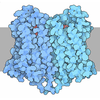
| Related items in Molecule of the Month |

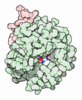
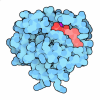

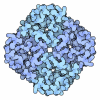


-Map
| File | Download / File: emd_60243.map.gz / Format: CCP4 / Size: 64 MB / Type: IMAGE STORED AS FLOATING POINT NUMBER (4 BYTES) | ||||||||||||||||||||||||||||||||||||
|---|---|---|---|---|---|---|---|---|---|---|---|---|---|---|---|---|---|---|---|---|---|---|---|---|---|---|---|---|---|---|---|---|---|---|---|---|---|
| Projections & slices | Image control
Images are generated by Spider. | ||||||||||||||||||||||||||||||||||||
| Voxel size | X=Y=Z: 1.1 Å | ||||||||||||||||||||||||||||||||||||
| Density |
| ||||||||||||||||||||||||||||||||||||
| Symmetry | Space group: 1 | ||||||||||||||||||||||||||||||||||||
| Details | EMDB XML:
|
 Z (Sec.)
 Y (Row.)
 X (Col.)


-Supplemental data
-Half map: #2
| File | emd_60243_half_map_1.map | ||||||||||||
|---|---|---|---|---|---|---|---|---|---|---|---|---|---|
| Projections & Slices |
| ||||||||||||
| Density Histograms |


-Half map: #1
| File | emd_60243_half_map_2.map | ||||||||||||
|---|---|---|---|---|---|---|---|---|---|---|---|---|---|
| Projections & Slices |
| ||||||||||||
| Density Histograms |


- Sample components
-Entire : GPCR/G-protein complex
| Entire | Name: GPCR/G-protein complex |
|---|---|
| Components |
|
-Supramolecule #1: GPCR/G-protein complex
| Supramolecule | Name: GPCR/G-protein complex / type: complex / ID: 1 / Parent: 0 / Macromolecule list: all |
|---|---|
| Source (natural) | Organism: Homo sapiens (human) |
| Molecular weight | Theoretical: 130 kDa/nm |
-Macromolecule #1: engineered G alpha q
| Macromolecule | Name: engineered G alpha q / type: protein_or_peptide / ID: 1 / Number of copies: 1 / Enantiomer: LEVO |
|---|---|
| Source (natural) | Organism: Homo sapiens (human) |
| Molecular weight | Theoretical: 41.855578 KDa |
| Recombinant expression | Organism:   Spodoptera frugiperda (fall armyworm) Spodoptera frugiperda (fall armyworm) |
| Sequence | String: MMGCTLSAED KAAVERSKMI EKQLQKDKQV YRRTLRLLLL GADNSGKSTI VKQMRIYHVN GYSEEECKQY KAVVYSNTIQ SIIAIIRAM GRLKIDFGDS ARADDARQLF VLAGAAEEGF MTAELAGVIK RLWKDSGVQA CFNRSREYQL NDSAAYYLND L DRIAQPNY ...String: MMGCTLSAED KAAVERSKMI EKQLQKDKQV YRRTLRLLLL GADNSGKSTI VKQMRIYHVN GYSEEECKQY KAVVYSNTIQ SIIAIIRAM GRLKIDFGDS ARADDARQLF VLAGAAEEGF MTAELAGVIK RLWKDSGVQA CFNRSREYQL NDSAAYYLND L DRIAQPNY IPTQQDVLRT RVKTSGIFET KFQVDKVNFH MFDVGAQRDE RRKWIQCFND VTAIIFVVDS SDYNRLQEAL ND FKSIWNN RWLRTISVIL FLNKQDLLAE KVLAGKSKIE DYFPEFARYT TPEDATPEPG EDPRVTRAKY FIRKEFVDIS TAS GDGRHI CYPHFTCSVD TENARRIFND CKDIILQMNL REYNLV |
-Macromolecule #2: Guanine nucleotide-binding protein G(I)/G(S)/G(T) subunit beta-1
| Macromolecule | Name: Guanine nucleotide-binding protein G(I)/G(S)/G(T) subunit beta-1 type: protein_or_peptide / ID: 2 / Number of copies: 1 / Enantiomer: LEVO |
|---|---|
| Source (natural) | Organism: Homo sapiens (human) |
| Molecular weight | Theoretical: 37.915496 KDa |
| Recombinant expression | Organism: Spodoptera frugiperda (fall armyworm) |
| Sequence | String: MGSLLQSELD QLRQEAEQLK NQIRDARKAC ADATLSQITN NIDPVGRIQM RTRRTLRGHL AKIYAMHWGT DSRLLVSASQ DGKLIIWDS YTTNKVHAIP LRSSWVMTCA YAPSGNYVAC GGLDNICSIY NLKTREGNVR VSRELAGHTG YLSCCRFLDD N QIVTSSGD ...String: MGSLLQSELD QLRQEAEQLK NQIRDARKAC ADATLSQITN NIDPVGRIQM RTRRTLRGHL AKIYAMHWGT DSRLLVSASQ DGKLIIWDS YTTNKVHAIP LRSSWVMTCA YAPSGNYVAC GGLDNICSIY NLKTREGNVR VSRELAGHTG YLSCCRFLDD N QIVTSSGD TTCALWDIET GQQTTTFTGH TGDVMSLSLA PDTRLFVSGA CDASAKLWDV REGMCRQTFT GHESDINAIC FF PNGNAFA TGSDDATCRL FDLRADQELM TYSHDNIICG ITSVSFSKSG RLLLAGYDDF NCNVWDALKA DRAGVLAGHD NRV SCLGVT DDGMAVATGS WDSFLKIWN UniProtKB: Guanine nucleotide-binding protein G(I)/G(S)/G(T) subunit beta-1 |
-Macromolecule #3: Guanine nucleotide-binding protein G(I)/G(S)/G(O) subunit gamma-2
| Macromolecule | Name: Guanine nucleotide-binding protein G(I)/G(S)/G(O) subunit gamma-2 type: protein_or_peptide / ID: 3 / Number of copies: 1 / Enantiomer: LEVO |
|---|---|
| Source (natural) | Organism: Homo sapiens (human) |
| Molecular weight | Theoretical: 7.861143 KDa |
| Recombinant expression | Organism: Spodoptera frugiperda (fall armyworm) |
| Sequence | String: MASNNTASIA QARKLVEQLK MEANIDRIKV SKAAADLMAY CEAHAKEDPL LTPVPASENP FREKKFFCAI L UniProtKB: Guanine nucleotide-binding protein G(I)/G(S)/G(O) subunit gamma-2 |
-Macromolecule #4: Proteinase-activated receptor 2
| Macromolecule | Name: Proteinase-activated receptor 2 / type: protein_or_peptide / ID: 4 / Number of copies: 1 / Enantiomer: LEVO |
|---|---|
| Source (natural) | Organism: Homo sapiens (human) |
| Molecular weight | Theoretical: 44.173203 KDa |
| Recombinant expression | Organism: Spodoptera frugiperda (fall armyworm) |
| Sequence | String: MRSPSAAWLL GAAILLAASL SCSGTIQGTN RSSKGRSLIG KVDGTSHVTG KGVTVETVFS VDEFSASVLT GKLTTVFLPI VYTIVFVVG LPSNGMALWV FLFRTKKKHP AVIYMANLAL ADLLSVIWFP LKIAYHIHGN NWIYGEALCN VLIGFFYGNM Y CSILFMTC ...String: MRSPSAAWLL GAAILLAASL SCSGTIQGTN RSSKGRSLIG KVDGTSHVTG KGVTVETVFS VDEFSASVLT GKLTTVFLPI VYTIVFVVG LPSNGMALWV FLFRTKKKHP AVIYMANLAL ADLLSVIWFP LKIAYHIHGN NWIYGEALCN VLIGFFYGNM Y CSILFMTC LSVQRYWVIV NPMGHSRKKA NIAIGISLAI WLLILLVTIP LYVVKQTIFI PALNITTCHD VLPEQLLVGD MF NYFLSLA IGVFLFPAFL TASAYVLMIR MLRSSAMDEN SEKKRKRAIK LIVTVLAMYL ICFTPSNLLL VVHYFLIKSQ GQS HVYALY IVALCLSTLN SCIDPFVYYF VSHDFRDHAK NALLCRSVRT VKQMQVSLTS KKHSRKSSSY SSSSTTVKTS Y UniProtKB: Proteinase-activated receptor 2 |
-Experimental details
-Structure determination
| Method | cryo EM |
|---|---|
 Processing Processing | single particle reconstruction |
| Aggregation state | particle |
-Sample preparation
| Buffer | pH: 7 |
|---|---|
| Vitrification | Cryogen name: ETHANE |
- Electron microscopy
| Microscope | FEI TECNAI F30 |
|---|---|
| Image recording | Film or detector model: GATAN K3 BIOQUANTUM (6k x 4k) / Average electron dose: 60.0 e/Å2 |
| Electron beam | Acceleration voltage: 300 kV / Electron source:  FIELD EMISSION GUN FIELD EMISSION GUN |
| Electron optics | Illumination mode: FLOOD BEAM / Imaging mode: BRIGHT FIELD / Nominal defocus max: 2.2 µm / Nominal defocus min: 1.2 µm |
| Experimental equipment | 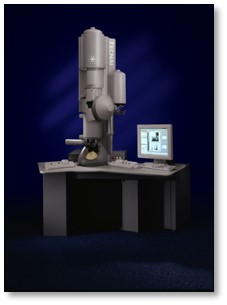 Model: Tecnai F30 / Image courtesy: FEI Company |

