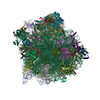
regulation of cytoplasmic translational initiation / RNA polymerase I core factor complex / dolichyl-diphosphooligosaccharide-protein glycotransferase / dolichyl-diphosphooligosaccharide-protein glycotransferase activity / oligosaccharyltransferase complex / preribosome / RNA polymerase I core promoter sequence-specific DNA binding / glycoprotein biosynthetic process / ribosomal large subunit export from nucleus / nucleolar large rRNA transcription by RNA polymerase I ...regulation of cytoplasmic translational initiation / RNA polymerase I core factor complex / dolichyl-diphosphooligosaccharide-protein glycotransferase / dolichyl-diphosphooligosaccharide-protein glycotransferase activity / oligosaccharyltransferase complex / preribosome / RNA polymerase I core promoter sequence-specific DNA binding / glycoprotein biosynthetic process / ribosomal large subunit export from nucleus / nucleolar large rRNA transcription by RNA polymerase I / protein kinase activator activity / protein-RNA complex assembly / post-translational protein modification / cellular response to amino acid starvation / ribosomal large subunit biogenesis / maturation of LSU-rRNA from tricistronic rRNA transcript (SSU-rRNA, 5.8S rRNA, LSU-rRNA) / large ribosomal subunit / ribosome biogenesis / 5S rRNA binding / ribosomal large subunit assembly / large ribosomal subunit rRNA binding / cytosolic large ribosomal subunit / cytoplasmic translation / negative regulation of translation / protein ubiquitination / rRNA binding / ribosome / translation / structural constituent of ribosome / ribonucleoprotein complex / mRNA binding / RNA binding / zinc ion binding / metal ion binding / cytosol / cytoplasm Similarity search - Function
Gcn1, N-terminal / : / : / : / Generalcontrol nonderepressible 1 (Gcn1) N-terminal / Fungal GCN1-like, HEAT repeats / Stalled ribosome sensor GCN1 N-terminal / Stalled ribosome sensor GCN1-like, HEAT repeats / Stalled ribosome sensor GCN1, HEAT repeats / Transcription initiation factor Rrn7, Zinc-finger ...Gcn1, N-terminal / : / : / : / Generalcontrol nonderepressible 1 (Gcn1) N-terminal / Fungal GCN1-like, HEAT repeats / Stalled ribosome sensor GCN1 N-terminal / Stalled ribosome sensor GCN1-like, HEAT repeats / Stalled ribosome sensor GCN1, HEAT repeats / Transcription initiation factor Rrn7, Zinc-finger / RNA polymerase I transcription initiation factor TAF1B/Rrn7 / : / : / Zinc-finger of RNA-polymerase I-specific TFIIB, Rrn7 / Rrn7/TAF1B, N-terminal cyclin domain / Rrn7/TAF1B, C-terminal cyclin domain / E-Z type HEAT repeats / PBS lyase HEAT-like repeat / : / Stalled ribosome sensor GCN1-like, HEAT repeats / Elongation factor 3/GNC1 HEAT repeat / EF3 N-terminal HEAT repeat / : / STT3/PglB/AglB core domain / TOG domain / TOG / Parkin co-regulated protein / Parkin co-regulated protein / : / Oligosaccharyl transferase, STT3 subunit / Oligosaccharyl transferase STT3, N-terminal / HEAT, type 2 / HEAT repeat profile. / 60s Acidic ribosomal protein / 60S acidic ribosomal protein P0 / : / 50S ribosomal protein L10, insertion domain superfamily / 60S ribosomal protein L10P, insertion domain / Insertion domain in 60S ribosomal protein L10P / : / Ribosomal protein L30e / Ribosomal protein L28e / Ribosomal L28e/Mak16 / Ribosomal L28e protein family / Ribosomal protein L41 / Ribosomal protein L41 / Ribosomal protein L13e, conserved site / Ribosomal protein L13e signature. / Ribosomal protein L27e, conserved site / Ribosomal protein L27e signature. / Ribosomal protein L22e / Ribosomal protein L22e superfamily / Ribosomal L22e protein family / Ribosomal protein L13e / Ribosomal protein L13e / : / Ribosomal protein L38e / Ribosomal protein L38e superfamily / Ribosomal L38e protein family / Ribosomal protein L6e signature. / Ribosomal protein L19, eukaryotic / 60S ribosomal protein L18a/ L20, eukaryotes / Ribosomal protein L10e, conserved site / Ribosomal protein L10e signature. / Ribosomal protein L18/L18-A/B/e, conserved site / Ribosomal protein L18e signature. / Ribosomal protein L44e signature. / Ribosomal protein L19/L19e conserved site / Ribosomal protein L19e signature. / Ribosomal protein L5 eukaryotic, C-terminal / Ribosomal L18 C-terminal region / Ribosomal protein L23/L25, N-terminal / Ribosomal protein L23, N-terminal domain / Ribosomal protein L10e / Ribosomal protein L34e, conserved site / Ribosomal protein L34e signature. / Ribosomal L40e family / Ribosomal protein L36e signature. / Ribosomal protein L30e signature 1. / Eukaryotic Ribosomal Protein L27, KOW domain / Ribosomal protein L27e / Ribosomal protein L27e superfamily / Ribosomal L27e protein family / Ribosomal Protein L6, KOW domain / 50S ribosomal protein L18Ae/60S ribosomal protein L20 and L18a / : / Ribosomal protein L35Ae, conserved site / Ribosomal protein L35Ae signature. / Ribosomal protein 50S-L18Ae/60S-L20/60S-L18A / Ribosomal proteins 50S-L18Ae/60S-L20/60S-L18A / Ribosomal_L40e / Ribosomal protein L40e / Ribosomal protein L40e superfamily / : / Ribosomal protein L44e / Ribosomal protein L44 / Ribosomal protein 60S L18 and 50S L18e / Ribosomal protein L6e / Ribosomal protein L7A/L8 / Ribosomal protein L30e signature 2. Similarity search - Domain/homology
Large ribosomal subunit protein uL3 / 60S ribosomal protein L26-like protein / Ribosomal protein L15 / 60S ribosomal protein L27 / 60S ribosomal protein L6 / Dolichyl-diphosphooligosaccharide--protein glycosyltransferase subunit STT3 / 60S ribosomal protein l9-like protein / 60S ribosomal protein l21-like protein / Ribosomal protein L37 / 60S ribosomal protein L24-like protein ...Large ribosomal subunit protein uL3 / 60S ribosomal protein L26-like protein / Ribosomal protein L15 / 60S ribosomal protein L27 / 60S ribosomal protein L6 / Dolichyl-diphosphooligosaccharide--protein glycosyltransferase subunit STT3 / 60S ribosomal protein l9-like protein / 60S ribosomal protein l21-like protein / Ribosomal protein L37 / 60S ribosomal protein L24-like protein / 60S ribosomal protein L14-like protein / 60S ribosomal protein L2-like protein / 60S ribosomal protein L25-like protein / 60S ribosomal protein L43-like protein / 60S ribosomal protein L32-like protein / Ribosomal protein / 60S ribosomal protein L13 / Ribosomal protein L18-like protein / Ribosomal protein L19 / 60S ribosomal protein L8 / 60S ribosomal protein L36 / 60S ribosomal protein L44-like protein / 60S ribosomal protein L20 / 60S ribosomal protein l33-like protein / 60S ribosomal protein / 60S ribosomal protein L22-like protein / Large ribosomal subunit protein uL18 / 60S ribosomal protein l30-like protein / 60S ribosomal protein L10-like protein / 60S ribosomal protein L4-like protein / 60S ribosomal protein l7-like protein / Ribosomal protein l34-like protein / 60S ribosomal protein L38-like protein / 60S ribosomal protein L12-like protein / 60S acidic ribosomal protein P0 / Large ribosomal subunit protein uL22 / 60S ribosomal protein L16-like protein / 60S ribosomal protein / Large ribosomal subunit protein uL5 / 60S ribosomal protein l23-like protein / Small ribosomal subunit protein eS32A Similarity search - Component
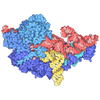
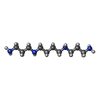
Journal: Nucleic Acids Res / Year: 2025 Title: Pseudouridine increases ribosome stability in a thermophilic eukaryote. Authors: Klemens Wild / Marius Klein / Alicia Burkard / Virginie Marchand / Nikola Kellner / Antonio Paez / Stefan Pastore / Tamer Butto / Yuri Motorin / Mark Helm / Irmgard Sinning / Abstract: RNA modifications alter stability, folding space, and interaction network of RNA molecules. Ribosomal RNA (rRNA) modifications stabilize the structure of ribosomes and cluster around functionally ...RNA modifications alter stability, folding space, and interaction network of RNA molecules. Ribosomal RNA (rRNA) modifications stabilize the structure of ribosomes and cluster around functionally important sites such as the peptidyl transferase center, ribosomal subunit bridges, and the polypeptide tunnel. Here, we investigate the rRNA modifications of the thermophilic fungus Chaetomium thermophilum (ct), a model organism for eukaryotic thermophily and structural stability. Using LC-MS/MS, orthogonal second and third generation RNA-sequencing and high-resolution cryo-electron microscopy, we describe a cross-correlating method to assign and quantify all ct rRNA modifications. Overall, a doubling of rRNA modifications to 4% explains ribosomal thermostability with an extended distribution towards peripheral functional sites. The 2.4 Å structure of the idle ct60S ribosome, retaining nascent chains and including metal ions, polyamines, and water molecules, allows for a comprehensive structure-function analysis. Comparison with mesophilic ribosomes from Chaetomium globosum, yeast, and human highlights the significant increase of pseudouridines (Ψs). The number of Ψs linearly correlates with growth temperature, suggesting statistical modification. A ct-specific Ψ substitution forming a 'Ψ-turn' at the polypeptide tunnel exit close to the third constriction exemplifies mechanistic adaptations of the ribosome at elevated temperatures.
In the structure databanks used in Yorodumi, some data are registered as the other names, "COVID-19 virus" and "2019-nCoV". Here are the details of the virus and the list of structure data.
Jan 31, 2019. EMDB accession codes are about to change! (news from PDBe EMDB page)
EMDB accession codes are about to change! (news from PDBe EMDB page)
The allocation of 4 digits for EMDB accession codes will soon come to an end. Whilst these codes will remain in use, new EMDB accession codes will include an additional digit and will expand incrementally as the available range of codes is exhausted. The current 4-digit format prefixed with “EMD-” (i.e. EMD-XXXX) will advance to a 5-digit format (i.e. EMD-XXXXX), and so on. It is currently estimated that the 4-digit codes will be depleted around Spring 2019, at which point the 5-digit format will come into force.
The EM Navigator/Yorodumi systems omit the EMD- prefix.
Related info.:Q: What is EMD? / ID/Accession-code notation in Yorodumi/EM Navigator
Yorodumi is a browser for structure data from EMDB, PDB, SASBDB, etc.
This page is also the successor to EM Navigator detail page, and also detail information page/front-end page for Omokage search.
The word "yorodu" (or yorozu) is an old Japanese word meaning "ten thousand". "mi" (miru) is to see.
Related info.:EMDB / PDB / SASBDB / Comparison of 3 databanks / Yorodumi Search / Aug 31, 2016. New EM Navigator & Yorodumi / Yorodumi Papers / Jmol/JSmol / Function and homology information / Changes in new EM Navigator and Yorodumi
 Movie
Movie Controller

 Yorodumi
 Open data
 Basic information
 Map data
 Sample
 Keywords
 Function and homology information
 Thermochaetoides thermophila (fungus) /
  Authors
 Germany, 1 items
  Citation
 Structure visualization
 Downloads & links
 emd_52576.png
 http://ftp.pdbj.org/pub/emdb/structures/EMD-52576
 Z (Sec.)
 Y (Row.)
 X (Col.)


 Sample components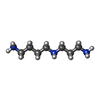

 Processing
 Electron microscopy
 FIELD EMISSION GUN