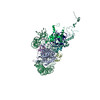
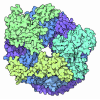
- EMDB-51383: Human 80S ribosome in complex with NatA in proximal and distal po... -
+
Open data
ID or keywords:
Loading...
-
Basic information
Entry
Database: EMDB / ID: EMD-51383
Title
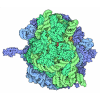
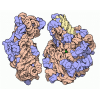
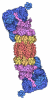
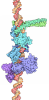
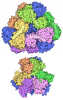
Human 80S ribosome in complex with NatA in proximal and distal position
Map data
Sample
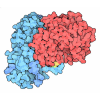
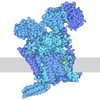
Complex: human 80S ribosome in complex with NatA and Ebp1
Protein or peptide: x 10 types
RNA: x 2 types
Protein or peptide: x 3 types
Ligand: x 1 types
Keywords
human 80S ribosome / N-terminal acetylation (NTA) / N-acety-transferase A (NatA) in proximal and distal position / TRANSLATION
Function / homology
Function and homology information
negative regulation of maintenance of mitotic sister chromatid cohesion, centromeric / positive regulation of protein refolding / protein-N-terminal-glutamate acetyltransferase activity / N-terminal amino-acid Nalpha-acetyltransferase NatA / NatA complex / protein N-terminal-serine acetyltransferase activity / protein-N-terminal-alanine acetyltransferase activity / protein-N-terminal amino-acid acetyltransferase activity / N-acetyltransferase activity / acetyltransferase activator activity ...negative regulation of maintenance of mitotic sister chromatid cohesion, centromeric / positive regulation of protein refolding / protein-N-terminal-glutamate acetyltransferase activity / N-terminal amino-acid Nalpha-acetyltransferase NatA / NatA complex / protein N-terminal-serine acetyltransferase activity / protein-N-terminal-alanine acetyltransferase activity / protein-N-terminal amino-acid acetyltransferase activity / N-acetyltransferase activity / acetyltransferase activator activity / translation at presynapse / regulation of translation involved in cellular response to UV / eukaryotic 80S initiation complex / positive regulation of intrinsic apoptotic signaling pathway in response to DNA damage by p53 class mediator / positive regulation of DNA damage response, signal transduction by p53 class mediator / TORC2 complex binding / negative regulation of myoblast fusion / PELO:HBS1L and ABCE1 dissociate a ribosome on a non-stop mRNA / ZNF598 and the Ribosome-associated Quality Trigger (RQT) complex dissociate a ribosome stalled on a no-go mRNA / Peptide chain elongation / Selenocysteine synthesis / Formation of a pool of free 40S subunits / Eukaryotic Translation Termination / SRP-dependent cotranslational protein targeting to membrane / Response of EIF2AK4 (GCN2) to amino acid deficiency / Viral mRNA Translation / Nonsense Mediated Decay (NMD) independent of the Exon Junction Complex (EJC) / GTP hydrolysis and joining of the 60S ribosomal subunit / L13a-mediated translational silencing of Ceruloplasmin expression / Major pathway of rRNA processing in the nucleolus and cytosol / Nonsense Mediated Decay (NMD) enhanced by the Exon Junction Complex (EJC) / protein-RNA complex assembly / rough endoplasmic reticulum / Ribosome Quality Control (RQC) complex extracts and degrades nascent peptide / DNA damage response, signal transduction by p53 class mediator / ribosomal large subunit biogenesis / positive regulation of translation / maturation of LSU-rRNA from tricistronic rRNA transcript (SSU-rRNA, 5.8S rRNA, LSU-rRNA) / striated muscle contraction / cytosolic ribosome / protein maturation / cellular response to gamma radiation / mRNA 5'-UTR binding / Regulation of expression of SLITs and ROBOs / cytoplasmic ribonucleoprotein granule / cellular response to UV / rRNA processing / heparin binding / presynapse / ribosome binding / angiogenesis / cell body / transcription regulator complex / spermatogenesis / cytosolic large ribosomal subunit / nuclear body / cell differentiation / cytoplasmic translation / postsynaptic density / protein stabilization / rRNA binding / structural constituent of ribosome / cadherin binding / translation / ribonucleoprotein complex / focal adhesion / mRNA binding / regulation of DNA-templated transcription / nucleolus / synapse / dendrite / positive regulation of DNA-templated transcription / glutamatergic synapse / endoplasmic reticulum / DNA-templated transcription / DNA binding / RNA binding / extracellular exosome / nucleoplasm / membrane / identical protein binding / nucleus / cytosol / cytoplasm Similarity search - Function
N-terminal acetyltransferase A, auxiliary subunit / N-terminal acetyltransferase A, auxiliary subunit / N-acetyltransferase Ard1-like / Acetyltransferase (GNAT) family / Tetratricopeptide repeat / Ribosomal protein L6, N-terminal / Ribosomal protein L6, N-terminal domain / Gcn5-related N-acetyltransferase (GNAT) domain profile. / Ribosomal protein L28e / : ...N-terminal acetyltransferase A, auxiliary subunit / N-terminal acetyltransferase A, auxiliary subunit / N-acetyltransferase Ard1-like / Acetyltransferase (GNAT) family / Tetratricopeptide repeat / Ribosomal protein L6, N-terminal / Ribosomal protein L6, N-terminal domain / Gcn5-related N-acetyltransferase (GNAT) domain profile. / Ribosomal protein L28e / : / Ribosomal L28e/Mak16 / Ribosomal L28e protein family / GNAT domain / Ribosomal protein L23 / TPR repeat region circular profile. / Ribosomal protein L22e / Ribosomal protein L22e superfamily / Ribosomal L22e protein family / : / Ribosomal protein L38e / Ribosomal protein L38e superfamily / Ribosomal L38e protein family / Ribosomal protein L6e signature. / TPR repeat profile. / Ribosomal protein L19, eukaryotic / Ribosomal protein L19/L19e conserved site / Ribosomal protein L19e signature. / Acyl-CoA N-acyltransferase / Ribosomal protein L23/L25, N-terminal / Ribosomal protein L23, N-terminal domain / Ribosomal Protein L6, KOW domain / 60S ribosomal protein L35 / Ribosomal protein L6e / 60S ribosomal protein L6E / Tetratricopeptide repeats / 60S ribosomal protein L4, C-terminal domain / 60S ribosomal protein L4 C-terminal domain / 60S ribosomal protein L19 / Ribosomal protein L31e, conserved site / Ribosomal protein L31e signature. / : / : / Ribosomal protein L19e, C-terminal domain / Ribosomal_L19e / Ribosomal protein L19/L19e / Ribosomal protein L19/L19e, domain 1 / Ribosomal protein L19/L19e superfamily / Ribosomal protein L19e, N-terminal domain / Ribosomal protein L4/L1e, eukaryotic/archaeal, conserved site / Ribosomal protein L1e signature. / Ribosomal protein L31e / Ribosomal protein L31e domain superfamily / Ribosomal protein L31e / Ribosomal_L31e / Ribosomal protein L22/L17, eukaryotic/archaeal / Tetratricopeptide repeat / Ribosomal protein L4, eukaryotic and archaeal type / Ribosomal protein L26/L24, eukaryotic/archaeal / Ribosomal proteins L26 eukaryotic, L24P archaeal / Ribosomal protein L23/L25, conserved site / Ribosomal protein L23 signature. / Ribosomal protein L29, conserved site / Ribosomal protein L29 signature. / Ribosomal protein L22/L17, conserved site / Ribosomal protein L22 signature. / Tetratricopeptide-like helical domain superfamily / Ribosomal L29 protein / Ribosomal protein L29/L35 / Ribosomal protein L29/L35 superfamily / Ribosomal protein L24 signature. / Ribosomal protein L24/L26, conserved site / Ribosomal protein L23 / KOW (Kyprides, Ouzounis, Woese) motif. / Ribosomal protein L25/L23 / Ribosomal protein L26/L24, KOW domain / Ribosomal protein L22/L17 / Ribosomal protein L22p/L17e / Ribosomal protein L22/L17 superfamily / Ribosomal protein L4/L1e / Ribosomal protein L4 domain superfamily / Ribosomal protein L4/L1 family / Translation protein SH3-like domain superfamily / Ribosomal protein L23/L15e core domain superfamily / KOW motif / KOW / Ribosomal protein L2, domain 2 / Nucleotide-binding alpha-beta plait domain superfamily Similarity search - Domain/homology
Large ribosomal subunit protein uL22 / Large ribosomal subunit protein eL22 / Large ribosomal subunit protein uL4 / N-alpha-acetyltransferase 10 / Large ribosomal subunit protein uL29 / Large ribosomal subunit protein eL28 / Large ribosomal subunit protein uL24 / Large ribosomal subunit protein uL23 / Large ribosomal subunit protein eL31 / Large ribosomal subunit protein eL38 ...Large ribosomal subunit protein uL22 / Large ribosomal subunit protein eL22 / Large ribosomal subunit protein uL4 / N-alpha-acetyltransferase 10 / Large ribosomal subunit protein uL29 / Large ribosomal subunit protein eL28 / Large ribosomal subunit protein uL24 / Large ribosomal subunit protein uL23 / Large ribosomal subunit protein eL31 / Large ribosomal subunit protein eL38 / Large ribosomal subunit protein eL19 / Large ribosomal subunit protein eL6 / N-alpha-acetyltransferase 15, NatA auxiliary subunit Similarity search - Component
Biological species
Homo sapiens (human)
Method
single particle reconstruction / cryo EM / Resolution: 3.91 Å
Journal: Nat Commun / Year: 2026 Title: NatA engages in multi-factor complexes at the ribosomal polypeptide tunnel exit. Authors: Marius Klein / Klemens Wild / Nina McTiernan / Thomas Arnesen / Irmgard Sinning / Abstract: N-terminal acetylation (NTA) is the most common protein modification in eukaryotes, playing a crucial role in proteostasis. Almost 40% of the human proteome is acetylated co-translationally by the ...N-terminal acetylation (NTA) is the most common protein modification in eukaryotes, playing a crucial role in proteostasis. Almost 40% of the human proteome is acetylated co-translationally by the NatA complex, which requires prior N-terminal methionine excision (NME). Recently, NatA was shown to form multi-enzyme complexes with MAP1/NAC or MAP2, combining the capabilities of NME and NTA into a single complex. Here, we show that NatA can also form ribosome-independent assemblies with several ribosome associated factors (RAFs). At the ribosome, NatA can form a ternary complex with the abundant pseudoenzyme Ebp1 or a second copy of NatA, which can be coordinated from a different binding site with closer access to a potential substrate. Further, we identify a conserved binding site on NatA, which can be accessed by four RAFs - Ebp1, NAC, Naa10 and HypK, allowing the formation of different multi-factor complexes at the ribosomal tunnel exit. Therefore, our data suggest that NatA constitutes an interaction hub, and contributes to the coordination of co-translational protein maturation.
In the structure databanks used in Yorodumi, some data are registered as the other names, "COVID-19 virus" and "2019-nCoV". Here are the details of the virus and the list of structure data.
Jan 31, 2019. EMDB accession codes are about to change! (news from PDBe EMDB page)
EMDB accession codes are about to change! (news from PDBe EMDB page)
The allocation of 4 digits for EMDB accession codes will soon come to an end. Whilst these codes will remain in use, new EMDB accession codes will include an additional digit and will expand incrementally as the available range of codes is exhausted. The current 4-digit format prefixed with “EMD-” (i.e. EMD-XXXX) will advance to a 5-digit format (i.e. EMD-XXXXX), and so on. It is currently estimated that the 4-digit codes will be depleted around Spring 2019, at which point the 5-digit format will come into force.
The EM Navigator/Yorodumi systems omit the EMD- prefix.
Related info.:Q: What is EMD? / ID/Accession-code notation in Yorodumi/EM Navigator
Yorodumi is a browser for structure data from EMDB, PDB, SASBDB, etc.
This page is also the successor to EM Navigator detail page, and also detail information page/front-end page for Omokage search.
The word "yorodu" (or yorozu) is an old Japanese word meaning "ten thousand". "mi" (miru) is to see.
Related info.:EMDB / PDB / SASBDB / Comparison of 3 databanks / Yorodumi Search / Aug 31, 2016. New EM Navigator & Yorodumi / Yorodumi Papers / Jmol/JSmol / Function and homology information / Changes in new EM Navigator and Yorodumi
 Movie
Movie Controller

 Yorodumi
 Open data
 Basic information
 Map data
 Sample
 Keywords
 Function and homology information
 Homo sapiens (human)
 Authors
 Germany, 1 items
  Citation
 Structure visualization
 Downloads & links
 emd_51383.png
 http://ftp.pdbj.org/pub/emdb/structures/EMD-51383



 Z (Sec.)
 Y (Row.)
 X (Col.)


 Sample components
 Processing
 Electron microscopy
 FIELD EMISSION GUN