Protein or peptide: ATP-binding cassette sub-family D member 3
Keywords
ABC transporter / Peroxisome / Fatty-acid transport / MEMBRANE PROTEIN
Function / homology
Function and homology information
phytanic acid metabolic process / very long-chain fatty acid metabolic process / long-chain fatty acid import into peroxisome / very long-chain fatty acid catabolic process / Class I peroxisomal membrane protein import / fatty acyl-CoA hydrolase activity / peroxisome organization / ABC transporters in lipid homeostasis / bile acid biosynthetic process / Hydrolases; Acting on ester bonds; Thioester hydrolases ...phytanic acid metabolic process / very long-chain fatty acid metabolic process / long-chain fatty acid import into peroxisome / very long-chain fatty acid catabolic process / Class I peroxisomal membrane protein import / fatty acyl-CoA hydrolase activity / peroxisome organization / ABC transporters in lipid homeostasis / bile acid biosynthetic process / Hydrolases; Acting on ester bonds; Thioester hydrolases / Translocases; Catalysing the translocation of other compounds; Linked to the hydrolysis of a nucleoside triphosphate / peroxisomal membrane / long-chain fatty acid transmembrane transporter activity / fatty acid beta-oxidation / bile acid and bile salt transport / RHOC GTPase cycle / peroxisomal matrix / RHOA GTPase cycle / ATPase-coupled transmembrane transporter activity / ABC-type transporter activity / fatty acid biosynthetic process / peroxisome / response to xenobiotic stimulus / protein homodimerization activity / ATP hydrolysis activity / mitochondrion / ATP binding / membrane / cytosol Similarity search - Function
Peroxysomal long chain fatty acyl transporter / ABC transporter transmembrane region 2 / : / ABC transporter type 1, transmembrane domain / ABC transporter integral membrane type-1 fused domain profile. / ABC transporter type 1, transmembrane domain superfamily / ABC transporter-like, conserved site / ABC transporters family signature. / ABC transporter / ABC transporter-like, ATP-binding domain ...Peroxysomal long chain fatty acyl transporter / ABC transporter transmembrane region 2 / : / ABC transporter type 1, transmembrane domain / ABC transporter integral membrane type-1 fused domain profile. / ABC transporter type 1, transmembrane domain superfamily / ABC transporter-like, conserved site / ABC transporters family signature. / ABC transporter / ABC transporter-like, ATP-binding domain / ATP-binding cassette, ABC transporter-type domain profile. / ATPases associated with a variety of cellular activities / AAA+ ATPase domain / P-loop containing nucleoside triphosphate hydrolase Similarity search - Domain/homology
National Institutes of Health/National Institute on Aging (NIH/NIA)
United States
Citation
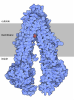
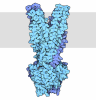
Journal: Proc Natl Acad Sci U S A / Year: 2025 Title: Molecular mechanism of substrate transport by human peroxisomal ABCD3. Authors: Meghna Gupta / Nitesh Kumar Khandelwal / Devin J Seka / Sree Ganesh Balasubramani / Miles Sasha Dickinson / Alexander Myasnikov / Ignacia Echeverria / Robert M Stroud / Abstract: ATP-binding cassette transporters of the D subfamily (ABCD1-3) mediate the export of CoA thioesters of fatty acids from the cytosol into peroxisomes for further oxidation. ABCD3 facilitates the ...ATP-binding cassette transporters of the D subfamily (ABCD1-3) mediate the export of CoA thioesters of fatty acids from the cytosol into peroxisomes for further oxidation. ABCD3 facilitates the transport of a broad spectrum of substrates, including branched-chain fatty acids, very long-chain fatty acids, bile salt intermediates, and dicarboxylic acids as CoA adducts. Mutations in ABCD3 are associated with defects in congenital bile acid synthesis. Despite its importance, the basis for substrate selectivity and the mechanism of transport by ABCD3 are not well defined. We report the cryogenic sample electron microscopy (cryo-EM) structures of full-length human ABCD3 in its apo state and bound to one of its physiological substrates (phytanoyl-CoA) at resolutions of 3.33 Å and 3.13 Å, respectively. Our biochemical assays reveal that substrate binding induces ATPase activity in ABCD3, suggesting a substrate-dependent conformational change. Structural comparison of the apo and substrate-bound states demonstrates that the substrate interaction brings nucleotide-binding domains closer together, providing a mechanistic basis of substrate-induced ATPase activity. These findings offer critical insights into the transport mechanism of ABCD3 and lay a structural foundation for understanding its role in peroxisomal metabolite import and related diseases.
In the structure databanks used in Yorodumi, some data are registered as the other names, "COVID-19 virus" and "2019-nCoV". Here are the details of the virus and the list of structure data.
Jan 31, 2019. EMDB accession codes are about to change! (news from PDBe EMDB page)
EMDB accession codes are about to change! (news from PDBe EMDB page)
The allocation of 4 digits for EMDB accession codes will soon come to an end. Whilst these codes will remain in use, new EMDB accession codes will include an additional digit and will expand incrementally as the available range of codes is exhausted. The current 4-digit format prefixed with “EMD-” (i.e. EMD-XXXX) will advance to a 5-digit format (i.e. EMD-XXXXX), and so on. It is currently estimated that the 4-digit codes will be depleted around Spring 2019, at which point the 5-digit format will come into force.
The EM Navigator/Yorodumi systems omit the EMD- prefix.
Related info.:Q: What is EMD? / ID/Accession-code notation in Yorodumi/EM Navigator
Yorodumi is a browser for structure data from EMDB, PDB, SASBDB, etc.
This page is also the successor to EM Navigator detail page, and also detail information page/front-end page for Omokage search.
The word "yorodu" (or yorozu) is an old Japanese word meaning "ten thousand". "mi" (miru) is to see.
Related info.:EMDB / PDB / SASBDB / Comparison of 3 databanks / Yorodumi Search / Aug 31, 2016. New EM Navigator & Yorodumi / Yorodumi Papers / Jmol/JSmol / Function and homology information / Changes in new EM Navigator and Yorodumi
 Movie
Movie Controller


 Open data
 Basic information
 Map data
 Sample
 Keywords
 Function and homology information
 Homo sapiens (human)
 Authors
 United States, 1 items
  Citation
 Structure visualization
 Downloads & links
 emd_49388.png
 http://ftp.pdbj.org/pub/emdb/structures/EMD-49388


 Z (Sec.)
 Y (Row.)
 X (Col.)


 Sample components
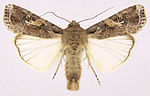 Spodoptera frugiperda (fall armyworm)
 Processing
 Electron microscopy
 FIELD EMISSION GUN

