antigen processing and presentation of endogenous peptide antigen via MHC class Ib via ER pathway, TAP-dependent / tapasin binding / ABC-type peptide antigen transporter activity / ABC-type antigen peptide transporter / TAP complex / ABC-type peptide transporter activity / peptide antigen transport / MHC class Ib protein binding / cytosol to endoplasmic reticulum transport / TAP2 binding ...antigen processing and presentation of endogenous peptide antigen via MHC class Ib via ER pathway, TAP-dependent / tapasin binding / ABC-type peptide antigen transporter activity / ABC-type antigen peptide transporter / TAP complex / ABC-type peptide transporter activity / peptide antigen transport / MHC class Ib protein binding / cytosol to endoplasmic reticulum transport / TAP2 binding / TAP1 binding / peptide transport / peptide transmembrane transporter activity / antigen processing and presentation of endogenous peptide antigen via MHC class I via ER pathway, TAP-dependent / MHC class I protein binding / endoplasmic reticulum-Golgi intermediate compartment membrane / T cell mediated cytotoxicity / Antigen Presentation: Folding, assembly and peptide loading of class I MHC / antigen processing and presentation of exogenous protein antigen via MHC class Ib, TAP-dependent / response to molecule of bacterial origin / defense response / MHC class I peptide loading complex / antigen processing and presentation of endogenous peptide antigen via MHC class I / ADP binding / positive regulation of T cell mediated cytotoxicity / transmembrane transport / peptide antigen binding / phagocytic vesicle membrane / centriolar satellite / protein transport / ER-Phagosome pathway / adaptive immune response / nuclear speck / endoplasmic reticulum membrane / endoplasmic reticulum / protein homodimerization activity / ATP hydrolysis activity / ATP binding / membrane / metal ion binding 類似検索 - 分子機能
Antigen peptide transporter 2 / ABC transporter Tap-like / Type 1 protein exporter / ABC transporter transmembrane region / ABC transporter type 1, transmembrane domain / ABC transporter integral membrane type-1 fused domain profile. / ABC transporter type 1, transmembrane domain superfamily / ABC transporter-like, conserved site / ABC transporters family signature. / ABC transporter ...Antigen peptide transporter 2 / ABC transporter Tap-like / Type 1 protein exporter / ABC transporter transmembrane region / ABC transporter type 1, transmembrane domain / ABC transporter integral membrane type-1 fused domain profile. / ABC transporter type 1, transmembrane domain superfamily / ABC transporter-like, conserved site / ABC transporters family signature. / ABC transporter / ABC transporter-like, ATP-binding domain / ATP-binding cassette, ABC transporter-type domain profile. / ATPases associated with a variety of cellular activities / AAA+ ATPase domain / P-loop containing nucleoside triphosphate hydrolase 類似検索 - ドメイン・相同性
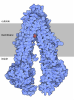
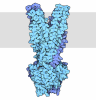
ジャーナル: Immunity / 年: 2025 タイトル: Nucleotide-dependent conformational changes direct peptide export by the transporter associated with antigen processing. 著者: James Lee / Victor Manon / Jue Chen / 要旨: The transporter associated with antigen processing (TAP) delivers peptide antigens from the cytoplasm into the endoplasmic reticulum (ER) for loading onto major histocompatibility complex class I ...The transporter associated with antigen processing (TAP) delivers peptide antigens from the cytoplasm into the endoplasmic reticulum (ER) for loading onto major histocompatibility complex class I (MHC-I) molecules. To examine the mechanisms of peptide transport and release into the ER, we determined cryo-electron microscopy structures of the human TAP heterodimer in multiple functional states along the transport cycle. In the inward-facing conformation, when the peptide translocation cavity within the TAP heterodimer is exposed to the cytosol, ATP binding strengthened intradomain assembly. Transition to the outward-facing conformation, when the transporter opens to the ER lumen, led to a complete reconfiguration of the peptide-binding site, facilitating peptide release. ATP hydrolysis opened the catalytically active nucleotide-binding consensus site, and the subsequent separation of the nucleotide-binding domains reset the transport cycle. These findings establish a comprehensive structural framework for understanding unilateral peptide transport, vanadate trapping, and trans-inhibition-an internal feedback mechanism that prevents excessive peptide accumulation and activation of the ER stress response.
 ムービー
ムービー コントローラー


 データを開く
 基本情報
基本情報
 マップデータ
 試料
試料 キーワード
キーワード 機能・相同性情報
 Homo sapiens (ヒト)
 データ登録者
 米国, 1件
  引用
引用 構造の表示
構造の表示
 ダウンロードとリンク
 emd_49047.png
 http://ftp.pdbj.org/pub/emdb/structures/EMD-49047


 Z (Sec.)
 Y (Row.)
 X (Col.)


 試料の構成要素
 解析
解析 電子顕微鏡法
 FIELD EMISSION GUN

