[English] 日本語
Yorodumi
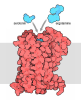
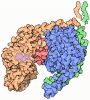
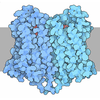
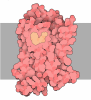
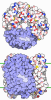
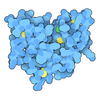
- EMDB-48827: hM4Di(GRANPA) in complex with mGsI and diphenhydramine -

+
Open data


ID or keywords:

Loading...

-
Basic information

Entry
Database: EMDB / ID: EMD-48827
TitlehM4Di(GRANPA) in complex with mGsI and diphenhydramine
Map data
Sample
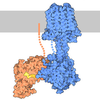
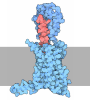
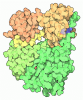
  • Complex: Human M4Di(GRANPA)-miniGsI-Gb1g2 complex
    • Protein or peptide: Guanine nucleotide-binding protein G(I)/G(S)/G(T) subunit beta-1
    • Protein or peptide: Guanine nucleotide-binding protein G(I)/G(S)/G(O) subunit gamma-2
    • Protein or peptide: nanobody 35
    • Protein or peptide: Guanine nucleotide-binding protein Gi chimera (mGsI)
    • Protein or peptide: Muscarinic acetylcholine receptor M4
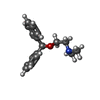
  • Ligand: N-[2-(BENZHYDRYLOXY)ETHYL]-N,N-DIMETHYLAMINE
KeywordsG protein-coupled receptor / acetylcholine binding / seven transmembrane protein / MEMBRANE PROTEIN / SIGNALING PROTEIN
Function / homology
Function and homology information


Muscarinic acetylcholine receptors / G protein-coupled acetylcholine receptor activity / regulation of locomotion / adenylate cyclase-inhibiting G protein-coupled acetylcholine receptor signaling pathway / G-protein activation / Activation of the phototransduction cascade / Glucagon-type ligand receptors / Thromboxane signalling through TP receptor / Sensory perception of sweet, bitter, and umami (glutamate) taste / G beta:gamma signalling through PI3Kgamma ...Muscarinic acetylcholine receptors / G protein-coupled acetylcholine receptor activity / regulation of locomotion / adenylate cyclase-inhibiting G protein-coupled acetylcholine receptor signaling pathway / G-protein activation / Activation of the phototransduction cascade / Glucagon-type ligand receptors / Thromboxane signalling through TP receptor / Sensory perception of sweet, bitter, and umami (glutamate) taste / G beta:gamma signalling through PI3Kgamma / G beta:gamma signalling through CDC42 / Cooperation of PDCL (PhLP1) and TRiC/CCT in G-protein beta folding / Activation of G protein gated Potassium channels / Inhibition of voltage gated Ca2+ channels via Gbeta/gamma subunits / Ca2+ pathway / G alpha (z) signalling events / High laminar flow shear stress activates signaling by PIEZO1 and PECAM1:CDH5:KDR in endothelial cells / Glucagon-like Peptide-1 (GLP1) regulates insulin secretion / Vasopressin regulates renal water homeostasis via Aquaporins / Adrenaline,noradrenaline inhibits insulin secretion / ADP signalling through P2Y purinoceptor 12 / G alpha (q) signalling events / G alpha (i) signalling events / Thrombin signalling through proteinase activated receptors (PARs) / photoreceptor outer segment membrane / spectrin binding / alkylglycerophosphoethanolamine phosphodiesterase activity / photoreceptor outer segment / G protein-coupled receptor signaling pathway, coupled to cyclic nucleotide second messenger / cardiac muscle cell apoptotic process / photoreceptor inner segment / G protein-coupled acetylcholine receptor signaling pathway / G beta:gamma signalling through PLC beta / Presynaptic function of Kainate receptors / Thromboxane signalling through TP receptor / Activation of G protein gated Potassium channels / Inhibition of voltage gated Ca2+ channels via Gbeta/gamma subunits / G-protein activation / Glucagon signaling in metabolic regulation / G beta:gamma signalling through CDC42 / Prostacyclin signalling through prostacyclin receptor / G beta:gamma signalling through BTK / ADP signalling through P2Y purinoceptor 12 / Glucagon-type ligand receptors / Adrenaline,noradrenaline inhibits insulin secretion / Vasopressin regulates renal water homeostasis via Aquaporins / Glucagon-like Peptide-1 (GLP1) regulates insulin secretion / G alpha (z) signalling events / cellular response to catecholamine stimulus / ADP signalling through P2Y purinoceptor 1 / G beta:gamma signalling through PI3Kgamma / ADORA2B mediated anti-inflammatory cytokines production / adenylate cyclase-activating dopamine receptor signaling pathway / Cooperation of PDCL (PhLP1) and TRiC/CCT in G-protein beta folding / GPER1 signaling / cellular response to prostaglandin E stimulus / heterotrimeric G-protein complex / G alpha (12/13) signalling events / G-protein beta-subunit binding / positive regulation of cytosolic calcium ion concentration / sensory perception of taste / Thrombin signalling through proteinase activated receptors (PARs) / signaling receptor complex adaptor activity / retina development in camera-type eye / fibroblast proliferation / cell body / GTPase binding / Ca2+ pathway / chemical synaptic transmission / cellular response to hypoxia / High laminar flow shear stress activates signaling by PIEZO1 and PECAM1:CDH5:KDR in endothelial cells / G alpha (i) signalling events / G alpha (s) signalling events / G alpha (q) signalling events / phospholipase C-activating G protein-coupled receptor signaling pathway / cell population proliferation / postsynaptic membrane / cell surface receptor signaling pathway / Extra-nuclear estrogen signaling / G protein-coupled receptor signaling pathway / GTPase activity / dendrite / synapse / protein-containing complex binding / signal transduction / extracellular exosome / membrane / plasma membrane / cytoplasm
Similarity search - Function
Muscarinic acetylcholine receptor M4 / Muscarinic acetylcholine receptor family / Serpentine type 7TM GPCR chemoreceptor Srsx / G-protein, gamma subunit / G-protein gamma subunit domain profile. / G-protein gamma-like domain / G-protein gamma-like domain superfamily / GGL domain / G protein gamma subunit-like motifs / GGL domain ...Muscarinic acetylcholine receptor M4 / Muscarinic acetylcholine receptor family / Serpentine type 7TM GPCR chemoreceptor Srsx / G-protein, gamma subunit / G-protein gamma subunit domain profile. / G-protein gamma-like domain / G-protein gamma-like domain superfamily / GGL domain / G protein gamma subunit-like motifs / GGL domain / G protein beta WD-40 repeat protein / Guanine nucleotide-binding protein, beta subunit / G-protein, beta subunit / G-protein coupled receptors family 1 signature. / 7 transmembrane receptor (rhodopsin family) / G protein-coupled receptor, rhodopsin-like / GPCR, rhodopsin-like, 7TM / G-protein coupled receptors family 1 profile. / G-protein beta WD-40 repeat / WD40 repeat, conserved site / Trp-Asp (WD) repeats signature. / Trp-Asp (WD) repeats profile. / Trp-Asp (WD) repeats circular profile. / WD40 repeats / WD40 repeat / WD40-repeat-containing domain superfamily / WD40/YVTN repeat-like-containing domain superfamily
Similarity search - Domain/homology
Muscarinic acetylcholine receptor M4 / Guanine nucleotide-binding protein G(I)/G(S)/G(T) subunit beta-1 / Guanine nucleotide-binding protein G(I)/G(S)/G(O) subunit gamma-2
Similarity search - Component
Biological speciesHomo sapiens (human) / Rattus norvegicus (Norway rat) / Lama glama (llama)
Methodsingle particle reconstruction / cryo EM / Resolution: 2.6 Å
AuthorsMobbs JI / Thal DM
Funding support Australia, 1 items
OrganizationGrant numberCountry
National Health and Medical Research Council (NHMRC, Australia)1196951 Australia
CitationJournal: Signal Transduct Target Ther / Year: 2026
Title: Next-generation chemogenetic inhibition using a brain-permeant non-prescription agent.
Authors: Steven O Devenish / Sahil D Patel / Laura V Ussingkær / Luiz F Almeida Silva / Olivia Goff / Amy Richardson / Jesse I Mobbs / Hariprasad Venugopal / David M Thal / Dimitri M Kullmann /
Abstract: Chemogenetics allows the controllable manipulation of brain circuits upon delivery of a selective activating ligand, and has been invaluable in dissecting brain circuits underlying many behaviours. ...Chemogenetics allows the controllable manipulation of brain circuits upon delivery of a selective activating ligand, and has been invaluable in dissecting brain circuits underlying many behaviours. The Gαi/o-coupled designer muscarinic receptor hM4Di is an especially versatile tool for on-demand inhibition, and has proven effective not only in fundamental neuroscience but also as a therapeutic transgene in preclinical models of epilepsy and other CNS disorders. Indeed, by placing the circuit modulation under the control of an exogenous ligand, chemogenetics mitigates the potential risk of overdosage intrinsic to viral-vector mediated gene therapy. An obstacle to clinical translation, however, is the absence of an activating ligand with favourable biodistribution and side effect profile. Here we show that mutation of hM4Di at two sites (S85 and Y416) imparts full and potent agonism to the widely used over-the-counter antihistamine diphenhydramine. We complement medium-throughput screening in human embryonic kidney cells with in vitro electrophysiological characterization in neuronal circuits, and reveal the interaction of diphenhydramine with key residues using cryo-electron microscopy. Administration of diphenhydramine to mice expressing the modified receptor in the ventral hippocampus reversibly modulated anxiety-related behaviour and attenuated the severity of chemoconvulsant-induced seizures. We further demonstrate on-demand seizure suppression in a chronic epilepsy model. G protein-coupled Receptors Activated by Non-Prescription Agents (GRANPAs) lower the barrier to clinical translation of a powerful chemogenetic approach to brain circuit manipulation.
History
DepositionJan 28, 2025-
Header (metadata) releaseJul 15, 2026-
Map releaseJul 15, 2026-
UpdateJul 15, 2026-
Current statusJul 15, 2026Processing site: RCSB / Status: Released

-
Structure visualization

Supplemental images

Downloads & links

-
Map

FileDownload / File: emd_48827.map.gz / Format: CCP4 / Size: 178 MB / Type: IMAGE STORED AS FLOATING POINT NUMBER (4 BYTES)
Projections & slices

Image control

Size
Brightness
Contrast
Others
AxesZ (Sec.)Y (Row.)X (Col.)
0.82 Å/pix.
x 360 pix.
= 295.2 Å
0.82 Å/pix.
x 360 pix.
= 295.2 Å
0.82 Å/pix.
x 360 pix.
= 295.2 Å

Surface

Projections

Slices (1/3)

Slices (1/2)

Slices (2/3)

Images are generated by Spider.

Voxel sizeX=Y=Z: 0.82 Å
Density
Contour LevelBy AUTHOR: 0.31
Minimum - Maximum-0.8874118 - 2.1649313
Average (Standard dev.)0.0004349265 (±0.036107525)
SymmetrySpace group: 1
Details

EMDB XML:

Map geometry
Axis orderXYZ
Origin000
Dimensions360360360
Spacing360360360
CellA=B=C: 295.2 Å
α=β=γ: 90.0 °

-
Supplemental data

-
Mask #1

Fileemd_48827_msk_1.map
Projections & Slices
AxesZYX

Projections

Slices (1/2)
Density Histograms

-
Half map: #1

Fileemd_48827_half_map_1.map
Projections & Slices
AxesZYX

Projections

Slices (1/2)
Density Histograms

-
Half map: #2

Fileemd_48827_half_map_2.map
Projections & Slices
AxesZYX

Projections

Slices (1/2)
Density Histograms

-
Sample components

-
Entire : Human M4Di(GRANPA)-miniGsI-Gb1g2 complex

EntireName: Human M4Di(GRANPA)-miniGsI-Gb1g2 complex
Components
  • Complex: Human M4Di(GRANPA)-miniGsI-Gb1g2 complex
    • Protein or peptide: Guanine nucleotide-binding protein G(I)/G(S)/G(T) subunit beta-1
    • Protein or peptide: Guanine nucleotide-binding protein G(I)/G(S)/G(O) subunit gamma-2
    • Protein or peptide: nanobody 35
    • Protein or peptide: Guanine nucleotide-binding protein Gi chimera (mGsI)
    • Protein or peptide: Muscarinic acetylcholine receptor M4
  • Ligand: N-[2-(BENZHYDRYLOXY)ETHYL]-N,N-DIMETHYLAMINE

-
Supramolecule #1: Human M4Di(GRANPA)-miniGsI-Gb1g2 complex

SupramoleculeName: Human M4Di(GRANPA)-miniGsI-Gb1g2 complex / type: complex / ID: 1 / Parent: 0 / Macromolecule list: #1-#5
Source (natural)Organism: Homo sapiens (human)

-
Macromolecule #1: Guanine nucleotide-binding protein G(I)/G(S)/G(T) subunit beta-1

MacromoleculeName: Guanine nucleotide-binding protein G(I)/G(S)/G(T) subunit beta-1
type: protein_or_peptide / ID: 1 / Number of copies: 1 / Enantiomer: LEVO
Source (natural)Organism: Rattus norvegicus (Norway rat)
Molecular weightTheoretical: 38.744371 KDa
Recombinant expressionOrganism: Trichoplusia ni (cabbage looper)
SequenceString: MHHHHHHGSL LQSELDQLRQ EAEQLKNQIR DARKACADAT LSQITNNIDP VGRIQMRTRR TLRGHLAKIY AMHWGTDSRL LVSASQDGK LIIWDSYTTN KVHAIPLRSS WVMTCAYAPS GNYVACGGLD NICSIYNLKT REGNVRVSRE LAGHTGYLSC C RFLDDNQI ...String:
MHHHHHHGSL LQSELDQLRQ EAEQLKNQIR DARKACADAT LSQITNNIDP VGRIQMRTRR TLRGHLAKIY AMHWGTDSRL LVSASQDGK LIIWDSYTTN KVHAIPLRSS WVMTCAYAPS GNYVACGGLD NICSIYNLKT REGNVRVSRE LAGHTGYLSC C RFLDDNQI VTSSGDTTCA LWDIETGQQT TTFTGHTGDV MSLSLAPDTR LFVSGACDAS AKLWDVREGM CRQTFTGHES DI NAICFFP NGNAFATGSD DATCRLFDLR ADQELMTYSH DNIICGITSV SFSKSGRLLL AGYDDFNCNV WDALKADRAG VLA GHDNRV SCLGVTDDGM AVATGSWDSF LKIWN

UniProtKB: Guanine nucleotide-binding protein G(I)/G(S)/G(T) subunit beta-1

-
Macromolecule #2: Guanine nucleotide-binding protein G(I)/G(S)/G(O) subunit gamma-2

MacromoleculeName: Guanine nucleotide-binding protein G(I)/G(S)/G(O) subunit gamma-2
type: protein_or_peptide / ID: 2 / Number of copies: 1 / Enantiomer: LEVO
Source (natural)Organism: Homo sapiens (human)
Molecular weightTheoretical: 7.56375 KDa
Recombinant expressionOrganism: Trichoplusia ni (cabbage looper)
SequenceString:
MASNNTASIA QARKLVEQLK MEANIDRIKV SKAAADLMAY CEAHAKEDPL LTPVPASENP FREKKFFC

UniProtKB: Guanine nucleotide-binding protein G(I)/G(S)/G(O) subunit gamma-2

-
Macromolecule #3: nanobody 35

MacromoleculeName: nanobody 35 / type: protein_or_peptide / ID: 3 / Number of copies: 1 / Enantiomer: LEVO
Source (natural)Organism: Lama glama (llama)
Molecular weightTheoretical: 15.140742 KDa
Recombinant expressionOrganism: Escherichia coli (E. coli)
SequenceString:
QVQLQESGGG LVQPGGSLRL SCAASGFTFS NYKMNWVRQA PGKGLEWVSD ISQSGASISY TGSVKGRFTI SRDNAKNTLY LQMNSLKPE DTAVYYCARC PAPFTRDCFD VTSTTYAYRG QGTQVTVSSH HHHHHEPEA

-
Macromolecule #4: Guanine nucleotide-binding protein Gi chimera (mGsI)

MacromoleculeName: Guanine nucleotide-binding protein Gi chimera (mGsI) / type: protein_or_peptide / ID: 4 / Number of copies: 1 / Enantiomer: LEVO
Source (natural)Organism: Homo sapiens (human)
Molecular weightTheoretical: 27.915672 KDa
Recombinant expressionOrganism: Trichoplusia ni (cabbage looper)
SequenceString: GCTLSAEDKA AVERSKMIDR NLREDGEKAA REVKLLLLGA DNSGKSTIVK QMRILHGGSG GSGGTSGIFE TKFQVDKVNF HMFDVGGQR DERRKWIQCF NDVTAIIFVV DSSDYNRLQE ALNLFKSIWN NRWLRTISVI LFLNKQDLLA EKVLAGKSKI E DYFPEFAR ...String:
GCTLSAEDKA AVERSKMIDR NLREDGEKAA REVKLLLLGA DNSGKSTIVK QMRILHGGSG GSGGTSGIFE TKFQVDKVNF HMFDVGGQR DERRKWIQCF NDVTAIIFVV DSSDYNRLQE ALNLFKSIWN NRWLRTISVI LFLNKQDLLA EKVLAGKSKI E DYFPEFAR YTTPEDATPE PGEDPRVTRA KYFIRDEFLR ISTASGDGRH YCYPHFTCAV DTENARRIFN DVTDIIIKMN LR DCGLF

-
Macromolecule #5: Muscarinic acetylcholine receptor M4

MacromoleculeName: Muscarinic acetylcholine receptor M4 / type: protein_or_peptide / ID: 5 / Number of copies: 1 / Enantiomer: LEVO
Source (natural)Organism: Homo sapiens (human)
Molecular weightTheoretical: 52.896785 KDa
Recombinant expressionOrganism: Trichoplusia ni (cabbage looper)
SequenceString: ANFTPVNGSS GNQSVRLVTS SSHNRYETVE MVFIATVTGS LSLVTVVGNI LVMLSIKVNR QLQTVNNYFL FSLACADLII GAFVMNLYT VYIIKGYWPL GAVVCDLWLA LDCVVSNASV MNLLIISFDR YFCVTKPLTY PARRTTKMAG LMIAAAWVLS F VLWAPAIL ...String:
ANFTPVNGSS GNQSVRLVTS SSHNRYETVE MVFIATVTGS LSLVTVVGNI LVMLSIKVNR QLQTVNNYFL FSLACADLII GAFVMNLYT VYIIKGYWPL GAVVCDLWLA LDCVVSNASV MNLLIISFDR YFCVTKPLTY PARRTTKMAG LMIAAAWVLS F VLWAPAIL FWQFVVGKRT VPDNQCFIQF LSNPAVTFGT AIAGFYLPVV IMTVLYIHIS LASRSRVHKH RPEGPKEKKA KT LAFLKSP LMKQSVKKPP PGEAAREELR NGKLEEAPPP ALPPPPRPVA DKDTSNESSS GSATQNTKER PATELSTTEA TTP AMPAPP LQPRALNPAS RWSKIQIVTK QTGNECVTAI EIVPATPAGM RPAANVARKF ASIARNQVRK KRQMAARERK VTRT IFAIL LAFILTWTPF NVMVLVNTFC QSCIPDTVWS IGYWLCYVNS TINPACYALC NATFKKTFRH LLLCQYRNIG TAR

UniProtKB: Muscarinic acetylcholine receptor M4

-
Macromolecule #6: N-[2-(BENZHYDRYLOXY)ETHYL]-N,N-DIMETHYLAMINE

MacromoleculeName: N-[2-(BENZHYDRYLOXY)ETHYL]-N,N-DIMETHYLAMINE / type: ligand / ID: 6 / Number of copies: 1 / Formula: 2PM
Molecular weightTheoretical: 255.355 Da
Chemical component information

ChemComp-2PM:
N-[2-(BENZHYDRYLOXY)ETHYL]-N,N-DIMETHYLAMINE

-
Experimental details

-
Structure determination

Methodcryo EM
Processingsingle particle reconstruction
Aggregation stateparticle

-
Sample preparation

BufferpH: 7.4
VitrificationCryogen name: ETHANE

-
Electron microscopy

MicroscopeTFS KRIOS
Image recordingFilm or detector model: GATAN K3 (6k x 4k) / Average electron dose: 60.0 e/Å2
Electron beamAcceleration voltage: 300 kV / Electron source: FIELD EMISSION GUN
Electron opticsIllumination mode: FLOOD BEAM / Imaging mode: BRIGHT FIELD / Nominal defocus max: 1.5 µm / Nominal defocus min: 0.5 µm
Experimental equipment
Model: Titan Krios / Image courtesy: FEI Company

+
Image processing

CTF correctionType: PHASE FLIPPING AND AMPLITUDE CORRECTION
Startup modelType of model: INSILICO MODEL / In silico model: ab initio model
Final reconstructionResolution.type: BY AUTHOR / Resolution: 2.6 Å / Resolution method: FSC 0.143 CUT-OFF / Number images used: 189628
Initial angle assignmentType: MAXIMUM LIKELIHOOD
Final angle assignmentType: MAXIMUM LIKELIHOOD
FSC plot (resolution estimation)

+
About Yorodumi

-
News

-
Feb 9, 2022. New format data for meta-information of EMDB entries

New format data for meta-information of EMDB entries

  • Version 3 of the EMDB header file is now the official format.
  • The previous official version 1.9 will be removed from the archive.

Related info.:EMDB header

External links:wwPDB to switch to version 3 of the EMDB data model

-
Aug 12, 2020. Covid-19 info

Covid-19 info

URL: https://pdbj.org/emnavi/covid19.php

New page: Covid-19 featured information page in EM Navigator.

Related info.:Covid-19 info / Mar 5, 2020. Novel coronavirus structure data

+
Mar 5, 2020. Novel coronavirus structure data

Novel coronavirus structure data

Related info.:Yorodumi Speices / Aug 12, 2020. Covid-19 info

External links:COVID-19 featured content - PDBj / Molecule of the Month (242):Coronavirus Proteases

+
Jan 31, 2019. EMDB accession codes are about to change! (news from PDBe EMDB page)

EMDB accession codes are about to change! (news from PDBe EMDB page)

  • The allocation of 4 digits for EMDB accession codes will soon come to an end. Whilst these codes will remain in use, new EMDB accession codes will include an additional digit and will expand incrementally as the available range of codes is exhausted. The current 4-digit format prefixed with “EMD-” (i.e. EMD-XXXX) will advance to a 5-digit format (i.e. EMD-XXXXX), and so on. It is currently estimated that the 4-digit codes will be depleted around Spring 2019, at which point the 5-digit format will come into force.
  • The EM Navigator/Yorodumi systems omit the EMD- prefix.

Related info.:Q: What is EMD? / ID/Accession-code notation in Yorodumi/EM Navigator

External links:EMDB Accession Codes are Changing Soon! / Contact to PDBj

+
Jul 12, 2017. Major update of PDB

Major update of PDB

  • wwPDB released updated PDB data conforming to the new PDBx/mmCIF dictionary.
  • This is a major update changing the version number from 4 to 5, and with Remediation, in which all the entries are updated.
  • In this update, many items about electron microscopy experimental information are reorganized (e.g. em_software).
  • Now, EM Navigator and Yorodumi are based on the updated data.

External links:wwPDB Remediation / Enriched Model Files Conforming to OneDep Data Standards Now Available in the PDB FTP Archive

-
Yorodumi

Thousand views of thousand structures

  • Yorodumi is a browser for structure data from EMDB, PDB, SASBDB, etc.
  • This page is also the successor to EM Navigator detail page, and also detail information page/front-end page for Omokage search.
  • The word "yorodu" (or yorozu) is an old Japanese word meaning "ten thousand". "mi" (miru) is to see.

Related info.:EMDB / PDB / SASBDB / Comparison of 3 databanks / Yorodumi Search / Aug 31, 2016. New EM Navigator & Yorodumi / Yorodumi Papers / Jmol/JSmol / Function and homology information / Changes in new EM Navigator and Yorodumi

Read more