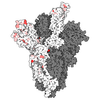
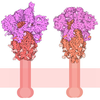
Journal: Signal Transduct Target Ther / Year: 2024 Title: Enhanced potency of an IgM-like nanobody targeting conserved epitope in SARS-CoV-2 spike N-terminal domain. Authors: Bo Liu / Honghui Liu / Pu Han / Xiaoyun Wang / Chunmei Wang / Xinxin Yan / Wenwen Lei / Ke Xu / Jianjie Zhou / Jianxun Qi / Ruiwen Fan / Guizhen Wu / Wen-Xia Tian / George F Gao / Qihui Wang / Abstract: Almost all the neutralizing antibodies targeting the receptor-binding domain (RBD) of spike (S) protein show weakened or lost efficacy against severe acute respiratory syndrome coronavirus 2 (SARS- ...Almost all the neutralizing antibodies targeting the receptor-binding domain (RBD) of spike (S) protein show weakened or lost efficacy against severe acute respiratory syndrome coronavirus 2 (SARS-CoV-2) emerged or emerging variants, such as Omicron and its sub-variants. This suggests that highly conserved epitopes are crucial for the development of neutralizing antibodies. Here, we present one nanobody, N235, displaying broad neutralization against the SARS-CoV-2 prototype and multiple variants, including the newly emerged Omicron and its sub-variants. Cryo-electron microscopy demonstrates N235 binds a novel, conserved, cryptic epitope in the N-terminal domain (NTD) of the S protein, which interferes with the RBD in the neighboring S protein. The neutralization mechanism interpreted via flow cytometry and Western blot shows that N235 appears to induce the S1 subunit shedding from the trimeric S complex. Furthermore, a nano-IgM construct (MN235), engineered by fusing N235 with the human IgM Fc region, displays prevention via inducing S1 shedding and cross-linking virus particles. Compared to N235, MN235 exhibits varied enhancement in neutralization against pseudotyped and authentic viruses in vitro. The intranasal administration of MN235 in low doses can effectively prevent the infection of Omicron sub-variant BA.1 and XBB in vivo, suggesting that it can be developed as a promising prophylactic antibody to cope with the ongoing and future infection.
In the structure databanks used in Yorodumi, some data are registered as the other names, "COVID-19 virus" and "2019-nCoV". Here are the details of the virus and the list of structure data.
Jan 31, 2019. EMDB accession codes are about to change! (news from PDBe EMDB page)
EMDB accession codes are about to change! (news from PDBe EMDB page)
The allocation of 4 digits for EMDB accession codes will soon come to an end. Whilst these codes will remain in use, new EMDB accession codes will include an additional digit and will expand incrementally as the available range of codes is exhausted. The current 4-digit format prefixed with “EMD-” (i.e. EMD-XXXX) will advance to a 5-digit format (i.e. EMD-XXXXX), and so on. It is currently estimated that the 4-digit codes will be depleted around Spring 2019, at which point the 5-digit format will come into force.
The EM Navigator/Yorodumi systems omit the EMD- prefix.
Related info.:Q: What is EMD? / ID/Accession-code notation in Yorodumi/EM Navigator
Yorodumi is a browser for structure data from EMDB, PDB, SASBDB, etc.
This page is also the successor to EM Navigator detail page, and also detail information page/front-end page for Omokage search.
The word "yorodu" (or yorozu) is an old Japanese word meaning "ten thousand". "mi" (miru) is to see.
Related info.:EMDB / PDB / SASBDB / Comparison of 3 databanks / Yorodumi Search / Aug 31, 2016. New EM Navigator & Yorodumi / Yorodumi Papers / Jmol/JSmol / Function and homology information / Changes in new EM Navigator and Yorodumi
 Movie
Movie Controller

 Yorodumi
 Open data
 Basic information
 Map data
 Sample
 Keywords
 Function and homology information
 Vicugna pacos (alpaca) /
  Homo sapiens (human) /
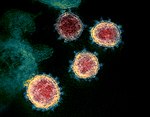 Severe acute respiratory syndrome coronavirus 2
 Authors
 China, 1 items
  Citation
 Structure visualization
 Downloads & links
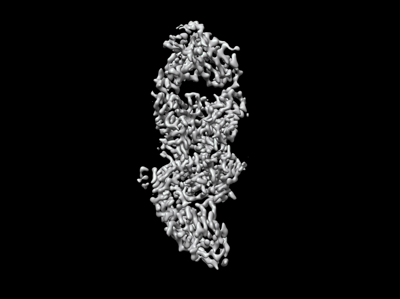 emd_36672.png
 http://ftp.pdbj.org/pub/emdb/structures/EMD-36672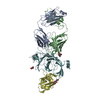
 Z (Sec.)
 Y (Row.)
 X (Col.)




 Sample components
 Processing
 Electron microscopy
 FIELD EMISSION GUN

