National Institutes of Health/National Institute of General Medical Sciences (NIH/NIGMS)
R35GM150960
United States
Japan Society for the Promotion of Science (JSPS)
21H04762
Japan
Japan Society for the Promotion of Science (JSPS)
21H05248
Japan
Japan Agency for Medical Research and Development (AMED)
JP24ama121002
Japan
Japan Society for the Promotion of Science (JSPS)
SP24007
Japan
National Institutes of Health/National Institute of Dental and Craniofacial Research (NIH/NIDCR)
F31DE034311
United States
National Institutes of Health/National Cancer Institute (NIH/NCI)
P30CA016086
United States
Citation
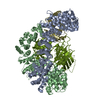
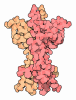
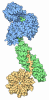
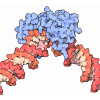
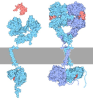
Journal: Sci Adv / Year: 2026 Title: CCDC32 collaborates with the membrane to assemble the AP-2 clathrin adaptor complex. Authors: Dillon E Sloan / Ariel E Matthews / Haruaki Yanagisawa / Tanita Tedamrongwanish / Kevin Cannon / Jake Simmons / Garrett Chappell / Nathan I Nicely / Rebecca Berlow / Masahide Kikkawa / Richard W Baker / Abstract: Assembly of adaptor protein complex 2 (AP-2), the primary cargo adaptor in clathrin-mediated endocytosis, is regulated by the chaperones alpha- and gamma-adaptin binding protein (AAGAB) and coiled- ...Assembly of adaptor protein complex 2 (AP-2), the primary cargo adaptor in clathrin-mediated endocytosis, is regulated by the chaperones alpha- and gamma-adaptin binding protein (AAGAB) and coiled-coil domain-containing protein 32 (CCDC32), whose deletion causes loss of all AP-2 subunits in vivo. Here, we describe the molecular mechanism of CCDC32-mediated AP-2 assembly. CCDC32 interacts with the appendage domain of the AP-2 α subunit with high affinity, using the same binding site as canonical endocytic regulators in addition to a previously unidentified, yet highly conserved pocket on α. CCDC32 contains cargo sorting motifs normally found in transmembrane cargo and binds to AP-2 heterodimers using canonical cargo-binding sites. In addition, two amphipathic helices in CCDC32 bind to the α/σ2 heterodimer. Unexpectedly, in solution, CCDC32 prevents complex assembly and actively disassembles AP-2 tetramers. Inhibition requires the amphipathic helices of CCDC32, which also mediate binding to phosphatidylinositol 4,5-bisphosphate (PIP)-containing membranes. The presence of PIP-containing membrane stabilizes the final stages of assembly. We propose that the membrane acts as a molecular switch to release inhibitory interactions, allowing for full complex assembly to proceed.
In the structure databanks used in Yorodumi, some data are registered as the other names, "COVID-19 virus" and "2019-nCoV". Here are the details of the virus and the list of structure data.
Jan 31, 2019. EMDB accession codes are about to change! (news from PDBe EMDB page)
EMDB accession codes are about to change! (news from PDBe EMDB page)
The allocation of 4 digits for EMDB accession codes will soon come to an end. Whilst these codes will remain in use, new EMDB accession codes will include an additional digit and will expand incrementally as the available range of codes is exhausted. The current 4-digit format prefixed with “EMD-” (i.e. EMD-XXXX) will advance to a 5-digit format (i.e. EMD-XXXXX), and so on. It is currently estimated that the 4-digit codes will be depleted around Spring 2019, at which point the 5-digit format will come into force.
The EM Navigator/Yorodumi systems omit the EMD- prefix.
Related info.:Q: What is EMD? / ID/Accession-code notation in Yorodumi/EM Navigator
Yorodumi is a browser for structure data from EMDB, PDB, SASBDB, etc.
This page is also the successor to EM Navigator detail page, and also detail information page/front-end page for Omokage search.
The word "yorodu" (or yorozu) is an old Japanese word meaning "ten thousand". "mi" (miru) is to see.
Related info.:EMDB / PDB / SASBDB / Comparison of 3 databanks / Yorodumi Search / Aug 31, 2016. New EM Navigator & Yorodumi / Yorodumi Papers / Jmol/JSmol / Function and homology information / Changes in new EM Navigator and Yorodumi
 Movie
 Controller


 Open data

 Basic information

 Map data
 Sample
 Keywords
 Function and homology information

 Mus musculus (house mouse)
 Authors
 United States,
 Japan, 7 items
 Citation
 Structure visualization

 Downloads & links
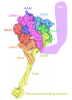
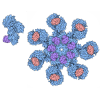
 emd_71905.png
 https://data.pdbj.org/pub/emdb/structures/EMD-71905


 Z (Sec.)
 Y (Row.)
 X (Col.)


 Sample components

 Escherichia coli (E. coli)
 Processing
 Electron microscopy
 FIELD EMISSION GUN