[English] 日本語
Yorodumi
- EMDB-59025: MRC3 conformer 4 (MRC3-C4) mouse prion fibril from terminal infec... -

+
Open data


ID or keywords:

Loading...

-
Basic information

Entry
Database: EMDB / ID: EMD-59025
TitleMRC3 conformer 4 (MRC3-C4) mouse prion fibril from terminal infected mouse brain
Map data
Sample
  • Complex: MRC3-C4 mouse prion fibril
    • Protein or peptide: Major prion protein
KeywordsPrion / amyloid / fibril / PROTEIN FIBRIL
Function / homology
Function and homology information


Insertion of tail-anchored proteins into the endoplasmic reticulum membrane / vascular associated smooth muscle cell apoptotic process / vascular associated smooth muscle cell proliferation / vascular associated smooth muscle cell migration / maternal placenta development / ferroptosis / regulation of response to oxidative stress / regulation of acute inflammatory response / negative regulation of amyloid precursor protein catabolic process / regulation of glutamate receptor signaling pathway ...Insertion of tail-anchored proteins into the endoplasmic reticulum membrane / vascular associated smooth muscle cell apoptotic process / vascular associated smooth muscle cell proliferation / vascular associated smooth muscle cell migration / maternal placenta development / ferroptosis / regulation of response to oxidative stress / regulation of acute inflammatory response / negative regulation of amyloid precursor protein catabolic process / regulation of glutamate receptor signaling pathway / aspartic-type endopeptidase inhibitor activity / lamin binding / regulation of calcium ion import across plasma membrane / glycosaminoglycan binding / positive regulation of mesenchymal stem cell proliferation / TRAIL-activated apoptotic signaling pathway / regulation of potassium ion transmembrane transport / negative regulation of calcineurin-NFAT signaling cascade / cupric ion binding / negative regulation of interleukin-17 production / regulation of oxidative stress-induced neuron intrinsic apoptotic signaling pathway / ATP-dependent protein binding / type 5 metabotropic glutamate receptor binding / negative regulation of interleukin-2 production / negative regulation of activated T cell proliferation / negative regulation of dendritic spine maintenance / response to copper ion / response to amyloid-beta / positive regulation of glutamate receptor signaling pathway / negative regulation of type II interferon production / negative regulation of amyloid-beta formation / negative regulation of long-term synaptic potentiation / response to cadmium ion / cuprous ion binding / intracellular copper ion homeostasis / positive regulation of protein targeting to membrane / negative regulation of T cell receptor signaling pathway / neuron apoptotic process / ERK1 and ERK2 cascade / response to ischemia / positive regulation of calcium-mediated signaling / endoplasmic reticulum unfolded protein response / neuron projection maintenance / inclusion body / response to endoplasmic reticulum stress / molecular function activator activity / response to reactive oxygen species / cellular response to copper ion / cellular response to xenobiotic stimulus / mitochondrion organization / protein destabilization / molecular condensate scaffold activity / positive regulation of protein localization to plasma membrane / tubulin binding / protein homooligomerization / cellular response to amyloid-beta / positive regulation of neuron apoptotic process / neuron projection development / terminal bouton / amyloid-beta binding / regulation of protein localization / nuclear membrane / protein-folding chaperone binding / signaling receptor activity / protease binding / protein-containing complex assembly / response to oxidative stress / microtubule binding / molecular adaptor activity / transmembrane transporter binding / learning or memory / postsynaptic density / mitochondrial outer membrane / intracellular signal transduction / membrane raft / copper ion binding / negative regulation of apoptotic process / dendrite / protein-containing complex binding / negative regulation of transcription by RNA polymerase II / Golgi apparatus / metal ion binding / cell surface / endoplasmic reticulum / membrane / identical protein binding / plasma membrane / cytosol
Similarity search - Function
Prion, copper binding octapeptide repeat / Copper binding octapeptide repeat region / Major prion protein N-terminal domain / Major prion protein bPrPp - N terminal / Prion protein signature 1. / Prion protein signature 2. / Prion protein / Major prion protein / Prion/Doppel protein, beta-ribbon domain / Prion/Doppel beta-ribbon domain superfamily / Prion/Doppel alpha-helical domain
Similarity search - Domain/homology
Biological speciesMus musculus (house mouse)
Methodhelical reconstruction / cryo EM / Resolution: 3.18 Å
AuthorsWenborn A / Manka SW / Saibil HR / Wadsworth JDF / Collinge J
Funding support United Kingdom, 7 items
OrganizationGrant numberCountry
Medical Research Council (MRC, United Kingdom)MC_UU_00037/8 United Kingdom
Medical Research Council (MRC, United Kingdom)MC_UU_00037/6 United Kingdom
Medical Research Council (MRC, United Kingdom)MC_UU_00024/7 United Kingdom
Medical Research Council (MRC, United Kingdom)MC_UU_00024/5 United Kingdom
Wellcome Trust202679/Z/16/Z United Kingdom
Wellcome Trust206166/Z/17/Z United Kingdom
Wellcome Trust106249/Z/14/Z United Kingdom
CitationJournal: To Be Published
Title: Prion strain evolution across a species barrier viewed at molecular scale
Authors: Wenborn A / Manka SW / Linehan JM / Joiner S / Nazari T / Thirlway G / Ahmed P / Al-Doujaily H / Sandberg MK / Hill AF / Brandner S / Saibil HR / Wadsworth JDF / Collinge J
History
DepositionJul 16, 2026-
Header (metadata) releaseNov 25, 2026-
Map releaseNov 25, 2026-
UpdateNov 25, 2026-
Current statusNov 25, 2026Processing site: PDBe / Status: Released

-
Structure visualization

Supplemental images

Downloads & links

-
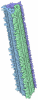
Map

FileDownload / File: emd_59025.map.gz / Format: CCP4 / Size: 421.9 MB / Type: IMAGE STORED AS FLOATING POINT NUMBER (4 BYTES)
Projections & slices

Image control

Size
Brightness
Contrast
Others
AxesZ (Sec.)Y (Row.)X (Col.)
0.83 Å/pix.
x 480 pix.
= 397.44 Å
0.83 Å/pix.
x 480 pix.
= 397.44 Å
0.83 Å/pix.
x 480 pix.
= 397.44 Å

Surface

Projections

Slices (1/3)

Slices (1/2)

Slices (2/3)

Images are generated by Spider.

Voxel sizeX=Y=Z: 0.828 Å
Density
Contour LevelBy AUTHOR: 0.0045
Minimum - Maximum-0.0147050815 - 0.027398074
Average (Standard dev.)0.000012883043 (±0.0004119472)
SymmetrySpace group: 1
Details

EMDB XML:

Map geometry
Axis orderXYZ
Origin000
Dimensions480480480
Spacing480480480
CellA=B=C: 397.44 Å
α=β=γ: 90.0 °

-
Supplemental data

-
Mask #1

Fileemd_59025_msk_1.map
Projections & Slices
AxesZYX

Projections

Slices (1/2)
Density Histograms

-
Half map: #2

Fileemd_59025_half_map_1.map
Projections & Slices
AxesZYX

Projections

Slices (1/2)
Density Histograms

-
Half map: #1

Fileemd_59025_half_map_2.map
Projections & Slices
AxesZYX

Projections

Slices (1/2)
Density Histograms

-
Sample components

-
Entire : MRC3-C4 mouse prion fibril

EntireName: MRC3-C4 mouse prion fibril
Components
  • Complex: MRC3-C4 mouse prion fibril
    • Protein or peptide: Major prion protein

-
Supramolecule #1: MRC3-C4 mouse prion fibril

SupramoleculeName: MRC3-C4 mouse prion fibril / type: complex / ID: 1 / Parent: 0 / Macromolecule list: all
Source (natural)Organism: Mus musculus (house mouse) / Organ: Brain

-
Macromolecule #1: Major prion protein

MacromoleculeName: Major prion protein / type: protein_or_peptide / ID: 1 / Number of copies: 3 / Enantiomer: LEVO
Source (natural)Organism: Mus musculus (house mouse) / Organ: Brain
Molecular weightTheoretical: 15.290103 KDa
SequenceString:
THNQWNKPSK PKTNLKHVAG AAAAGAVVGG LGGYMLGSAM SRPMIHFGND WEDRYYRENM YRYPNQVYYR PVDQYSNQNN FVHDCVNIT IKQHTVTTTT KGENFTETDV KMMERVVEQM CVTQYQKESQ AYY

UniProtKB: Major prion protein

-
Experimental details

-
Structure determination

Methodcryo EM
Processinghelical reconstruction
Aggregation statefilament

-
Sample preparation

BufferpH: 8
VitrificationCryogen name: ETHANE / Instrument: LEICA EM GP

-
Electron microscopy

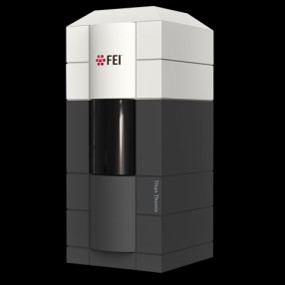
MicroscopeTFS KRIOS
SoftwareName: EPU (ver. 2)
Image recordingFilm or detector model: GATAN K3 (6k x 4k) / Average electron dose: 50.2 e/Å2
Electron beamAcceleration voltage: 300 kV / Electron source: FIELD EMISSION GUN
Electron opticsIllumination mode: FLOOD BEAM / Imaging mode: BRIGHT FIELD / Nominal defocus max: 2.0 µm / Nominal defocus min: 0.6 µm / Nominal magnification: 105000
Sample stageSpecimen holder model: FEI TITAN KRIOS AUTOGRID HOLDER / Cooling holder cryogen: NITROGEN
Experimental equipment
Model: Titan Krios / Image courtesy: FEI Company

+
Image processing

Final reconstructionApplied symmetry - Helical parameters - Δz: 4.79 Å
Applied symmetry - Helical parameters - Δ&Phi: -0.703 °
Applied symmetry - Helical parameters - Axial symmetry: C1 (asymmetric)
Resolution.type: BY AUTHOR / Resolution: 3.18 Å / Resolution method: FSC 0.143 CUT-OFF / Software - Name: RELION (ver. 5) / Number images used: 27475
CTF correctionSoftware - Name: CTFFIND (ver. 4.1) / Type: PHASE FLIPPING AND AMPLITUDE CORRECTION
Startup modelType of model: INSILICO MODEL
Final angle assignmentType: NOT APPLICABLE / Software - Name: RELION (ver. 5)
FSC plot (resolution estimation)

+
About Yorodumi

-
News

-
Feb 9, 2022. New format data for meta-information of EMDB entries

New format data for meta-information of EMDB entries

  • Version 3 of the EMDB header file is now the official format.
  • The previous official version 1.9 will be removed from the archive.

Related info.:EMDB header

External links:wwPDB to switch to version 3 of the EMDB data model

-
Aug 12, 2020. Covid-19 info

Covid-19 info

URL: https://pdbj.org/emnavi/covid19.php

New page: Covid-19 featured information page in EM Navigator.

Related info.:Covid-19 info / Mar 5, 2020. Novel coronavirus structure data

+
Mar 5, 2020. Novel coronavirus structure data

Novel coronavirus structure data

Related info.:Yorodumi Speices / Aug 12, 2020. Covid-19 info

External links:COVID-19 featured content - PDBj / Molecule of the Month (242):Coronavirus Proteases

+
Jan 31, 2019. EMDB accession codes are about to change! (news from PDBe EMDB page)

EMDB accession codes are about to change! (news from PDBe EMDB page)

  • The allocation of 4 digits for EMDB accession codes will soon come to an end. Whilst these codes will remain in use, new EMDB accession codes will include an additional digit and will expand incrementally as the available range of codes is exhausted. The current 4-digit format prefixed with “EMD-” (i.e. EMD-XXXX) will advance to a 5-digit format (i.e. EMD-XXXXX), and so on. It is currently estimated that the 4-digit codes will be depleted around Spring 2019, at which point the 5-digit format will come into force.
  • The EM Navigator/Yorodumi systems omit the EMD- prefix.

Related info.:Q: What is EMD? / ID/Accession-code notation in Yorodumi/EM Navigator

External links:EMDB Accession Codes are Changing Soon! / Contact to PDBj

+
Jul 12, 2017. Major update of PDB

Major update of PDB

  • wwPDB released updated PDB data conforming to the new PDBx/mmCIF dictionary.
  • This is a major update changing the version number from 4 to 5, and with Remediation, in which all the entries are updated.
  • In this update, many items about electron microscopy experimental information are reorganized (e.g. em_software).
  • Now, EM Navigator and Yorodumi are based on the updated data.

External links:wwPDB Remediation / Enriched Model Files Conforming to OneDep Data Standards Now Available in the PDB FTP Archive

-
Yorodumi

Thousand views of thousand structures

  • Yorodumi is a browser for structure data from EMDB, PDB, SASBDB, etc.
  • This page is also the successor to EM Navigator detail page, and also detail information page/front-end page for Omokage search.
  • The word "yorodu" (or yorozu) is an old Japanese word meaning "ten thousand". "mi" (miru) is to see.

Related info.:EMDB / PDB / SASBDB / Comparison of 3 databanks / Yorodumi Search / Aug 31, 2016. New EM Navigator & Yorodumi / Yorodumi Papers / Jmol/JSmol / Function and homology information / Changes in new EM Navigator and Yorodumi

Read more