Movie
Movie Controller

[English] 日本語
 Yorodumi
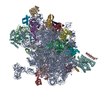
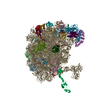
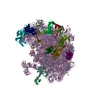
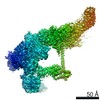
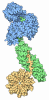
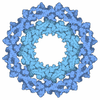
- EMDB-3213: Architecture of human mTOR Complex 1 - 5.9 Angstrom reconstruction -
+ Open data

- Basic information
| Entry | Database: EMDB / ID: EMD-3213 | |||||||||
|---|---|---|---|---|---|---|---|---|---|---|
| Title | Architecture of human mTOR Complex 1 - 5.9 Angstrom reconstruction | |||||||||
 Map data Map data | Human mTOR complex 1 | |||||||||
 Sample Sample |
| |||||||||
 Keywords Keywords | Rapamycin / TOR / mTOR / Raptor / mLST8 / FKBP / mTORC1 | |||||||||
| Function / homology |  Function and homology information Function and homology informationpositive regulation of SCF-dependent proteasomal ubiquitin-dependent catabolic process / RNA polymerase III type 2 promoter sequence-specific DNA binding / RNA polymerase III type 1 promoter sequence-specific DNA binding / positive regulation of cytoplasmic translational initiation / regulation of locomotor rhythm / T-helper 1 cell lineage commitment / positive regulation of pentose-phosphate shunt / positive regulation of wound healing, spreading of epidermal cells / TORC2 complex / regulation of membrane permeability ...positive regulation of SCF-dependent proteasomal ubiquitin-dependent catabolic process / RNA polymerase III type 2 promoter sequence-specific DNA binding / RNA polymerase III type 1 promoter sequence-specific DNA binding / positive regulation of cytoplasmic translational initiation / regulation of locomotor rhythm / T-helper 1 cell lineage commitment / positive regulation of pentose-phosphate shunt / positive regulation of wound healing, spreading of epidermal cells / TORC2 complex / regulation of membrane permeability / cellular response to leucine starvation / TFIIIC-class transcription factor complex binding / heart valve morphogenesis / negative regulation of lysosome organization / TORC1 complex / voluntary musculoskeletal movement / positive regulation of odontoblast differentiation / positive regulation of transcription of nucleolar large rRNA by RNA polymerase I / calcineurin-NFAT signaling cascade / RNA polymerase III type 3 promoter sequence-specific DNA binding / positive regulation of keratinocyte migration / regulation of osteoclast differentiation / MTOR signalling / regulation of lysosome organization / energy reserve metabolic process / cellular response to L-leucine / regulation of autophagosome assembly / Energy dependent regulation of mTOR by LKB1-AMPK / cellular response to nutrient / Amino acids regulate mTORC1 / cellular response to methionine / TORC2 signaling / positive regulation of osteoclast differentiation / negative regulation of cell size / cellular response to osmotic stress / anoikis / cell projection organization / inositol hexakisphosphate binding / cardiac muscle cell development / negative regulation of calcineurin-NFAT signaling cascade / positive regulation of ubiquitin-dependent protein catabolic process / regulation of myelination / negative regulation of protein localization to nucleus / positive regulation of transcription by RNA polymerase III / positive regulation of ruffle assembly / regulation of cell size / negative regulation of macroautophagy / positive regulation of myotube differentiation / Macroautophagy / Constitutive Signaling by AKT1 E17K in Cancer / germ cell development / positive regulation of actin filament polymerization / oligodendrocyte differentiation / TORC1 signaling / behavioral response to pain / positive regulation of oligodendrocyte differentiation / TOR signaling / mTORC1-mediated signalling / response to amino acid / positive regulation of translational initiation / CD28 dependent PI3K/Akt signaling / HSF1-dependent transactivation / regulation of macroautophagy / positive regulation of TOR signaling / protein kinase activator activity / protein serine/threonine kinase inhibitor activity / enzyme-substrate adaptor activity / social behavior / 'de novo' pyrimidine nucleobase biosynthetic process / positive regulation of epithelial to mesenchymal transition / positive regulation of G1/S transition of mitotic cell cycle / positive regulation of lipid biosynthetic process / vascular endothelial cell response to laminar fluid shear stress / heart morphogenesis / neuronal action potential / regulation of cellular response to heat / positive regulation of lamellipodium assembly / phagocytic vesicle / T cell costimulation / cardiac muscle contraction / positive regulation of stress fiber assembly / positive regulation of endothelial cell proliferation / negative regulation of insulin receptor signaling pathway / cytoskeleton organization / 14-3-3 protein binding / endomembrane system / cellular response to nutrient levels / positive regulation of glycolytic process / cellular response to amino acid starvation / cellular response to starvation / regulation of signal transduction by p53 class mediator / Regulation of PTEN gene transcription / negative regulation of autophagy / VEGFR2 mediated vascular permeability / regulation of autophagy / protein serine/threonine kinase activator activity / post-embryonic development / positive regulation of translation / TP53 Regulates Metabolic Genes / regulation of actin cytoskeleton organization Similarity search - Function | |||||||||
| Biological species |  Homo sapiens (human) Homo sapiens (human) | |||||||||
| Method | single particle reconstruction / cryo EM / Resolution: 5.9 Å | |||||||||
 Authors Authors | Aylett CHS / Sauer E / Imseng S / Boehringer D / Hall MN / Ban N / Maier T | |||||||||
 Citation Citation | Journal: Science / Year: 2016 Title: Architecture of human mTOR complex 1. Authors: Christopher H S Aylett / Evelyn Sauer / Stefan Imseng / Daniel Boehringer / Michael N Hall / Nenad Ban / Timm Maier /  Abstract: Target of rapamycin (TOR), a conserved protein kinase and central controller of cell growth, functions in two structurally and functionally distinct complexes: TORC1 and TORC2. Dysregulation of ...Target of rapamycin (TOR), a conserved protein kinase and central controller of cell growth, functions in two structurally and functionally distinct complexes: TORC1 and TORC2. Dysregulation of mammalian TOR (mTOR) signaling is implicated in pathologies that include diabetes, cancer, and neurodegeneration. We resolved the architecture of human mTORC1 (mTOR with subunits Raptor and mLST8) bound to FK506 binding protein (FKBP)-rapamycin, by combining cryo-electron microscopy at 5.9 angstrom resolution with crystallographic studies of Chaetomium thermophilum Raptor at 4.3 angstrom resolution. The structure explains how FKBP-rapamycin and architectural elements of mTORC1 limit access to the recessed active site. Consistent with a role in substrate recognition and delivery, the conserved amino-terminal domain of Raptor is juxtaposed to the kinase active site. | |||||||||
| History |
|
- Structure visualization
| Movie |
Movie viewer |
|---|---|
| Structure viewer | EM map: SurfViewMolmilJmol/JSmol |
| Supplemental images |

- Downloads & links
-EMDB archive
| Map data | emd_3213.map.gz | 58.6 MB | EMDB map data format | |
|---|---|---|---|---|
| Header (meta data) | emd-3213-v30.xmlemd-3213.xml | 12.3 KB 12.3 KB | Display Display | EMDB header |
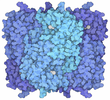
| Images | 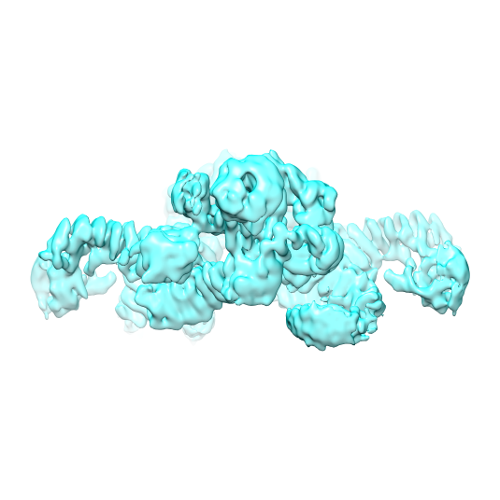 EMD-3213_mTORC1.png EMD-3213_mTORC1.png | 98.3 KB | ||
| Archive directory |  http://ftp.pdbj.org/pub/emdb/structures/EMD-3213ftp://ftp.pdbj.org/pub/emdb/structures/EMD-3213 http://ftp.pdbj.org/pub/emdb/structures/EMD-3213ftp://ftp.pdbj.org/pub/emdb/structures/EMD-3213 | HTTPS FTP |
-Related structure data
| Related structure data | 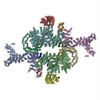 5flcMC 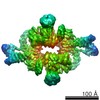 3212C 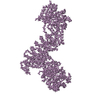 5ef5C M: atomic model generated by this map C: citing same article ( |
|---|---|
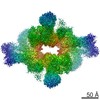
| Similar structure data |

-Links
| EMDB pages | EMDB (EBI/PDBe) / EMDataResource |
|---|---|
| Related items in Molecule of the Month |
-Map
| File | Download / File: emd_3213.map.gz / Format: CCP4 / Size: 62.5 MB / Type: IMAGE STORED AS FLOATING POINT NUMBER (4 BYTES) | ||||||||||||||||||||||||||||||||||||||||||||||||||||||||||||
|---|---|---|---|---|---|---|---|---|---|---|---|---|---|---|---|---|---|---|---|---|---|---|---|---|---|---|---|---|---|---|---|---|---|---|---|---|---|---|---|---|---|---|---|---|---|---|---|---|---|---|---|---|---|---|---|---|---|---|---|---|---|
| Annotation | Human mTOR complex 1 | ||||||||||||||||||||||||||||||||||||||||||||||||||||||||||||
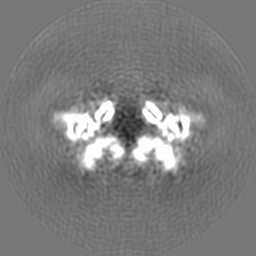
| Projections & slices | Image control
Images are generated by Spider. | ||||||||||||||||||||||||||||||||||||||||||||||||||||||||||||
| Voxel size | X=Y=Z: 1.39 Å | ||||||||||||||||||||||||||||||||||||||||||||||||||||||||||||
| Density |
| ||||||||||||||||||||||||||||||||||||||||||||||||||||||||||||
| Symmetry | Space group: 1 | ||||||||||||||||||||||||||||||||||||||||||||||||||||||||||||
| Details | EMDB XML:
CCP4 map header:
| ||||||||||||||||||||||||||||||||||||||||||||||||||||||||||||
 Z (Sec.)
 Y (Row.)
 X (Col.)




-Supplemental data
- Sample components
-Entire : Human mTOR complex 1
| Entire | Name: Human mTOR complex 1 |
|---|---|
| Components |
|
-Supramolecule #1000: Human mTOR complex 1
| Supramolecule | Name: Human mTOR complex 1 / type: sample / ID: 1000 / Oligomeric state: tetrameric / Number unique components: 3 |
|---|---|
| Molecular weight | Theoretical: 1 MDa |
-Macromolecule #1: mTOR
| Macromolecule | Name: mTOR / type: protein_or_peptide / ID: 1 / Oligomeric state: Dimeric / Recombinant expression: Yes |
|---|---|
| Source (natural) | Organism: Homo sapiens (human) / synonym: Human |
| Molecular weight | Theoretical: 290 KDa |
| Recombinant expression | Organism:   Spodoptera frugiperda (fall armyworm) / Recombinant cell: 21 / Recombinant plasmid: Multibac Spodoptera frugiperda (fall armyworm) / Recombinant cell: 21 / Recombinant plasmid: Multibac |
| Sequence | UniProtKB: Serine/threonine-protein kinase mTOR |
-Macromolecule #2: Raptor
| Macromolecule | Name: Raptor / type: protein_or_peptide / ID: 2 / Oligomeric state: Dimeric / Recombinant expression: Yes |
|---|---|
| Source (natural) | Organism: Homo sapiens (human) / synonym: Human |
| Molecular weight | Theoretical: 150 KDa |
| Recombinant expression | Organism: Spodoptera frugiperda (fall armyworm) / Recombinant cell: 21 / Recombinant plasmid: Multibac |
| Sequence | UniProtKB: Regulatory-associated protein of mTOR |
-Macromolecule #3: mLST8
| Macromolecule | Name: mLST8 / type: protein_or_peptide / ID: 3 / Recombinant expression: Yes |
|---|---|
| Source (natural) | Organism: Homo sapiens (human) / synonym: Human |
| Molecular weight | Theoretical: 40 KDa |
| Recombinant expression | Organism: Spodoptera frugiperda (fall armyworm) / Recombinant cell: 21 / Recombinant plasmid: Multibac |
| Sequence | UniProtKB: Target of rapamycin complex subunit LST8 |
-Experimental details
-Structure determination
| Method | cryo EM |
|---|---|
 Processing Processing | single particle reconstruction |
| Aggregation state | particle |
-Sample preparation
| Buffer | pH: 8 / Details: 100 mM NaCl, 10 mM NaBicine, 1 mM TCEP |
|---|---|
| Grid | Details: Quantifoil R2/2 with an additional thin carbon layer |
| Vitrification | Cryogen name: ETHANE / Chamber humidity: 100 % / Chamber temperature: 120 K / Instrument: FEI VITROBOT MARK I / Method: 4 second blotting |
- Electron microscopy
| Microscope | FEI TITAN KRIOS |
|---|---|
| Temperature | Average: 100 K |
| Alignment procedure | Legacy - Astigmatism: Objective lens astigmatism was corrected at 150,000 times magnification |
| Date | May 5, 2015 |
| Image recording | Category: CCD / Film or detector model: FEI FALCON II (4k x 4k) / Number real images: 6299 / Average electron dose: 25 e/Å2 Details: Single movie frame readout. 7 frames per exposure. Drift corrected in post-processing. 4 images per hole. Bits/pixel: 16 |
| Electron beam | Acceleration voltage: 300 kV / Electron source:  FIELD EMISSION GUN FIELD EMISSION GUN |
| Electron optics | Calibrated magnification: 100719 / Illumination mode: FLOOD BEAM / Imaging mode: BRIGHT FIELD / Cs: 2.7 mm / Nominal defocus max: 4.0 µm / Nominal defocus min: 1.9 µm / Nominal magnification: 59000 |
| Sample stage | Specimen holder model: FEI TITAN KRIOS AUTOGRID HOLDER |
| Experimental equipment |  Model: Titan Krios / Image courtesy: FEI Company |
-Image processing
| Details | Poor quality micrographs were rejected by eye, based on the extent and regularity of the Thon rings observed in the contrast transfer function. Estimation of the contrast transfer function was carried out for each image using CTFFIND3, particles were selected semi-automatically using boxer and batchboxer. |
|---|---|
| CTF correction | Details: Each image |
| Final reconstruction | Applied symmetry - Point group: C2 (2 fold cyclic) / Algorithm: OTHER / Resolution.type: BY AUTHOR / Resolution: 5.9 Å / Resolution method: OTHER / Software - Name: CTFFIND3, RELION, 1.3 Details: For full details see the supplemental materials and methods in the accompanying publication which provides processing details and the classification schema. Number images used: 309792 |