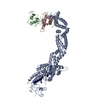
TARGETED PROTEIN DEGRADATION / PROTAC / GTPASE / TRANSFERASE
機能・相同性
機能・相同性情報
regulation of cellular response to hypoxia / negative regulation of beige fat cell differentiation / negative regulation of receptor signaling pathway via JAK-STAT / cullin-RING-type E3 NEDD8 transferase / RHOBTB3 ATPase cycle / NEDD8 transferase activity / cullin-RING ubiquitin ligase complex / Cul7-RING ubiquitin ligase complex / cellular response to chemical stress / Loss of Function of FBXW7 in Cancer and NOTCH1 Signaling ...regulation of cellular response to hypoxia / negative regulation of beige fat cell differentiation / negative regulation of receptor signaling pathway via JAK-STAT / cullin-RING-type E3 NEDD8 transferase / RHOBTB3 ATPase cycle / NEDD8 transferase activity / cullin-RING ubiquitin ligase complex / Cul7-RING ubiquitin ligase complex / cellular response to chemical stress / Loss of Function of FBXW7 in Cancer and NOTCH1 Signaling / target-directed miRNA degradation / elongin complex / positive regulation of protein autoubiquitination / RNA polymerase II transcription initiation surveillance / protein neddylation / Replication of the SARS-CoV-1 genome / transcription elongation factor activity / NEDD8 ligase activity / protein K27-linked ubiquitination / negative regulation of response to oxidative stress / VCB complex / Cul5-RING ubiquitin ligase complex / response to mineralocorticoid / GMP binding / ubiquitin-ubiquitin ligase activity / forebrain astrocyte development / ubiquitin-dependent protein catabolic process via the C-end degron rule pathway / SCF ubiquitin ligase complex / LRR domain binding / Cul2-RING ubiquitin ligase complex / Cul3-RING ubiquitin ligase complex / SUMOylation of ubiquitinylation proteins / regulation of synaptic transmission, GABAergic / negative regulation of type I interferon production / negative regulation of epithelial cell differentiation / response to isolation stress / SCF-dependent proteasomal ubiquitin-dependent protein catabolic process / Cul4A-RING E3 ubiquitin ligase complex / Cul4-RING E3 ubiquitin ligase complex / Prolactin receptor signaling / negative regulation of mitophagy / response to gravity / epithelial tube branching involved in lung morphogenesis / Cul4B-RING E3 ubiquitin ligase complex / type I pneumocyte differentiation / ubiquitin ligase complex scaffold activity / Rac protein signal transduction / myoblast proliferation / Signaling by RAS GAP mutants / Signaling by RAS GTPase mutants / Activation of RAS in B cells / negative regulation of transcription elongation by RNA polymerase II / Pausing and recovery of Tat-mediated HIV elongation / Tat-mediated HIV elongation arrest and recovery / RAS signaling downstream of NF1 loss-of-function variants / RUNX3 regulates p14-ARF / positive regulation of glial cell proliferation / HIV elongation arrest and recovery / Pausing and recovery of HIV elongation / skeletal muscle cell differentiation / SOS-mediated signalling / Activated NTRK3 signals through RAS / cullin family protein binding / Activated NTRK2 signals through RAS / SHC1 events in ERBB4 signaling / cardiac muscle cell proliferation / Signalling to RAS / negative regulation of signal transduction / protein monoubiquitination / Tat-mediated elongation of the HIV-1 transcript / SHC-related events triggered by IGF1R / Activated NTRK2 signals through FRS2 and FRS3 / Formation of HIV-1 elongation complex containing HIV-1 Tat / positive regulation of Rac protein signal transduction / Estrogen-stimulated signaling through PRKCZ / SHC-mediated cascade:FGFR3 / glial cell proliferation / MET activates RAS signaling / Formation of HIV elongation complex in the absence of HIV Tat / SHC-mediated cascade:FGFR2 / SHC-mediated cascade:FGFR4 / Signaling by PDGFRA transmembrane, juxtamembrane and kinase domain mutants / Signaling by PDGFRA extracellular domain mutants / PTK6 Regulates RHO GTPases, RAS GTPase and MAP kinases / Erythropoietin activates RAS / SHC-mediated cascade:FGFR1 / ubiquitin-like ligase-substrate adaptor activity / site of DNA damage / Signaling by FGFR4 in disease / Signaling by CSF3 (G-CSF) / RNA Polymerase II Transcription Elongation / FRS-mediated FGFR3 signaling / Formation of RNA Pol II elongation complex / Signaling by FLT3 ITD and TKD mutants / FRS-mediated FGFR2 signaling / FRS-mediated FGFR4 signaling / p38MAPK events / signal transduction in response to DNA damage / Signaling by FGFR3 in disease / FRS-mediated FGFR1 signaling 類似検索 - 分子機能
von Hippel-Lindau disease tumour suppressor, beta/alpha domain / von Hippel-Lindau disease tumour suppressor, alpha domain / von Hippel-Lindau disease tumour suppressor, beta domain / VHL superfamily / von Hippel-Lindau disease tumour suppressor, alpha domain superfamily / von Hippel-Lindau disease tumour suppressor, beta domain superfamily / VHL beta domain / VHL box domain / Zinc finger, RING-H2-type / RING-H2 zinc finger domain ...von Hippel-Lindau disease tumour suppressor, beta/alpha domain / von Hippel-Lindau disease tumour suppressor, alpha domain / von Hippel-Lindau disease tumour suppressor, beta domain / VHL superfamily / von Hippel-Lindau disease tumour suppressor, alpha domain superfamily / von Hippel-Lindau disease tumour suppressor, beta domain superfamily / VHL beta domain / VHL box domain / Zinc finger, RING-H2-type / RING-H2 zinc finger domain / Cullin, N-terminal / Cullin protein neddylation domain / : / Cullin, conserved site / Cullin alpha solenoid domain / Cullin family signature. / Cullin repeat-like-containing domain superfamily / Cullin protein, neddylation domain / Cullin / Cullin protein neddylation domain / Elongin-C / Elongin B / Cullin / : / Cullin alpha+beta domain / Cullin homology domain / Cullin homology domain superfamily / Cullin family profile. / S-phase kinase-associated protein 1-like / SKP1 component, POZ domain / Skp1 family, tetramerisation domain / Found in Skp1 protein family / Small GTPase, Ras-type / Small GTPase Ras domain profile. / Ran (Ras-related nuclear proteins) /TC4 subfamily of small GTPases / SKP1/BTB/POZ domain superfamily / Rho (Ras homology) subfamily of Ras-like small GTPases / Ras subfamily of RAS small GTPases / Small GTPase / Ras family / Rab subfamily of small GTPases / Zinc finger RING-type profile. / Zinc finger, RING-type / Small GTP-binding protein domain / Ubiquitin family / Ubiquitin homologues / Ubiquitin domain profile. / Ubiquitin-like domain / Zinc finger, RING/FYVE/PHD-type / Ubiquitin-like domain superfamily / Winged helix DNA-binding domain superfamily / Winged helix-like DNA-binding domain superfamily / P-loop containing nucleoside triphosphate hydrolase 類似検索 - ドメイン・相同性
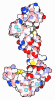
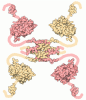
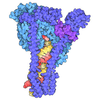
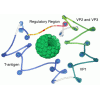
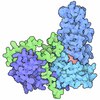
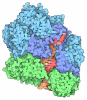
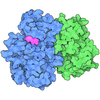
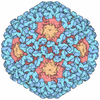
ジャーナル: Science / 年: 2024 タイトル: Targeting cancer with small-molecule pan-KRAS degraders. 著者: Johannes Popow / William Farnaby / Andreas Gollner / Christiane Kofink / Gerhard Fischer / Melanie Wurm / David Zollman / Andre Wijaya / Nikolai Mischerikow / Carina Hasenoehrl / Polina ...著者: Johannes Popow / William Farnaby / Andreas Gollner / Christiane Kofink / Gerhard Fischer / Melanie Wurm / David Zollman / Andre Wijaya / Nikolai Mischerikow / Carina Hasenoehrl / Polina Prokofeva / Heribert Arnhof / Silvia Arce-Solano / Sammy Bell / Georg Boeck / Emelyne Diers / Aileen B Frost / Jake Goodwin-Tindall / Jale Karolyi-Oezguer / Shakil Khan / Theresa Klawatsch / Manfred Koegl / Roland Kousek / Barbara Kratochvil / Katrin Kropatsch / Arnel A Lauber / Ross McLennan / Sabine Olt / Daniel Peter / Oliver Petermann / Vanessa Roessler / Peggy Stolt-Bergner / Patrick Strack / Eva Strauss / Nicole Trainor / Vesna Vetma / Claire Whitworth / Siying Zhong / Jens Quant / Harald Weinstabl / Bernhard Kuster / Peter Ettmayer / Alessio Ciulli / 要旨: Mutations in the Kirsten rat sarcoma viral oncogene homolog (KRAS) protein are highly prevalent in cancer. However, small-molecule concepts that address oncogenic KRAS alleles remain elusive beyond ...Mutations in the Kirsten rat sarcoma viral oncogene homolog (KRAS) protein are highly prevalent in cancer. However, small-molecule concepts that address oncogenic KRAS alleles remain elusive beyond replacing glycine at position 12 with cysteine (G12C), which is clinically drugged through covalent inhibitors. Guided by biophysical and structural studies of ternary complexes, we designed a heterobifunctional small molecule that potently degrades 13 out of 17 of the most prevalent oncogenic KRAS alleles. Compared with inhibition, KRAS degradation results in more profound and sustained pathway modulation across a broad range of KRAS mutant cell lines, killing cancer cells while sparing models without genetic KRAS aberrations. Pharmacological degradation of oncogenic KRAS was tolerated and led to tumor regression in vivo. Together, these findings unveil a new path toward addressing KRAS-driven cancers with small-molecule degraders.
 ムービー
ムービー コントローラー


 データを開く
 基本情報
基本情報
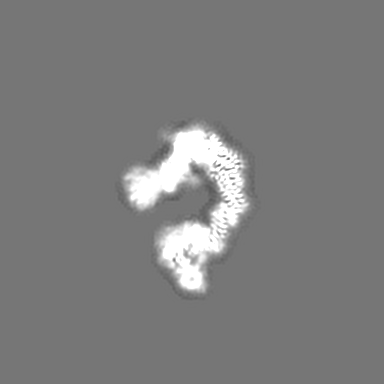
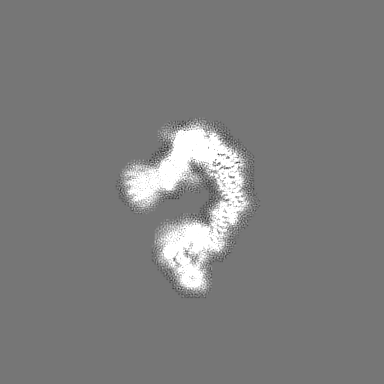
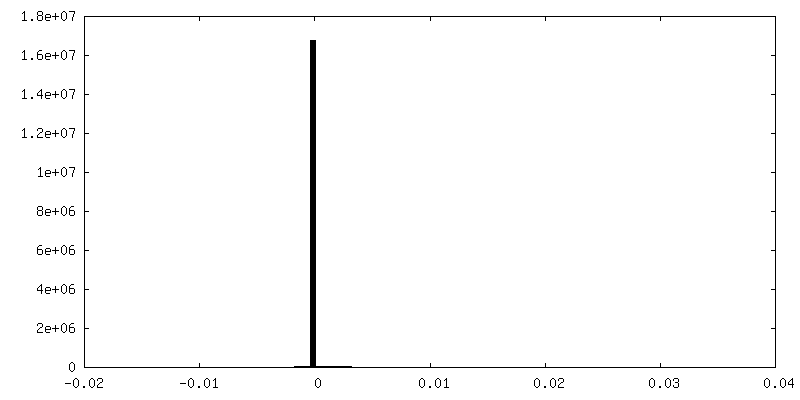
 マップデータ
 試料
試料 キーワード
キーワード 機能・相同性情報
 Homo sapiens (ヒト)
 データ登録者
 オーストリア, 1件
  引用
引用


 構造の表示
構造の表示
 ダウンロードとリンク
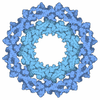
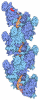
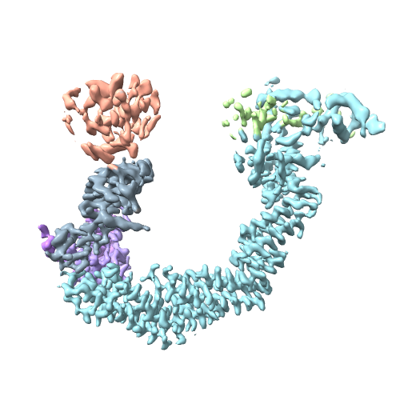 emd_18657.png
 http://ftp.pdbj.org/pub/emdb/structures/EMD-18657
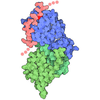

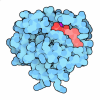
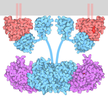
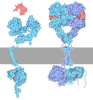
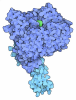
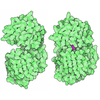
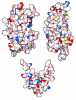
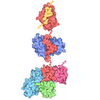

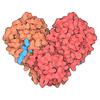
 Z (Sec.)
 Y (Row.)
 X (Col.)










 試料の構成要素
 Escherichia coli (大腸菌)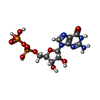

 解析
解析 電子顕微鏡法
 FIELD EMISSION GUN