 Movie
Movie Controller
 Structure viewers
 About Yorodumi Papers


+Search query
-Structure paper
| Title | Optimization of VE607 to generate analogs with improved neutralization activities against SARS-CoV-2 variants. |
|---|---|
| Journal, issue, pages | J Virol, Vol. 99, Issue 11, Page e0103425, Year 2025 |
| Publish date | Nov 25, 2025 |
 Authors Authors | Shilei Ding / Derek Yang / Irfan Ullah / Ling Niu / Matthew Unger / Marco A Díaz-Salinas / Monika Chandravanshi / Fei Zhou / Guillaume Beaudoin-Bussières / Mehdi Benlarbi / William D Tolbert / Keon-Woong Yoon / Ruixue Xu / Geneviève Laroche / Fleur Gaudette / Abraham J Morton / Zabrina C Lang / Anna Son / Cameron Abrams / Marceline Côté / Amos B Smith / Rick K Huang / Doreen Matthies / James B Munro / Marzena Pazgier / Pradeep D Uchil / Andrés Finzi /   |
| PubMed Abstract | Severe acute respiratory syndrome coronavirus 2 (SARS-CoV-2) infection remains a threat to human health, particularly among immunocompromised and elderly individuals, given their heightened ...Severe acute respiratory syndrome coronavirus 2 (SARS-CoV-2) infection remains a threat to human health, particularly among immunocompromised and elderly individuals, given their heightened vulnerability to coronavirus disease 2019 (COVID-19)-associated morbidity and mortality. Recently, omicron subvariants such as KP.3.1.1 and XEC have emerged with an enhanced ability to evade humoral immunity. The development of new strategies against these variants of concern remains an intense area of research. The small molecule VE607 is an entry inhibitor that targets the Spike glycoprotein and delays virus spread . To improve the potency of this new class of SARS-CoV-2 entry inhibitors, we generated and characterized VE607 analogs and identified candidates with enhanced activity against variants, including KP.3.1.1 and XEC. Promising analogs exhibited higher inhibitory potency than the original compound and stabilized the receptor-binding domain in its "up" conformation. Among these, DY-III-281 also reduced viral burden and delayed death in SARS-CoV-2-challenged K18-hACE2 transgenic mice. Furthermore, combining DY-III-281 with a non-neutralizing antibody engineered for Fc-enhanced functions exhibited an additive effect in reducing SARS-CoV-2-induced disease burden in mice. Our findings support the continued development of small-molecule entry inhibitors, alone or in combination with antibody-based therapies, as a promising strategy to counteract emerging SARS-CoV-2 variants. IMPORTANCE: Mutations in the Spike glycoprotein drive viral evolution and confer resistance to current vaccines and some therapeutic interventions against severe acute respiratory syndrome coronavirus 2 (SARS-CoV-2). Here, we report new analogs of the SARS-CoV-2 small-molecule entry inhibitor VE607. These analogs exhibited improved potency against emerging SARS-CoV-2 variants, including KP.3.1.1 and XEC. One analog, DY-III-281, delayed viral replication in SARS-CoV-2-challenged K18-hACE2 transgenic mice, suggesting that small-molecule compounds targeting viral entry might be useful in fighting evolving SARS-CoV-2 variants. |
 External links External links | J Virol / PubMed:41081594 / PubMed Central |
| Methods | EM (single particle) |
| Resolution | 3.09 - 3.56 Å |
| Structure data | EMDB-70451, PDB-9og4: EMDB-70453, PDB-9og5: EMDB-70454, PDB-9og6: EMDB-70455, PDB-9og7: |
| Chemicals | 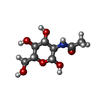 ChemComp-NAG: |
| Source |
|
 Keywords Keywords | VIRAL PROTEIN / SARS-COV-2 / S protein |


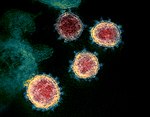 severe acute respiratory syndrome coronavirus 2