[English] 日本語
Yorodumi Papers
- Database of articles cited by EMDB/PDB/SASBDB data -

+
Search query

Keywords
Structure methods
Author
Journal
IF

-
Structure paper

TitleStructural snapshots of Pseudomonas aeruginosa LptBFG and LptBFGC reveal insights into lipopolysaccharide recognition and transport.
Journal, issue, pagesNat Commun, Vol. 16, Issue 1, Page 11384, Year 2025
Publish dateDec 17, 2025
AuthorsFrancesco Fiorentino / Matteo Cervoni / Yi Wang / Leonhard H Urner / Joshua B Sauer / Anh Tran / Robin A Corey / Dante Rotili / Antonello Mai / Phillip J Stansfeld / Francesco Imperi / Edward W Yu / Chih-Chia Su / Carol V Robinson / Jani R Bolla /
PubMed AbstractGram-negative bacteria are intrinsically resistant to many antibiotics because of densely packed lipopolysaccharides (LPS) in the outer leaflet of their outer membrane (OM), which acts as a highly ...Gram-negative bacteria are intrinsically resistant to many antibiotics because of densely packed lipopolysaccharides (LPS) in the outer leaflet of their outer membrane (OM), which acts as a highly effective barrier towards the spontaneous permeation of toxic molecules, including antibiotics. LPS are extracted from the inner membrane by the ABC transporter LptBFGC and translocated across the periplasm via a protein bridge to the OM. While structural studies have elucidated aspects of Lpt function in enterobacteria, little is known about how this system operates in divergent species such as Pseudomonas aeruginosa, a major human pathogen. Here, we report five cryo-electron microscopy structures of P. aeruginosa LptBFG and LptBFGC, revealing a rigid body movement in the periplasmic β-jellyroll domains necessary for LPS to shuttle through the periplasmic space. Notably, these structures exhibit a significantly smaller LPS binding cavity compared to previously determined models, suggesting the ligand-unbound states of the transporter. Mass spectrometry and molecular dynamics simulations indicate that the phosphate groups of LPS are the key determinants for binding and that the transporter can also accommodate cardiolipin. Together, these findings reveal previously unappreciated structural diversity in the Lpt system and provide mechanistic insight into how pathogenic Gram-negative bacteria tailor LPS recognition and transport. This understanding offers new avenues for the development of novel inhibitors targeting membrane biogenesis.
External linksNat Commun / PubMed:41407669 / PubMed Central
MethodsEM (single particle)
Resolution3.26 - 3.61 Å
Structure data

EMDB-47084, PDB-9doh:
Cryo-EM structure of LptB2FG apo-1
Method: EM (single particle) / Resolution: 3.34 Å

EMDB-47085, PDB-9dok:
Cryo-EM structure of LptB2FG apo-II
Method: EM (single particle) / Resolution: 3.26 Å

EMDB-47086, PDB-9doo:
Cryo-EM structure of LptB2FG apo-III
Method: EM (single particle) / Resolution: 3.31 Å

EMDB-47088, PDB-9doq:
Cryo-EM structure of LptB2FGC apo-I
Method: EM (single particle) / Resolution: 3.26 Å

EMDB-47089, PDB-9dor:
Cryo-EM structure of LptB2FGC apo-II
Method: EM (single particle) / Resolution: 3.61 Å

Chemicals

ChemComp-3PE:
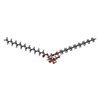
1,2-Distearoyl-sn-glycerophosphoethanolamine / phospholipid*YM

Source
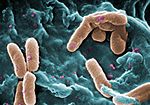
  • pseudomonas aeruginosa (bacteria)
KeywordsLIPID TRANSPORT / LPS transporter

+
About Yorodumi Papers

-
News

-
Feb 9, 2022. New format data for meta-information of EMDB entries

New format data for meta-information of EMDB entries

  • Version 3 of the EMDB header file is now the official format.
  • The previous official version 1.9 will be removed from the archive.

Related info.:EMDB header

External links:wwPDB to switch to version 3 of the EMDB data model

-
Aug 12, 2020. Covid-19 info

Covid-19 info

URL: https://pdbj.org/emnavi/covid19.php

New page: Covid-19 featured information page in EM Navigator.

Related info.:Covid-19 info / Mar 5, 2020. Novel coronavirus structure data

+
Mar 5, 2020. Novel coronavirus structure data

Novel coronavirus structure data

Related info.:Yorodumi Speices / Aug 12, 2020. Covid-19 info

External links:COVID-19 featured content - PDBj / Molecule of the Month (242):Coronavirus Proteases

+
Jan 31, 2019. EMDB accession codes are about to change! (news from PDBe EMDB page)

EMDB accession codes are about to change! (news from PDBe EMDB page)

  • The allocation of 4 digits for EMDB accession codes will soon come to an end. Whilst these codes will remain in use, new EMDB accession codes will include an additional digit and will expand incrementally as the available range of codes is exhausted. The current 4-digit format prefixed with “EMD-” (i.e. EMD-XXXX) will advance to a 5-digit format (i.e. EMD-XXXXX), and so on. It is currently estimated that the 4-digit codes will be depleted around Spring 2019, at which point the 5-digit format will come into force.
  • The EM Navigator/Yorodumi systems omit the EMD- prefix.

Related info.:Q: What is EMD? / ID/Accession-code notation in Yorodumi/EM Navigator

External links:EMDB Accession Codes are Changing Soon! / Contact to PDBj

+
Jul 12, 2017. Major update of PDB

Major update of PDB

  • wwPDB released updated PDB data conforming to the new PDBx/mmCIF dictionary.
  • This is a major update changing the version number from 4 to 5, and with Remediation, in which all the entries are updated.
  • In this update, many items about electron microscopy experimental information are reorganized (e.g. em_software).
  • Now, EM Navigator and Yorodumi are based on the updated data.

External links:wwPDB Remediation / Enriched Model Files Conforming to OneDep Data Standards Now Available in the PDB FTP Archive

-
Yorodumi Papers

Database of articles cited by EMDB/PDB/SASBDB data

  • Database of articles cited by EMDB, PDB, and SASBDB entries
  • Using PubMed data

Related info.:EMDB / PDB / SASBDB / Yorodumi / EMN Papers / Changes in new EM Navigator and Yorodumi

Read more