Jinhong Hu / Sofia Ievleva / Sung Jin Park / Junuk Lee / Jie Cheng / Garrett O'Dea / Jiangnan Sheng / Juan Du / Wei Lü /
PubMed Abstract
Proteins operate in dynamic environments where ions, lipids and temperature collectively define their properties, yet most studies rely on simplified conditions that overlook these intrinsic ...Proteins operate in dynamic environments where ions, lipids and temperature collectively define their properties, yet most studies rely on simplified conditions that overlook these intrinsic variables. Here we show two such factors-temperature and Ca-remodel the function and pharmacology of TRPM4, an ion channel implicated in cardiac conduction, immune regulation, cancer and intestinal-fluid homeostasis. At physiological temperature and Ca, TPPO-previously considered a selective TRPM5 inhibitor inactive toward TRPM4-potently activates TRPM4, revealing strong synergy among temperature, Ca and ligand binding. By contrast, Necrocide-1, a necroptotic activator targeting the same binding pocket, defies this logic: it opens TRPM4 without Ca but is antagonized by Ca. Meanwhile, the inhibitors NBA and CBA engage a nearby pocket, locking the channel in a non-conductive pre-open state. Our findings highlight that even rigid binding pockets can exhibit temperature-dependent ligand recognition, revealing hidden pharmacology and informing selective, environment-aware therapeutic strategies.
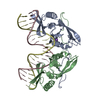
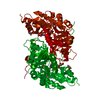
EMDB-73754, PDB-9z1w: Cryo-EM structure of human TRPM4 channel in complex with calcium and TPPO at 37 degrees Celsius (consensus) Method: EM (single particle) / Resolution: 2.86 Å
EMDB-73755, PDB-9z1x: Cryo-EM structure of human TRPM4 channel in the warm conformation in complex with calcium and TPPO at 37 degrees Celsius (monomeric TMD-focused map with best-resolved TPPO density) Method: EM (single particle) / Resolution: 3.0 Å
EMDB-73756, PDB-9z1y: Cryo-EM structure of human TRPM4 channel in the cold conformation in complex with calcium and TPPO at 37 degrees Celsius (monomeric TMD-focused map with best-resolved TPPO density) Method: EM (single particle) / Resolution: 3.26 Å
EMDB-73757, PDB-9z1z: Cryo-EM structure of human TRPM4 channel in complex with calcium and TPPO at 18 degrees Celsius (consensus) Method: EM (single particle) / Resolution: 2.63 Å
EMDB-73758, PDB-9z20: Cryo-EM structure of human TRPM4 channel in complex with EGTA and TPPO at 37 degrees Celsius (consensus) Method: EM (single particle) / Resolution: 2.51 Å
EMDB-73759, PDB-9z21: Cryo-EM structure of human TRPM4 channel in complex with calcium and NC1 at 37 degrees Celsius (consensus) Method: EM (single particle) / Resolution: 2.83 Å
EMDB-73760, PDB-9z22: Cryo-EM structure of human TRPM4 channel in complex with EGTA and NC1 at 37 degrees Celsius (consensus) Method: EM (single particle) / Resolution: 2.58 Å
EMDB-73761, PDB-9z23: Cryo-EM structure of human TRPM4 channel in complex with calcium and CBA at 37 degrees Celsius (consensus) Method: EM (single particle) / Resolution: 2.59 Å
EMDB-73762, PDB-9z24: Cryo-EM structure of human TRPM4 channel in complex with calcium and CBA at 37 degrees Celsius (monomeric TMD-focused map with best-resolved CBA density) Method: EM (single particle) / Resolution: 3.1 Å
EMDB-73763, PDB-9z25: Cryo-EM structure of human TRPM4 channel in complex with calcium and NBA at 37 degrees Celsius (consensus) Method: EM (single particle) / Resolution: 2.64 Å
EMDB-73764, PDB-9z26: Cryo-EM structure of human TRPM4 channel in complex with calcium and NBA at 37 degrees Celsius (monomeric TMD-focused map with best-resolved NBA density) Method: EM (single particle) / Resolution: 2.9 Å
EMDB-73765, PDB-9z27: Cryo-EM structure of human TRPM4 channel in complex with calcium and CBA and DVT at 37 degrees Celsius (consensus) Method: EM (single particle) / Resolution: 2.76 Å
In the structure databanks used in Yorodumi, some data are registered as the other names, "COVID-19 virus" and "2019-nCoV". Here are the details of the virus and the list of structure data.
Jan 31, 2019. EMDB accession codes are about to change! (news from PDBe EMDB page)
EMDB accession codes are about to change! (news from PDBe EMDB page)
The allocation of 4 digits for EMDB accession codes will soon come to an end. Whilst these codes will remain in use, new EMDB accession codes will include an additional digit and will expand incrementally as the available range of codes is exhausted. The current 4-digit format prefixed with “EMD-” (i.e. EMD-XXXX) will advance to a 5-digit format (i.e. EMD-XXXXX), and so on. It is currently estimated that the 4-digit codes will be depleted around Spring 2019, at which point the 5-digit format will come into force.
The EM Navigator/Yorodumi systems omit the EMD- prefix.
Related info.:Q: What is EMD? / ID/Accession-code notation in Yorodumi/EM Navigator