 Movie
Movie Controller
 Structure viewers
 About Yorodumi Papers


+Search query
-Structure paper
| Title | Assessment of Nucleic Acid Structure Prediction in CASP16. |
|---|---|
| Journal, issue, pages | Proteins, Vol. 94, Issue 1, Page 192-217, Year 2026 |
| Publish date | Oct 30, 2025 |
 Authors Authors | Rachael C Kretsch / Alissa M Hummer / Shujun He / Rongqing Yuan / Jing Zhang / Thomas Karagianes / Qian Cong / Andriy Kryshtafovych / Rhiju Das /  |
| PubMed Abstract | Consistently accurate 3D nucleic acid structure prediction would facilitate studies of the diverse RNA and DNA molecules underlying life. In CASP16, blind predictions for 42 targets canvassing a full ...Consistently accurate 3D nucleic acid structure prediction would facilitate studies of the diverse RNA and DNA molecules underlying life. In CASP16, blind predictions for 42 targets canvassing a full array of nucleic acid functions, from dopamine binding by DNA to formation of elaborate RNA nanocages, were submitted by 65 groups from 46 different labs worldwide. In contrast to concurrent protein structure predictions, performance on nucleic acids was generally poor, with no predictions of previously unseen natural RNA structures achieving TM-scores above 0.8. Even though automated server performance has improved, all top-performing groups were human expert predictors: Vfold, GuangzhouRNA-human, and KiharaLab. Good performance on one template-free modeling target (OLE RNA) and accurate global secondary structure prediction suggested that structural information can be extracted from multiple sequence alignments. However, 3D accuracy generally appeared to depend on the availability of closely related 3D structure templates, and predictions still did not achieve consistent recovery of pseudoknots, singlet Watson-Crick-Franklin pairs, non-canonical pairs, or tertiary motifs like A-minor interactions. For the first time, blind predictions of nucleic acid interactions with small molecules, proteins, and other nucleic acids could be assessed in CASP16. As with nucleic acid monomers, prediction accuracy for nucleic acid complexes was generally poor unless 3D templates were available. Accounting for template availability, there has not been a notable increase in nucleic acid modeling accuracy between previous blind challenges and CASP16. |
 External links External links | Proteins / PubMed:41165252 / PubMed Central |
| Methods | EM (single particle) |
| Resolution | 6.5 - 9.5 Å |
| Structure data | EMDB-73600, PDB-9yx9: EMDB-73601, PDB-9yxa: |
| Source |
|
 Keywords Keywords | RNA / SL5 / SARS-CoV-2 / BtCoV |


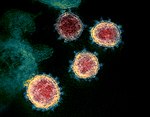 severe acute respiratory syndrome coronavirus 2