 Movie
Movie Controller
 Structure viewers
 About Yorodumi Papers


+Search query
-Structure paper
| Title | Oriented Multivalent Display Drives Consistent Serum Immunodominance to the Ebola Virus Glycoprotein. |
|---|---|
| Journal, issue, pages | ACS Cent Sci, Vol. 12, Issue 1, Page 100-110, Year 2026 |
| Publish date | Jan 28, 2026 |
 Authors Authors | Chu Zheng / Adonis A Rubio / Sheena Vasquez / Dominic Pham / Zhuangyu Pan / Christopher O Barnes / Peter S Kim /  |
| PubMed Abstract | Despite the vast diversity of B cell repertoires, serum antibody responses during viral infection often focus on a limited set of epitopesa phenomenon known as immunodominance. This inherent bias ...Despite the vast diversity of B cell repertoires, serum antibody responses during viral infection often focus on a limited set of epitopesa phenomenon known as immunodominance. This inherent bias establishes a hierarchy of epitope responses, which often facilitates viral immune evasion and presents a major challenge for universal vaccine design. It remains unclear whether serum immunodominance is primarily driven by antigen-intrinsic properties or by the spatial constraints imposed by virion-bound antigen presentation. Here, using Ebola virus glycoprotein (GP) as a model system, we found that trimeric GP elicited varied epitope hierarchies between individual animals during primary immunization. In contrast, multivalent GP presentation on either a vesicular stomatitis virus or ferritin nanoparticlesin the native orientation found on the Ebola viruselicited highly consistent and more refined epitope hierarchies across multiple mice and guinea pigs. These findings reveal a key role of oriented multivalent presentation in shaping serum immunodominance. The striking consistency of epitope hierarchy among individuals suggests that oriented multivalent presentation may promote more uniform immune protection at the population level, beyond increasing the magnitude of antibody binding and neutralizing responses. |
 External links External links | ACS Cent Sci / PubMed:41625225 / PubMed Central |
| Methods | EM (single particle) |
| Resolution | 15.0 Å |
| Structure data |  EMDB-72372: Polyclonal immune complex of guinea pig Fab from sera binding Ebola glycoprotein (nsEM, GP-trimer map 4)  EMDB-72373: Polyclonal immune complex of guinea pig Fab from sera binding Ebola glycoprotein (nsEM, GP-Ferritin map 1)  EMDB-72374: Polyclonal immune complex of guinea pig Fab from sera binding Ebola glycoprotein (nsEM, GP-Ferritin map 2)  EMDB-72375: Polyclonal immune complex of guinea pig Fab from sera binding Ebola glycoprotein (nsEM, GP-Ferritin map 3) |
| Source |
|

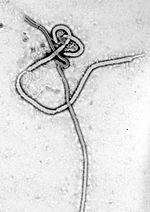 Ebola virus - Mayinga, Zaire, 1976
 Cavia porcellus (domestic guinea pig)