 Movie
Movie Controller
 Structure viewers
 About Yorodumi Papers


+Search query
-Structure paper
| Title | Hemoglobin receptor redundancy in : molecular flexibility as a determinant of divergent hemophore activity. |
|---|---|
| Journal, issue, pages | J Struct Biol X, Vol. 12, Page 100138, Year 2025 |
| Publish date | Nov 5, 2025 |
 Authors Authors | Valeria Buoli Comani / Omar De Bei / Francesca Pancrazi / Marcos Gragera / Giulia Paris / Marialaura Marchetti / Barbara Campanini / Luca Ronda / Ben F Luisi / Serena Faggiano / Anna Rita Bizzarri / Stefano Bettati /    |
| PubMed Abstract | To overcome iron limitation in the host, exploits sophisticated mechanisms to acquire this essential nutrient, particularly from hemoglobin (Hb). The bacterial hemophores IsdH and IsdB play key ...To overcome iron limitation in the host, exploits sophisticated mechanisms to acquire this essential nutrient, particularly from hemoglobin (Hb). The bacterial hemophores IsdH and IsdB play key roles in binding Hb and extracting heme, but the structural and mechanistic differences underlying their individual contributions remain poorly defined. In this study, we dissected the molecular mechanisms by which IsdH engages Hb and mediates heme extraction, using cryo-electron microscopy, biochemical assays, and single-molecule force spectroscopy. Our structural analyses revealed pronounced conformational heterogeneity within IsdH:Hb complexes, highlighting marked flexibility in the heme-binding domain of IsdH, likely underlying its distinct functional behavior. This plasticity contrasts with the more rigid architecture of IsdB. The flexibility observed in IsdH correlates with our biochemical and biophysical findings, supporting its functional relevance. Unlike IsdB, IsdH does not display selectivity for α- or β-Hb chains and shows reduced involvement of the heme-binding domain in Hb recognition. It also follows a distinct kinetic mechanism for heme capture, which begins upon binding but proceeds more slowly than in IsdB. Finally, IsdH does not exhibit the catch bond-like behavior characteristic of IsdB, suggesting it may act in different physiological niches or conditions. Collectively, these findings highlight a distinct mode of Hb engagement by IsdH, shaped by its dynamic and flexible architecture, and provide mechanistic insight into the diversity of iron acquisition strategies employed by . |
 External links External links | J Struct Biol X / PubMed:41321687 / PubMed Central |
| Methods | EM (single particle) |
| Resolution | 3.1 - 4.5 Å |
| Structure data | EMDB-54546, PDB-9s3p: EMDB-54563, PDB-9s4f: EMDB-54565, PDB-9s4i: EMDB-54566, PDB-9s4j: EMDB-54567, PDB-9s4k:  EMDB-54585: Human carboxyhemoglobin bound to Staphylococcus aureus IsdH-N2N3 - 3IsdH(alphabeta2):Hbtet complex  EMDB-54591: Human carboxyhemoglobin bound to Staphylococcus aureus IsdH-N2N3 - 2IsdH(alpha2):Hbtet complex - 3DVA component 0 right tail  EMDB-54613: Human carboxyhemoglobin bound to Staphylococcus aureus IsdH-N2N3 - 2IsdH(alpha2):Hbtet complex - 3DVA component 0 left tail  EMDB-54618: Human carboxyhemoglobin bound to Staphylococcus aureus IsdH-N2N3 - 2IsdH(alpha*beta):Hbdim complex - 3DVA component 0 right tail  EMDB-54619: Human carboxyhemoglobin bound to Staphylococcus aureus IsdH-N2N3 - 2IsdH(alpha*beta):Hbdim complex - 3DVA component 0 left tail  EMDB-54620: Human carboxyhemoglobin bound to Staphylococcus aureus IsdH-N2N3 - 2IsdH(alpha*beta):Hbdim complex - 3DVA component 1 left tail  EMDB-54621: Human carboxyhemoglobin bound to Staphylococcus aureus IsdH-N2N3 - 2IsdH(alpha*beta):Hbdim complex - 3DVA component 1 right tail |
| Chemicals | 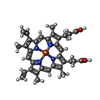 ChemComp-HEM: |
| Source |
|
 Keywords Keywords | METAL TRANSPORT / Iron acquisition / Hemophore / Hemoglobin / NEAT domain |


 homo sapiens (human)
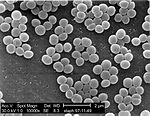 staphylococcus aureus (bacteria)