 Movie
Movie Controller
 Structure viewers
 About Yorodumi Papers


+Search query
-Structure paper
| Title | Designed miniproteins potently inhibit and protect against MERS-CoV. |
|---|---|
| Journal, issue, pages | Cell Rep, Vol. 44, Issue 6, Page 115760, Year 2025 |
| Publish date | Jun 24, 2025 |
 Authors Authors | Robert J Ragotte / M Alejandra Tortorici / Nicholas J Catanzaro / Amin Addetia / Brian Coventry / Heather M Froggatt / Jimin Lee / Cameron Stewart / Jack T Brown / Inna Goreshnik / Jeremiah N Sims / Lukas F Milles / Basile I M Wicky / Matthias Glögl / Stacey Gerben / Alex Kang / Asim K Bera / William Sharkey / Alexandra Schäfer / Jack R Harkema / Ralph S Baric / David Baker / David Veesler /  |
| PubMed Abstract | Middle East respiratory syndrome coronavirus (MERS-CoV) is a zoonotic pathogen with a 36% case-fatality rate in humans. No vaccines or specific therapeutics are currently approved for use in humans ...Middle East respiratory syndrome coronavirus (MERS-CoV) is a zoonotic pathogen with a 36% case-fatality rate in humans. No vaccines or specific therapeutics are currently approved for use in humans or the camel host reservoir. Here, we computationally designed monomeric and homo-oligomeric miniproteins that bind with high affinity to the MERS-CoV spike (S) glycoprotein, the main target of neutralizing antibodies and vaccine development. We show that these miniproteins broadly neutralize a panel of MERS-CoV S variants, spanning the known antigenic diversity of this pathogen, by targeting a conserved site in the receptor-binding domain (RBD). The miniproteins directly compete with binding of the dipeptidylpeptidase 4 (DPP4) receptor to MERS-CoV S, thereby blocking viral attachment to the host entry receptor and subsequent membrane fusion. Intranasal administration of a lead miniprotein provides prophylactic protection against stringent MERS-CoV challenge in mice, motivating its future clinical development as a next-generation countermeasure against this virus with pandemic potential. |
 External links External links | Cell Rep / PubMed:40450691 / PubMed Central |
| Methods | EM (single particle) / X-ray diffraction |
| Resolution | 1.85 - 3.3 Å |
| Structure data |  EMDB-46947: Designed miniproteins potently inhibit and protect against MERS_CoV (Global refinement of MERS_CoV_S RBD in complex with miniprotein cb3_GSG_SB175, linker 1)  EMDB-46952: Designed miniproteins potently inhibit and protect against MERS_CoV. MERS_CoV S in complex with cb3_GSG_SB175, linker 1. Global refinement, three RBDs engaged.  EMDB-46955: Designed miniproteins potently inhibit and protect against MERS_CoV. MERS_CoV S in complex with cb3_GGGSGGGS_SB175, linker 7. Global refinement.  EMDB-46957: Designed miniproteins potently inhibit and protect against MERS_CoV. MERS-CoV S in complex with cb3_GGGSGGGS_SB175B175, linker 7(Global refinement after focused classification) EMDB-46960, PDB-9dkk:  PDB-9c7z:  PDB-9dgo: |
| Chemicals |  ChemComp-PG4:  ChemComp-HOH:  ChemComp-NAG: |
| Source |
|
 Keywords Keywords | DE NOVO PROTEIN / trimer / hallucination / de novo / VIRAL PROTEIN / MERS-CoV / miniproteins / neutralization / fusion / cryo-EM / biolayer interferometry / MERS-CoV strains / Structural Genomics / Seattle Structural Genomics Center for Infectious Disease / SSGCID / Coronavirus / betacoronavirus / single particle cryo-EM / neutralization assays / binding assays / miniproteins inhibitors / fusion assays / in vivo protection |


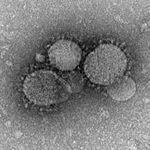 middle east respiratory syndrome-related coronavirus
 Homo sapiens (human)