 Movie
Movie Controller
 Structure viewers
 About Yorodumi Papers


+Search query
-Structure paper
| Title | Revealing nanoscale structure and interfaces of protein and polymer condensates cryo-electron microscopy. |
|---|---|
| Journal, issue, pages | Nanoscale, Vol. 16, Issue 35, Page 16706-16717, Year 2024 |
| Publish date | Sep 12, 2024 |
 Authors Authors | Aoon Rizvi / Bruna Favetta / Nora Jaber / Yun-Kyung Lee / Jennifer Jiang / Nehal S Idris / Benjamin S Schuster / Wei Dai / Joseph P Patterson /  |
| PubMed Abstract | Liquid-liquid phase separation (LLPS) is a ubiquitous demixing phenomenon observed in various molecular solutions, including in polymer and protein solutions. Demixing of solutions results in ...Liquid-liquid phase separation (LLPS) is a ubiquitous demixing phenomenon observed in various molecular solutions, including in polymer and protein solutions. Demixing of solutions results in condensed, phase separated droplets which exhibit a range of liquid-like properties driven by transient intermolecular interactions. Understanding the organization within these condensates is crucial for deciphering their material properties and functions. This study explores the distinct nanoscale networks and interfaces in the condensate samples using a modified cryo-electron microscopy (cryo-EM) method. The method involves initiating condensate formation on electron microscopy grids to limit droplet growth as large droplet sizes are not ideal for cryo-EM imaging. The versatility of this method is demonstrated by imaging three different classes of condensates. We further investigate the condensate structures using cryo-electron tomography which provides 3D reconstructions, uncovering porous internal structures, unique core-shell morphologies, and inhomogeneities within the nanoscale organization of protein condensates. Comparison with dry-state transmission electron microscopy emphasizes the importance of preserving the hydrated structure of condensates for accurate structural analysis. We correlate the internal structure of protein condensates with their amino acid sequences and material properties by performing viscosity measurements that support that more viscous condensates exhibit denser internal assemblies. Our findings contribute to a comprehensive understanding of nanoscale condensate structure and its material properties. Our approach here provides a versatile tool for exploring various phase-separated systems and their nanoscale structures for future studies. |
 External links External links | Nanoscale / PubMed:39171763 / PubMed Central |
| Methods | EM (tomography) |
| Structure data |  EMDB-43500: Cryo-electron tomography of wildtype LAF-1 RGG domain protein condensates with fibrous necks 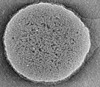 EMDB-43502: Cryo-Electron Tomography of Wildtype LAF-1 RGG Domain Condensate with Core/Shell Structure  EMDB-43503: Cryo-Electron Tomography of Wildtype LAF-1 RGG domain Condensate  EMDB-43504: Cryo-Electron Tomography of LAF-1 RGG Charge-Separated SH Mutant Condensate |
| Source |
|

 Caenorhabditis elegans (invertebrata)