 Movie
Movie Controller
 Structure viewers
 About Yorodumi Papers


+Search query
-Structure paper
| Title | A broadly neutralizing antibody against the SARS-CoV-2 Omicron sub-variants BA.1, BA.2, BA.2.12.1, BA.4, and BA.5. |
|---|---|
| Journal, issue, pages | Signal Transduct Target Ther, Vol. 10, Issue 1, Page 14, Year 2025 |
| Publish date | Jan 13, 2025 |
 Authors Authors | Zhe Chen / Leilei Feng / Lei Wang / Li Zhang / Binyang Zheng / Hua Fu / Fengdi Li / Ligai Liu / Qi Lv / Ran Deng / YanLi Xu / Yongfeng Hu / Jianhua Zheng / Chuan Qin / Linlin Bao / Xiangxi Wang / Qi Jin /  |
| PubMed Abstract | The global spread of Severe Acute Respiratory Syndrome Coronavirus 2. (SARS-CoV-2) and its variant strains, including Alpha, Beta, Gamma, Delta, and now Omicron, pose a significant challenge. With ...The global spread of Severe Acute Respiratory Syndrome Coronavirus 2. (SARS-CoV-2) and its variant strains, including Alpha, Beta, Gamma, Delta, and now Omicron, pose a significant challenge. With the constant evolution of the virus, Omicron and its subtypes BA.1, BA.2, BA.3, BA.4, and BA.5 have developed the capacity to evade neutralization induced by previous vaccination or infection. This evasion highlights the urgency in discovering new monoclonal antibodies (mAbs) with neutralizing activity, especially broadly neutralizing antibodies (bnAbs), to combat the virus.In the current study, we introduced a fully human neutralizing mAb, CR9, that targets Omicron variants. We demonstrated the mAb's effectiveness in inhibiting Omicron replication both in vitro and in vivo. Structural analysis using cryo-electron microscopy (cryo-EM) revealed that CR9 binds to an epitope formed by RBD residues, providing a molecular understanding of its neutralization mechanism. Given its potency and specificity, CR9 holds promise as a potential adjunct therapy for treating Omicron infections. Our findings highlight the importance of continuous mAb discovery and characterization in addressing the evolving threat of COVID-19. |
 External links External links | Signal Transduct Target Ther / PubMed:39800731 / PubMed Central |
| Methods | EM (single particle) |
| Resolution | 3.55 - 3.87 Å |
| Structure data | EMDB-38616, PDB-8xsd: EMDB-39839, PDB-8z86: |
| Source |
|
 Keywords Keywords | VIRAL PROTEIN/IMMUNE SYSTEM / SARS-CoV-2 / CR9 / Spike / VIRAL PROTEIN / VIRAL PROTEIN-PROTEIN BINDING complex / VIRAL PROTEIN-IMMUNE SYSTEM complex / ALLERGEN/IMMUNE SYSTEM / RBD / ALLERGEN / ALLERGEN-IMMUNE SYSTEM complex |


 homo sapiens (human)
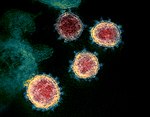 severe acute respiratory syndrome coronavirus 2