 Movie
Movie Controller
 Structure viewers
 About Yorodumi Papers


+Search query
-Structure paper
| Title | Public antibody clonotypes and deep learning identify SARS-CoV-2 and HIV broadly neutralizing antibodies in immune repertoires. |
|---|---|
| Journal, issue, pages | Cell Rep, Vol. 45, Issue 7, Page 117582, Year 2026 |
| Publish date | Jun 19, 2026 |
 Authors Authors | Lizhi Zhou / Zhili Yu / Shutian Lin / Yanan Jiang / Jiahua Gao / Yue Ma / Wenling Jiang / Siting Liang / Yiqing Chen / Yiwen Zhang / Yanqing Lin / Min Liang / Jingyu Dai / Lisha Zhang / Yuxuan Xiao / Tingting Li / Zhibo Kong / Qingyuan Liu / Shaogui He / Yangtao Wu / Quan Yuan / Fan Liu / Jun Zhang / Qingbing Zheng / Hai Yu / Ying Gu / Shaowei Li / Ningshao Xia /  |
| PubMed Abstract | Broadly neutralizing antibodies (bnAbs) are essential for the development of vaccines and therapeutics against rapidly evolving pathogens like HIV and SARS-CoV-2, yet traditional discovery methods ...Broadly neutralizing antibodies (bnAbs) are essential for the development of vaccines and therapeutics against rapidly evolving pathogens like HIV and SARS-CoV-2, yet traditional discovery methods remain technically challenging and time consuming. Here, we introduce ClonoDeep, an AI-powered platform that integrates public antibody clonotypes with a sequence-based deep learning model to directly identify bnAbs from a large-scale immune repertoire, independent of antigen-specific immunization. Applied to SARS-CoV-2 repertoires, ClonoDeep identified 18 clonotype-derived antibody candidates; 83% of the candidates were neutralizing antibodies, and 8 of these antibodies demonstrated broad neutralization across variants. Structural analysis revealed that somatic hypermutations at HCDR3 His107/Gly109 are key enhancers of the binding affinity and neutralizing breadth. Extending to HIV, ClonoDeep uncovered three previously unreported bnAbs from non-HIV cohorts, indicating that rare bnAb-like precursors exist in non-HIV cohort repertoires. ClonoDeep establishes a high-throughput computational approach for mining neutralizing antibodies from antibody repertoires shaped by non-pathogen-specific immunity and provides design principles to guide vaccine strategies against genetically diverse pathogens. |
 External links External links | Cell Rep / PubMed:42319828 |
| Methods | EM (single particle) |
| Resolution | 2.97 - 3.74 Å |
| Structure data |  EMDB-65044: Structure of SARS-CoV-2 Spike in complex with antibodies S309 and CT1-5.  EMDB-65049: Structure of SARS-CoV-2 Spike in complex with antibodies S309 and CT1-1 EMDB-66051, PDB-9wla: EMDB-66052, PDB-9wlb: |
| Chemicals |  ChemComp-CL: |
| Source |
|
 Keywords Keywords | VIRAL PROTEIN/IMMUNE SYSTEM / SARS-CoV-2 / RBD / Fab / VIRAL PROTEIN-IMMUNE SYSTEM complex |


 homo sapiens (human)
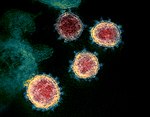 severe acute respiratory syndrome coronavirus 2