 Movie
Movie Controller
 Structure viewers
 About Yorodumi Papers


+Search query
-Structure paper
| Title | Two redox-responsive LysR-type transcription factors control the oxidative stress response of Agrobacterium tumefaciens. |
|---|---|
| Journal, issue, pages | Nucleic Acids Res, Vol. 53, Issue 6, Year 2025 |
| Publish date | Mar 20, 2025 |
 Authors Authors | Janka J Schmidt / Vivian B Brandenburg / Hannah Elders / Saba Shahzad / Sina Schäkermann / Ronja Fiedler / Lisa R Knoke / Yvonne Pfänder / Pascal Dietze / Hannah Bille / Bela Gärtner / Lennart J Albin / Lars I Leichert / Julia E Bandow / Eckhard Hofmann / Franz Narberhaus /  |
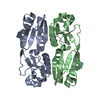
| PubMed Abstract | Pathogenic bacteria often encounter fluctuating reactive oxygen species (ROS) levels, particularly during host infection, necessitating robust redox-sensing mechanisms for survival. The LysR-type ...Pathogenic bacteria often encounter fluctuating reactive oxygen species (ROS) levels, particularly during host infection, necessitating robust redox-sensing mechanisms for survival. The LysR-type transcriptional regulator (LTTR) OxyR is a widely conserved bacterial thiol-based redox sensor. However, members of the Rhizobiales also encode LsrB, a second LTTR with potential redox-sensing function. This study explores the roles of OxyR and LsrB in the plant-pathogen Agrobacterium tumefaciens. Through single and combined deletions, we observed increased H2O2 sensitivity, underscoring their function in oxidative defense. Genome-wide transcriptome profiling under H2O2 exposure revealed that OxyR and LsrB co-regulate key antioxidant genes, including katG, encoding a bifunctional catalase/peroxidase. Agrobacterium tumefaciens LsrB possesses four cysteine residues potentially involved in redox sensing. To elucidate the structural basis for redox-sensing, we applied single-particle cryo-EM (cryogenic electron microscopy) to experimentally confirm an AlphaFold model of LsrB, identifying two proximal cysteine pairs. In vitro thiol-trapping coupled with mass spectrometry confirmed reversible thiol modifications of all four residues, suggesting a functional role in redox regulation. Collectively, these findings reveal that A. tumefaciens employs two cysteine-based redox sensing transcription factors, OxyR and LsrB, to withstand oxidative stress encountered in host and soil environments. |
 External links External links | Nucleic Acids Res / PubMed:40193708 / PubMed Central |
| Methods | EM (single particle) |
| Resolution | 3.9 Å |
| Structure data | EMDB-52168, PDB-9hh1: |
| Source |
|
 Keywords Keywords | DNA BINDING PROTEIN / LysR-type trancriptional regulator / DNA-Binding / Agrobacterium / transcription factor |

 Agrobacterium tumefaciens (bacteria)