National Institutes of Health/National Heart, Lung, and Blood Institute (NIH/NHLBI)
HL036153
米国
National Institutes of Health/National Heart, Lung, and Blood Institute (NIH/NHLBI)
HL124091
米国
引用
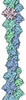
ジャーナル: J Mol Cell Cardiol / 年: 2026 タイトル: Pseudo-acetylation of ACTC1 K326 and K328 promotes dysinhibition of reconstituted human cardiac thin filaments. 著者: Kripa Chitre / Olga E Karpicheva / Chloe J King / Michael J Rynkiewicz / Axel J Fenwick / John F Dawson / D Brian Foster / William Lehman / Anthony Cammarato / 要旨: Electrostatic interactions between actin residues K326 and K328 and tropomyosin bias tropomyosin to an F-actin location where it blocks myosin attachment. K326/328 acetylation neutralizes their ...Electrostatic interactions between actin residues K326 and K328 and tropomyosin bias tropomyosin to an F-actin location where it blocks myosin attachment. K326/328 acetylation neutralizes their charge, potentially disrupting thin filament-based contractile regulation. We verified acetylation of K326/328 on human cardiac actin (ACTC1) and generated recombinant K326/328Q, pseudo-acetylated ACTC1. Pseudo-acetylation reduced inhibition of myosin-driven motility of F-actin-tropomyosin and F-actin-tropomyosin-troponin at low Ca. Cryo-EM-based and computational modeling revealed that pseudo-acetylation did not alter tropomyosin positioning along F-actin but decreased local F-actin-tropomyosin interaction energy. Thus, by reducing the energetic demands required for myosin to displace tropomyosin, ACTC1 K326/328 acetylation may promote contractile activation.
 ムービー
ムービー コントローラー


 データを開く
 基本情報
基本情報
 マップデータ
 試料
試料 キーワード
キーワード 機能・相同性情報
 Homo sapiens (ヒト)
 データ登録者
 米国, 2件
  引用
引用
 構造の表示
構造の表示
 ダウンロードとリンク
 emd_73996.png
 http://ftp.pdbj.org/pub/emdb/structures/EMD-73996


 Z
Z Y
Y X
X


 試料の構成要素
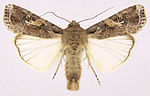 Spodoptera frugiperda (ツマジロクサヨトウ)
 Escherichia coli BL21(DE3) (大腸菌)
 解析
解析 電子顕微鏡法
 FIELD EMISSION GUN