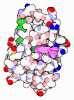
- EMDB-48312: Catalytic domain of human DNA polymerase alpha in complex with DN... -
+
データを開く
IDまたはキーワード:
読み込み中...
-
基本情報
登録情報
データベース: EMDB / ID: EMD-48312
タイトル
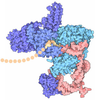
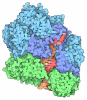
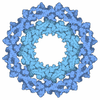
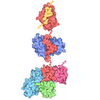
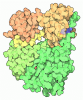
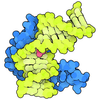
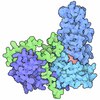
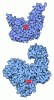
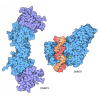
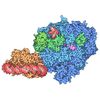
Catalytic domain of human DNA polymerase alpha in complex with DNA and RPA
マップデータ
composite map, 3.5 angstrom
試料
複合体: Ternary complex of DNA polymerase alpha with DNA and replication protein A
タンパク質・ペプチド: Replication protein A 14 kDa subunit
タンパク質・ペプチド: Replication protein A 32 kDa subunit
タンパク質・ペプチド: Replication protein A 70 kDa DNA-binding subunit
Other: RNA-DNA primer (11-mer)
タンパク質・ペプチド: DNA polymerase alpha catalytic subunit
DNA: DNA template (35-mer)
リガンド: ZINC ION
リガンド: MAGNESIUM ION
リガンド: 2'-DEOXYCYTIDINE-5'-TRIPHOSPHATE
キーワード
DNA replication / Replication-DNA-RNA complex
機能・相同性
機能・相同性情報
protein localization to chromosome / DNA replication factor A complex / DNA replication initiation / Inhibition of replication initiation of damaged DNA by RB1/E2F1 / Telomere C-strand synthesis initiation / alpha DNA polymerase:primase complex / regulation of type I interferon production / Polymerase switching / Processive synthesis on the lagging strand / single-stranded telomeric DNA binding ...protein localization to chromosome / DNA replication factor A complex / DNA replication initiation / Inhibition of replication initiation of damaged DNA by RB1/E2F1 / Telomere C-strand synthesis initiation / alpha DNA polymerase:primase complex / regulation of type I interferon production / Polymerase switching / Processive synthesis on the lagging strand / single-stranded telomeric DNA binding / Removal of the Flap Intermediate / lateral element / lagging strand elongation / G-rich strand telomeric DNA binding / regulation of DNA damage checkpoint / mitotic DNA replication initiation / protein localization to site of double-strand break / Mismatch repair (MMR) directed by MSH2:MSH3 (MutSbeta) / Mismatch repair (MMR) directed by MSH2:MSH6 (MutSalpha) / DNA replication, synthesis of primer / Polymerase switching on the C-strand of the telomere / chromatin-protein adaptor activity / Removal of the Flap Intermediate from the C-strand / HDR through Single Strand Annealing (SSA) / DNA strand elongation involved in DNA replication / regulation of double-strand break repair via homologous recombination / leading strand elongation / G1/S-Specific Transcription / telomeric repeat DNA binding / DNA synthesis involved in DNA repair / Impaired BRCA2 binding to RAD51 / hemopoiesis / DNA replication origin binding / PCNA-Dependent Long Patch Base Excision Repair / Activation of the pre-replicative complex / Regulation of HSF1-mediated heat shock response / DNA replication initiation / Presynaptic phase of homologous DNA pairing and strand exchange / HSF1 activation / Activation of ATR in response to replication stress / telomere maintenance via telomerase / mismatch repair / SUMOylation of DNA damage response and repair proteins / site of DNA damage / mitotic G1 DNA damage checkpoint signaling / homeostasis of number of cells within a tissue / regulation of mitotic cell cycle / telomere maintenance / Translesion synthesis by REV1 / Translesion synthesis by POLK / Translesion synthesis by POLI / male germ cell nucleus / Gap-filling DNA repair synthesis and ligation in GG-NER / meiotic cell cycle / Defective pyroptosis / nucleotide-excision repair / Fanconi Anemia Pathway / Termination of translesion DNA synthesis / Translesion Synthesis by POLH / Recognition of DNA damage by PCNA-containing replication complex / G2/M DNA damage checkpoint / base-excision repair / PML body / DNA-templated DNA replication / double-strand break repair via homologous recombination / Meiotic recombination / double-strand break repair via nonhomologous end joining / HDR through Homologous Recombination (HRR) / Dual Incision in GG-NER / nuclear matrix / Formation of Incision Complex in GG-NER / Dual incision in TC-NER / Gap-filling DNA repair synthesis and ligation in TC-NER / nuclear envelope / regulation of cell population proliferation / single-stranded DNA binding / site of double-strand break / Processing of DNA double-strand break ends / DNA recombination / protein phosphatase binding / Regulation of TP53 Activity through Phosphorylation / DNA-directed DNA polymerase / in utero embryonic development / damaged DNA binding / DNA-directed DNA polymerase activity / chromosome, telomeric region / DNA replication / nuclear body / nucleotide binding / DNA repair / positive regulation of cell population proliferation / DNA damage response / chromatin binding / ubiquitin protein ligase binding / protein kinase binding / chromatin / nucleolus / enzyme binding / DNA binding / zinc ion binding 類似検索 - 分子機能
Replication factor A protein 2 / Replication protein A, C-terminal / Replication protein A C terminal / Replication factor A protein 3 / Replication factor A protein 3 / Replication factor-A protein 1, N-terminal domain / Replication factor A protein-like / Replication factor A protein 1 / Replication factor-A protein 1, N-terminal / Replication protein A, OB domain ...Replication factor A protein 2 / Replication protein A, C-terminal / Replication protein A C terminal / Replication factor A protein 3 / Replication factor A protein 3 / Replication factor-A protein 1, N-terminal domain / Replication factor A protein-like / Replication factor A protein 1 / Replication factor-A protein 1, N-terminal / Replication protein A, OB domain / Replication protein A OB domain / : / Replication factor A, C-terminal / Replication factor-A C terminal domain / DNA polymerase alpha catalytic subunit, N-terminal domain / DNA polymerase alpha, zinc finger domain superfamily / DNA Polymerase alpha zinc finger / DNA polymerase alpha subunit p180 N terminal / Zinc finger, DNA-directed DNA polymerase, family B, alpha / DNA polymerase alpha catalytic subunit, catalytic domain / OB-fold nucleic acid binding domain, AA-tRNA synthetase-type / OB-fold nucleic acid binding domain / DNA polymerase family B, thumb domain / DNA-directed DNA polymerase, family B, multifunctional domain / DNA-directed DNA polymerase, family B, conserved site / DNA polymerase family B signature. / DNA polymerase family B / DNA polymerase family B, exonuclease domain / DNA-directed DNA polymerase, family B, exonuclease domain / DNA polymerase, palm domain superfamily / DNA polymerase type-B family / DNA-directed DNA polymerase, family B / Ribonuclease H superfamily / Ribonuclease H-like superfamily / Winged helix DNA-binding domain superfamily / Winged helix-like DNA-binding domain superfamily / Nucleic acid-binding, OB-fold / DNA/RNA polymerase superfamily 類似検索 - ドメイン・相同性
DNA polymerase alpha catalytic subunit / Replication protein A 32 kDa subunit / Replication protein A 70 kDa DNA-binding subunit / Replication protein A 14 kDa subunit 類似検索 - 構成要素
National Institutes of Health/National Institute of General Medical Sciences (NIH/NIGMS)
R35GM152032
米国
引用
ジャーナル: Nucleic Acids Res / 年: 2025 タイトル: The human primosome requires replication protein A when copying DNA with inverted repeats. 著者: Andrey G Baranovskiy / Lucia M Morstadt / Eduardo E Romero / Nigar D Babayeva / Tahir H Tahirov / 要旨: The human primosome, a four-subunit complex of primase and DNA polymerase alpha (Polα), initiates DNA synthesis on both chromosome strands by generating chimeric RNA-DNA primers for loading DNA ...The human primosome, a four-subunit complex of primase and DNA polymerase alpha (Polα), initiates DNA synthesis on both chromosome strands by generating chimeric RNA-DNA primers for loading DNA polymerases delta and epsilon (Polϵ). Replication protein A (RPA) tightly binds to single-stranded DNA strands, protecting them from nucleolytic digestion and unauthorized transactions. We report here that RPA plays a critical role for the human primosome during DNA synthesis across inverted repeats prone to hairpin formation. On other alternatively structured DNA, forming a G-quadruplex, RPA does not assist primosome. A stimulatory effect of RPA on DNA synthesis across hairpins was also observed for the catalytic domain of Polα but not of Polϵ. The winged helix-turn-helix domain of RPA is essential for an efficient hairpin bypass and increases RPA-Polα cooperativity on the primed DNA template. Cryo-EM studies revealed that this domain is mainly responsible for the interaction between RPA and Polα. The flexible mode of RPA-Polα interaction during DNA synthesis implies the mechanism of template handover between them when the hairpin formation should be avoided. This work provides insight into a cooperative action of RPA and primosome on DNA, which is critical for DNA synthesis across inverted repeats.
 ムービー
ムービー コントローラー


 データを開く
 基本情報
基本情報
 マップデータ
 試料
試料 キーワード
キーワード 機能・相同性情報
 Homo sapiens (ヒト)
 データ登録者
 米国, 1件
  引用
引用 構造の表示
構造の表示
 ダウンロードとリンク
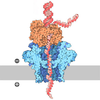
 emd_48312.png
 http://ftp.pdbj.org/pub/emdb/structures/EMD-48312



 X (Sec.)
 Y (Row.)
 Z (Col.)


 試料の構成要素
 Escherichia coli BL21(DE3) (大腸菌)
 Spodoptera frugiperda (ツマジロクサヨトウ)
 解析
解析 電子顕微鏡法
 FIELD EMISSION GUN