ムービー
ムービー コントローラー


+ データを開く

- 基本情報
基本情報
| 登録情報 |  | |||||||||
|---|---|---|---|---|---|---|---|---|---|---|
| タイトル | Cryo-EM map of squid sensory receptor CRB1 | |||||||||
 マップデータ マップデータ | Cryo-EM structure of squid sensory receptor CRB1 | |||||||||
 試料 試料 |
| |||||||||
 キーワード キーワード | pentameric ligand gated ion channel / squid sensory receptor / cys-loop receptor / STRUCTURAL PROTEIN | |||||||||
| 生物種 |  Sepioloidea lineolata (無脊椎動物) Sepioloidea lineolata (無脊椎動物) | |||||||||
| 手法 | 単粒子再構成法 / クライオ電子顕微鏡法 / 解像度: 3.13 Å | |||||||||
 データ登録者 データ登録者 | Kang G / Kim JJ / Allard CAH / Valencia-Montoya WA / van Giesen L / Kilian PB / Bai X / Bellono NW / Hibbs RE | |||||||||
| 資金援助 |  米国, 1件 米国, 1件
| |||||||||
 引用 引用 | ジャーナル: Nature / 年: 2023 タイトル: Sensory specializations drive octopus and squid behaviour. 著者: Guipeun Kang / Corey A H Allard / Wendy A Valencia-Montoya / Lena van Giesen / Jeong Joo Kim / Peter B Kilian / Xiaochen Bai / Nicholas W Bellono / Ryan E Hibbs / 要旨: The evolution of new traits enables expansion into new ecological and behavioural niches. Nonetheless, demonstrated connections between divergence in protein structure, function and lineage-specific ...The evolution of new traits enables expansion into new ecological and behavioural niches. Nonetheless, demonstrated connections between divergence in protein structure, function and lineage-specific behaviours remain rare. Here we show that both octopus and squid use cephalopod-specific chemotactile receptors (CRs) to sense their respective marine environments, but structural adaptations in these receptors support the sensation of specific molecules suited to distinct physiological roles. We find that squid express ancient CRs that more closely resemble related nicotinic acetylcholine receptors, whereas octopuses exhibit a more recent expansion in CRs consistent with their elaborated 'taste by touch' sensory system. Using a combination of genetic profiling, physiology and behavioural analyses, we identify the founding member of squid CRs that detects soluble bitter molecules that are relevant in ambush predation. We present the cryo-electron microscopy structure of a squid CR and compare this with octopus CRs and nicotinic receptors. These analyses demonstrate an evolutionary transition from an ancestral aromatic 'cage' that coordinates soluble neurotransmitters or tastants to a more recent octopus CR hydrophobic binding pocket that traps insoluble molecules to mediate contact-dependent chemosensation. Thus, our study provides a foundation for understanding how adaptation of protein structure drives the diversification of organismal traits and behaviour. | |||||||||
| 履歴 |
|
- 構造の表示
構造の表示
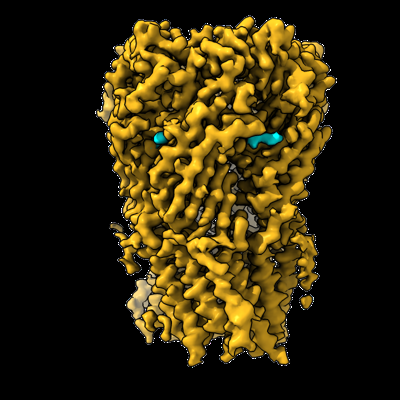
| 添付画像 |
|---|
- ダウンロードとリンク
-EMDBアーカイブ
| マップデータ | emd_28167.map.gz | 41.1 MB |  EMDBマップデータ形式 EMDBマップデータ形式 | |
|---|---|---|---|---|
| ヘッダ (付随情報) | emd-28167-v30.xmlemd-28167.xml | 14.9 KB 14.9 KB | 表示 表示 | EMDBヘッダ |
| FSC (解像度算出) | emd_28167_fsc.xml | 9.2 KB | 表示 | FSCデータファイル |
| 画像 | 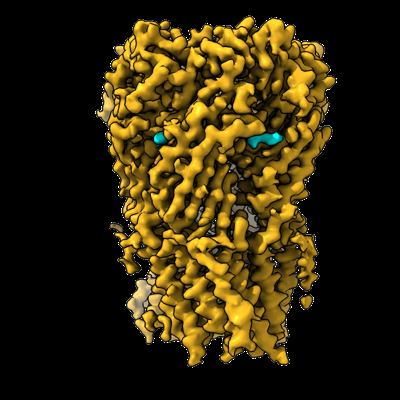 emd_28167.png emd_28167.png | 139.1 KB | ||
| Filedesc metadata | emd-28167.cif.gz | 5.6 KB | ||
| その他 | emd_28167_half_map_1.map.gzemd_28167_half_map_2.map.gz | 52.2 MB 51.9 MB | ||
| アーカイブディレクトリ |  http://ftp.pdbj.org/pub/emdb/structures/EMD-28167ftp://ftp.pdbj.org/pub/emdb/structures/EMD-28167 http://ftp.pdbj.org/pub/emdb/structures/EMD-28167ftp://ftp.pdbj.org/pub/emdb/structures/EMD-28167 | HTTPS FTP |
-関連構造データ
-リンク
| EMDBのページ | EMDB (EBI/PDBe) / EMDataResource |
|---|
-マップ
| ファイル | ダウンロード / ファイル: emd_28167.map.gz / 形式: CCP4 / 大きさ: 67 MB / タイプ: IMAGE STORED AS FLOATING POINT NUMBER (4 BYTES) | ||||||||||||||||||||||||||||||||||||
|---|---|---|---|---|---|---|---|---|---|---|---|---|---|---|---|---|---|---|---|---|---|---|---|---|---|---|---|---|---|---|---|---|---|---|---|---|---|
| 注釈 | Cryo-EM structure of squid sensory receptor CRB1 | ||||||||||||||||||||||||||||||||||||
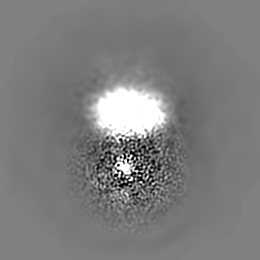
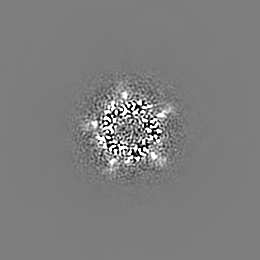
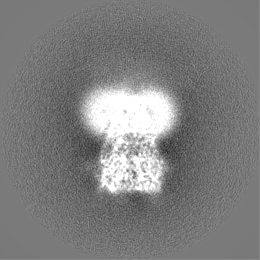
| 投影像・断面図 | 画像のコントロール
画像は Spider により作成 | ||||||||||||||||||||||||||||||||||||
| ボクセルのサイズ | X=Y=Z: 1.069 Å | ||||||||||||||||||||||||||||||||||||
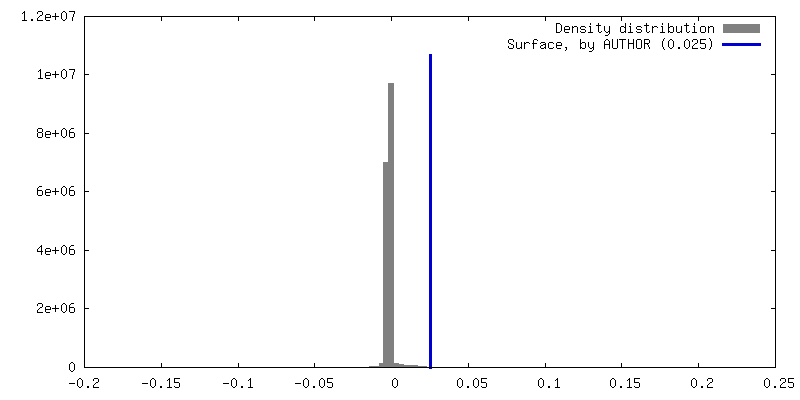
| 密度 |
| ||||||||||||||||||||||||||||||||||||
| 対称性 | 空間群: 1 | ||||||||||||||||||||||||||||||||||||
| 詳細 | EMDB XML:
|
 Z (Sec.)
 Y (Row.)
 X (Col.)







-添付データ
-ハーフマップ: Half Map 1
| ファイル | emd_28167_half_map_1.map | ||||||||||||
|---|---|---|---|---|---|---|---|---|---|---|---|---|---|
| 注釈 | Half Map 1 | ||||||||||||
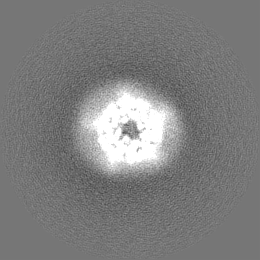
| 投影像・断面図 |
| ||||||||||||
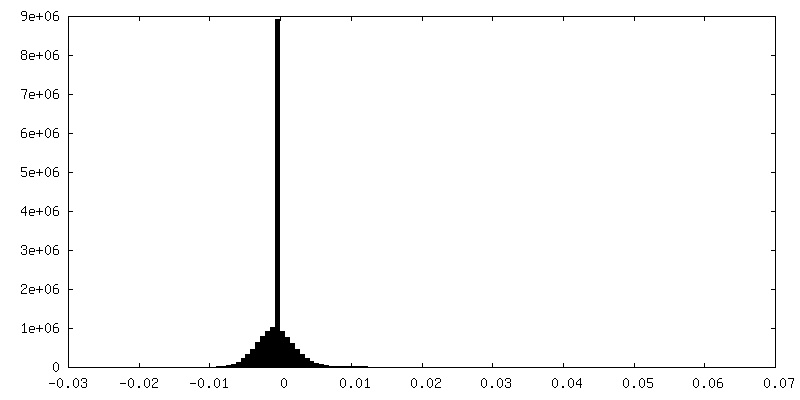
| 密度ヒストグラム |

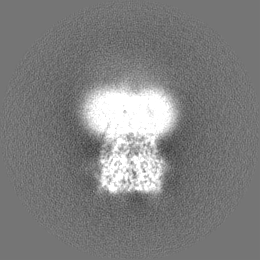
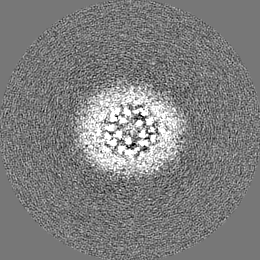
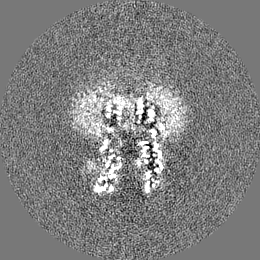
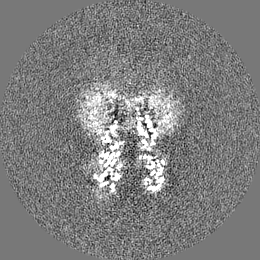
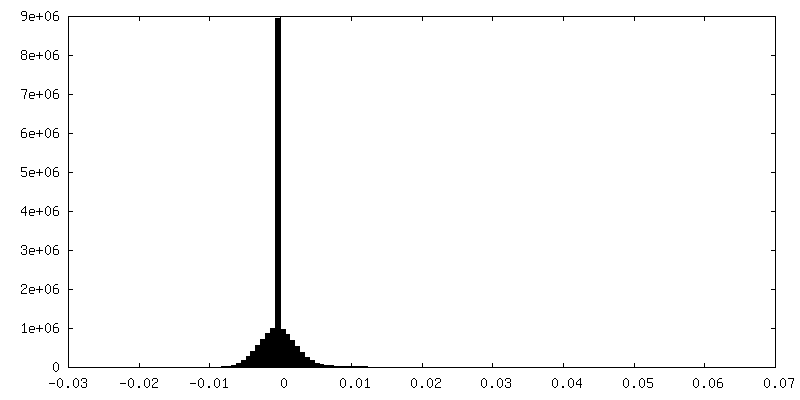
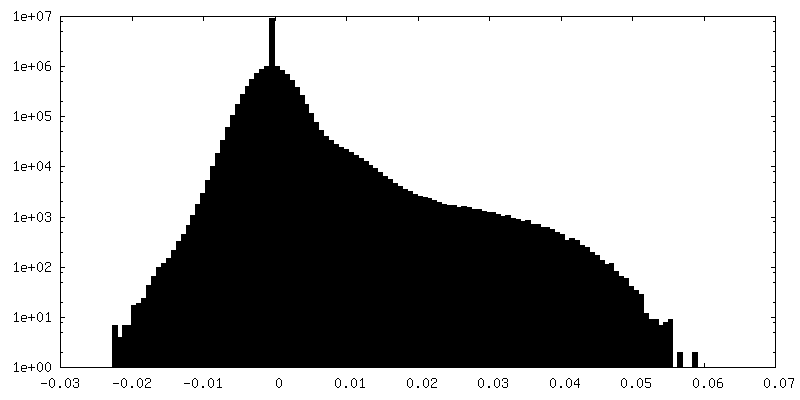
-ハーフマップ: Half Map 2
| ファイル | emd_28167_half_map_2.map | ||||||||||||
|---|---|---|---|---|---|---|---|---|---|---|---|---|---|
| 注釈 | Half Map 2 | ||||||||||||
| 投影像・断面図 |
| ||||||||||||
| 密度ヒストグラム |


- 試料の構成要素
-全体 : Squid sensory receptor CRB1 in complex with denatonium
| 全体 | 名称: Squid sensory receptor CRB1 in complex with denatonium |
|---|---|
| 要素 |
|
-超分子 #1: Squid sensory receptor CRB1 in complex with denatonium
| 超分子 | 名称: Squid sensory receptor CRB1 in complex with denatonium タイプ: complex / ID: 1 / 親要素: 0 / 含まれる分子: #1 |
|---|---|
| 由来(天然) | 生物種: Sepioloidea lineolata (無脊椎動物) |
| 分子量 | 理論値: 200 kDa/nm |
-分子 #1: Squid sensory receptor CRB1
| 分子 | 名称: Squid sensory receptor CRB1 / タイプ: protein_or_peptide / ID: 1 / コピー数: 5 / 光学異性体: LEVO |
|---|---|
| 由来(天然) | 生物種: Sepioloidea lineolata (無脊椎動物) |
| 分子量 | 理論値: 45.038723 KDa |
| 組換発現 | 生物種:  Homo sapiens (ヒト) Homo sapiens (ヒト) |
| 配列 | 文字列: CWTYEEEYYF RSNFLQQYNK DIRPLNDLSK PISVGIHLEI AKMNDFNLAE GRLKIQTYLI LQWYDEKIFW NESTYPIPKL MVSSKKIWS PAISVYYTEN EMDSKDQFQM EIYKNGSVHQ WKSFYFNILC DVNARAFPFD KYTCETMFYF NDYDIQTAIF S SFRCISST ...文字列: CWTYEEEYYF RSNFLQQYNK DIRPLNDLSK PISVGIHLEI AKMNDFNLAE GRLKIQTYLI LQWYDEKIFW NESTYPIPKL MVSSKKIWS PAISVYYTEN EMDSKDQFQM EIYKNGSVHQ WKSFYFNILC DVNARAFPFD KYTCETMFYF NDYDIQTAIF S SFRCISST DLSRKAWYVS FSCDTKIGEE GSLGQLSLKL VRKVSLQCLS VLLPLFIFFI LNIMIGYLPI ESGEKVTFAT TV FLSNVIY IDNLSKQLPK ESSEIPLIFL CHIFLAFLSG LSAVGTIITS KIFCKYKSTE SAPSPSPAPA NNKIDVKKNS QIY SISKEG RVEKEANSSD GIKATTTTTT TTITEDLKKI CLSYAKIESA ILYIMTFISI LCALVFTSLF FESFLD |
-分子 #3: N-benzyl-2-(2,6-dimethylanilino)-N,N-diethyl-2-oxoethan-1-aminium
| 分子 | 名称: N-benzyl-2-(2,6-dimethylanilino)-N,N-diethyl-2-oxoethan-1-aminium タイプ: ligand / ID: 3 / コピー数: 5 / 式: WK3 |
|---|---|
| 分子量 | 理論値: 325.468 Da |
| Chemical component information | 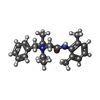 ChemComp-WK3: |
-分子 #4: water
| 分子 | 名称: water / タイプ: ligand / ID: 4 / コピー数: 10 / 式: HOH |
|---|---|
| 分子量 | 理論値: 18.015 Da |
| Chemical component information |  ChemComp-HOH: |
-実験情報
-構造解析
| 手法 | クライオ電子顕微鏡法 |
|---|---|
 解析 解析 | 単粒子再構成法 |
| 試料の集合状態 | particle |
-試料調製
| 緩衝液 | pH: 7.4 |
|---|---|
| 凍結 | 凍結剤: ETHANE / チャンバー内湿度: 100 % |
- 電子顕微鏡法
| 顕微鏡 | FEI TITAN KRIOS |
|---|---|
| 撮影 | フィルム・検出器のモデル: GATAN K3 (6k x 4k) / 平均電子線量: 50.0 e/Å2 |
| 電子線 | 加速電圧: 300 kV / 電子線源:  FIELD EMISSION GUN FIELD EMISSION GUN |
| 電子光学系 | 照射モード: FLOOD BEAM / 撮影モード: BRIGHT FIELD / 最大 デフォーカス(公称値): 2.5 µm / 最小 デフォーカス(公称値): 0.5 µm |
| 実験機器 |  モデル: Titan Krios / 画像提供: FEI Company |