positive regulation of synapse maturation / Conversion from APC/C:Cdc20 to APC/C:Cdh1 in late anaphase / regulation of mitotic cell cycle spindle assembly checkpoint / Inactivation of APC/C via direct inhibition of the APC/C complex / APC/C:Cdc20 mediated degradation of mitotic proteins / anaphase-promoting complex / Aberrant regulation of mitotic exit in cancer due to RB1 defects / anaphase-promoting complex-dependent catabolic process / regulation of meiotic cell cycle / protein branched polyubiquitination ...positive regulation of synapse maturation / Conversion from APC/C:Cdc20 to APC/C:Cdh1 in late anaphase / regulation of mitotic cell cycle spindle assembly checkpoint / Inactivation of APC/C via direct inhibition of the APC/C complex / APC/C:Cdc20 mediated degradation of mitotic proteins / anaphase-promoting complex / Aberrant regulation of mitotic exit in cancer due to RB1 defects / anaphase-promoting complex-dependent catabolic process / regulation of meiotic cell cycle / protein branched polyubiquitination / metaphase/anaphase transition of mitotic cell cycle / Phosphorylation of the APC/C / regulation of exit from mitosis / positive regulation of synaptic plasticity / positive regulation of dendrite morphogenesis / positive regulation of mitotic metaphase/anaphase transition / protein K11-linked ubiquitination / regulation of mitotic metaphase/anaphase transition / ubiquitin-ubiquitin ligase activity / mitotic metaphase chromosome alignment / Regulation of APC/C activators between G1/S and early anaphase / Transcriptional Regulation by VENTX / cullin family protein binding / enzyme-substrate adaptor activity / positive regulation of axon extension / intercellular bridge / heterochromatin / protein K48-linked ubiquitination / nuclear periphery / APC/C:Cdc20 mediated degradation of Cyclin B / regulation of mitotic cell cycle / APC-Cdc20 mediated degradation of Nek2A / Autodegradation of Cdh1 by Cdh1:APC/C / APC/C:Cdc20 mediated degradation of Securin / Assembly of the pre-replicative complex / Cdc20:Phospho-APC/C mediated degradation of Cyclin A / APC/C:Cdh1 mediated degradation of Cdc20 and other APC/C:Cdh1 targeted proteins in late mitosis/early G1 / brain development / G protein-coupled receptor binding / kinetochore / CDK-mediated phosphorylation and removal of Cdc6 / spindle / neuron projection development / ubiquitin-protein transferase activity / mitotic spindle / Separation of Sister Chromatids / ubiquitin protein ligase activity / nervous system development / Antigen processing: Ubiquitination & Proteasome degradation / mitotic cell cycle / microtubule cytoskeleton / Senescence-Associated Secretory Phenotype (SASP) / protein phosphatase binding / molecular adaptor activity / ubiquitin-dependent protein catabolic process / cell differentiation / protein ubiquitination / negative regulation of gene expression / cell division / ubiquitin protein ligase binding / centrosome / nucleolus / zinc ion binding / nucleoplasm / nucleus / cytoplasm / cytosol Similarity search - Function
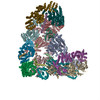
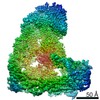
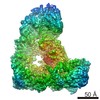
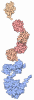
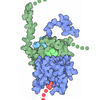
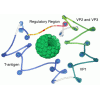
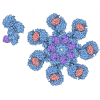
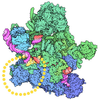
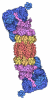
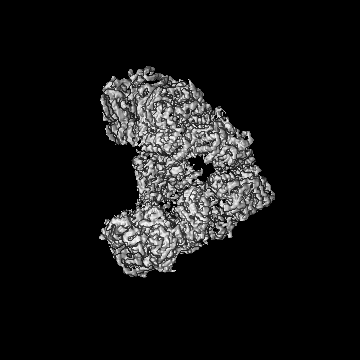
Journal: Nat Commun / Year: 2024 Title: Cryo-EM structures of apo-APC/C and APC/C complexes provide insights into APC/C regulation. Authors: Anna Höfler / Jun Yu / Jing Yang / Ziguo Zhang / Leifu Chang / Stephen H McLaughlin / Geoffrey W Grime / Elspeth F Garman / Andreas Boland / David Barford / Abstract: APC/C is a multi-subunit complex that functions as a master regulator of cell division. It controls progression through the cell cycle by timely marking mitotic cyclins and other cell cycle ...APC/C is a multi-subunit complex that functions as a master regulator of cell division. It controls progression through the cell cycle by timely marking mitotic cyclins and other cell cycle regulatory proteins for degradation. The APC/C itself is regulated by the sequential action of its coactivator subunits CDC20 and CDH1, post-translational modifications, and its inhibitory binding partners EMI1 and the mitotic checkpoint complex. In this study, we took advantage of developments in cryo-electron microscopy to determine the structures of human APC/C and apo-APC/C at 2.9 Å and 3.2 Å resolution, respectively, providing insights into the regulation of APC/C activity. The high-resolution maps allow the unambiguous assignment of an α-helix to the N-terminus of CDH1 (CDH1) in the APC/C ternary complex. We also identify a zinc-binding module in APC2 that confers structural stability to the complex, and we confirm the presence of zinc ions experimentally. Finally, due to the higher resolution and well defined density of these maps, we are able to build, aided by AlphaFold predictions, several intrinsically disordered regions in different APC/C subunits that likely play a role in proper APC/C assembly and regulation of its activity.
Model: Quantifoil R2/2 / Material: COPPER / Support film - Material: CARBON / Support film - topology: CONTINUOUS / Support film - Film thickness: 50 / Pretreatment - Type: PLASMA CLEANING / Pretreatment - Time: 20 sec. / Pretreatment - Atmosphere: OTHER
Vitrification
Cryogen name: ETHANE / Chamber humidity: 100 % / Chamber temperature: 277.15 K / Instrument: FEI VITROBOT MARK III
-
Electron microscopy
Microscope
FEI TITAN KRIOS
Image recording
Film or detector model: FEI FALCON III (4k x 4k) / Detector mode: COUNTING / Digitization - Dimensions - Width: 4096 pixel / Digitization - Dimensions - Height: 4096 pixel / Number real images: 8297 / Average electron dose: 40.0 e/Å2
Electron beam
Acceleration voltage: 300 kV / Electron source: FIELD EMISSION GUN
In the structure databanks used in Yorodumi, some data are registered as the other names, "COVID-19 virus" and "2019-nCoV". Here are the details of the virus and the list of structure data.
Jan 31, 2019. EMDB accession codes are about to change! (news from PDBe EMDB page)
EMDB accession codes are about to change! (news from PDBe EMDB page)
The allocation of 4 digits for EMDB accession codes will soon come to an end. Whilst these codes will remain in use, new EMDB accession codes will include an additional digit and will expand incrementally as the available range of codes is exhausted. The current 4-digit format prefixed with “EMD-” (i.e. EMD-XXXX) will advance to a 5-digit format (i.e. EMD-XXXXX), and so on. It is currently estimated that the 4-digit codes will be depleted around Spring 2019, at which point the 5-digit format will come into force.
The EM Navigator/Yorodumi systems omit the EMD- prefix.
Related info.:Q: What is EMD? / ID/Accession-code notation in Yorodumi/EM Navigator
Yorodumi is a browser for structure data from EMDB, PDB, SASBDB, etc.
This page is also the successor to EM Navigator detail page, and also detail information page/front-end page for Omokage search.
The word "yorodu" (or yorozu) is an old Japanese word meaning "ten thousand". "mi" (miru) is to see.
Related info.:EMDB / PDB / SASBDB / Comparison of 3 databanks / Yorodumi Search / Aug 31, 2016. New EM Navigator & Yorodumi / Yorodumi Papers / Jmol/JSmol / Function and homology information / Changes in new EM Navigator and Yorodumi
 Movie
Movie Controller

 Yorodumi
 Open data
 Basic information
 Map data
 Sample
 Keywords
 Function and homology information
 Homo sapiens (human)
 Authors
 Switzerland,
  United Kingdom, 2 items
  Citation
 Structure visualization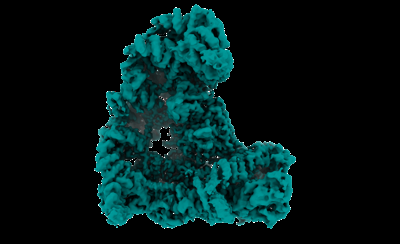
 Downloads & links
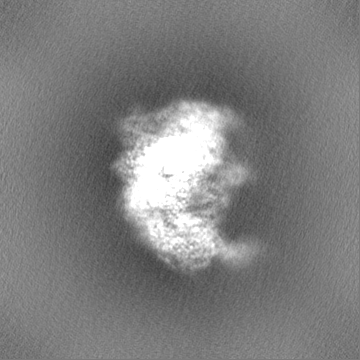
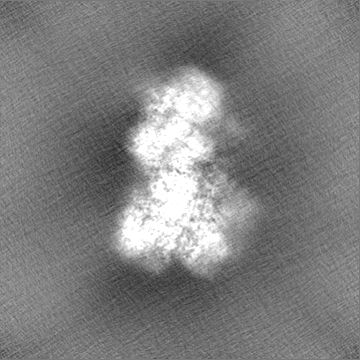
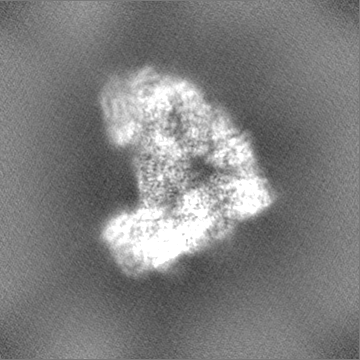
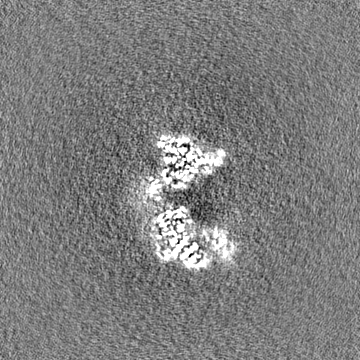
 emd_17751.png
 http://ftp.pdbj.org/pub/emdb/structures/EMD-17751




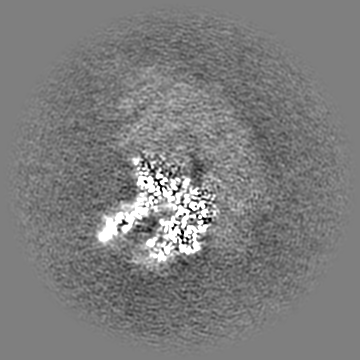
 Z (Sec.)
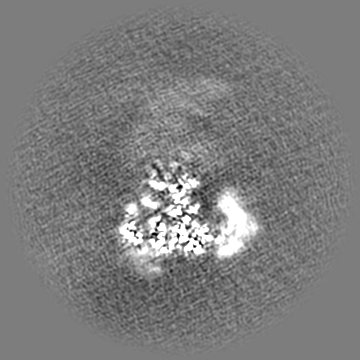
 Y (Row.)
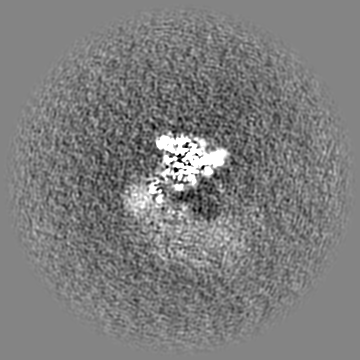
 X (Col.)









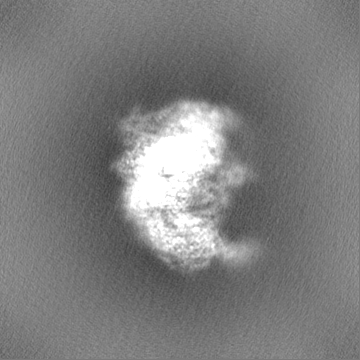
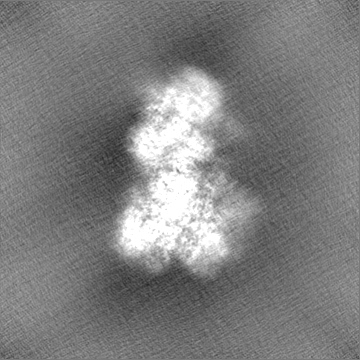
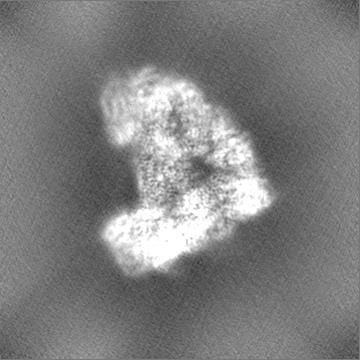
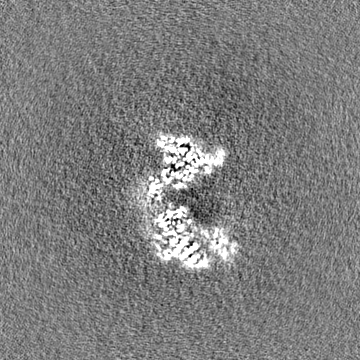
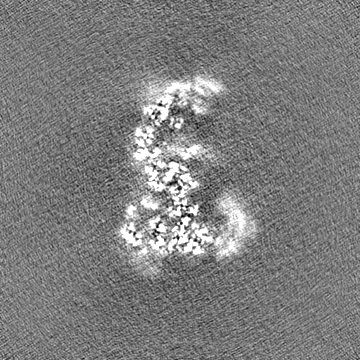
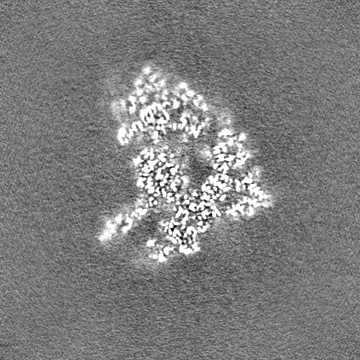

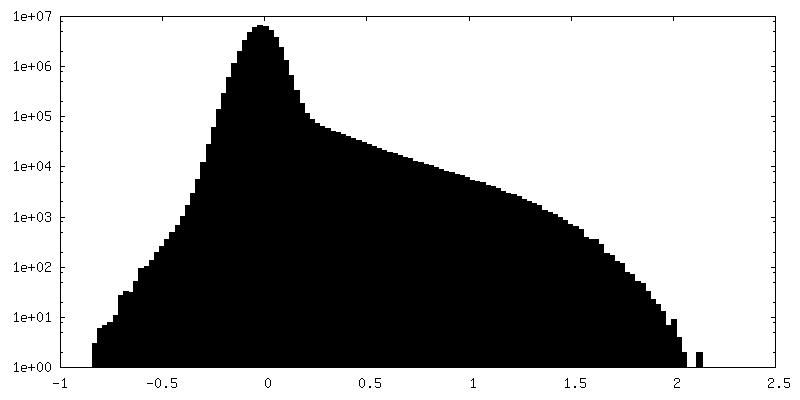
 Sample components
 Trichoplusia ni (cabbage looper)
 Processing
 Electron microscopy
 FIELD EMISSION GUN