B-WICH complex positively regulates rRNA expression / RNA Polymerase I Transcription Initiation / RNA Polymerase I Promoter Escape / RNA Polymerase I Transcription Termination / RNA Polymerase III Transcription Initiation From Type 1 Promoter / RNA Polymerase III Transcription Initiation From Type 2 Promoter / RNA Polymerase III Transcription Initiation From Type 3 Promoter / peptidyl-lysine trimethylation / FACT complex / blastocyst growth ...B-WICH complex positively regulates rRNA expression / RNA Polymerase I Transcription Initiation / RNA Polymerase I Promoter Escape / RNA Polymerase I Transcription Termination / RNA Polymerase III Transcription Initiation From Type 1 Promoter / RNA Polymerase III Transcription Initiation From Type 2 Promoter / RNA Polymerase III Transcription Initiation From Type 3 Promoter / peptidyl-lysine trimethylation / FACT complex / blastocyst growth / microtubule cytoskeleton organization involved in mitosis / Ski complex / RNA polymerase II C-terminal domain phosphoserine binding / [histone H3]-lysine36 N-trimethyltransferase / mRNA decay by 3' to 5' exoribonuclease / Cdc73/Paf1 complex / inner cell mass cell differentiation / positive regulation of mRNA 3'-end processing / regulation of mRNA export from nucleus / regulation of isotype switching / histone H3K36 trimethyltransferase activity / nuclear-transcribed mRNA catabolic process, 3'-5' exonucleolytic nonsense-mediated decay / negative regulation of DNA-templated transcription, elongation / regulation of muscle cell differentiation / endodermal cell fate commitment / negative regulation of myeloid cell differentiation / regulation of chromatin organization / positive regulation of cell cycle G1/S phase transition / DSIF complex / regulation of mRNA processing / trophectodermal cell differentiation / histone H3K36 methyltransferase activity / regulation of transcription elongation by RNA polymerase II / blastocyst hatching / response to alkaloid / nucleosome organization / Formation of RNA Pol II elongation complex / Formation of the Early Elongation Complex / Transcriptional regulation by small RNAs / RNA Polymerase II Pre-transcription Events / TP53 Regulates Transcription of DNA Repair Genes / FGFR2 alternative splicing / RNA polymerase II transcribes snRNA genes / mRNA Capping / mRNA Splicing - Minor Pathway / Processing of Capped Intron-Containing Pre-mRNA / RNA Polymerase II Promoter Escape / RNA Polymerase II Transcription Pre-Initiation And Promoter Opening / RNA Polymerase II Transcription Initiation / RNA Polymerase II Transcription Elongation / RNA Polymerase II Transcription Initiation And Promoter Clearance / RNA Pol II CTD phosphorylation and interaction with CE / Estrogen-dependent gene expression / Formation of TC-NER Pre-Incision Complex / Dual incision in TC-NER / Gap-filling DNA repair synthesis and ligation in TC-NER / mRNA Splicing - Major Pathway / response to type I interferon / blastocyst formation / protein-lysine N-methyltransferase activity / positive regulation of ossification / mRNA 3'-end processing / regulation of protein localization to chromatin / nucleosome disassembly / positive regulation of DNA-templated transcription, elongation / nuclear lumen / response to metal ion / Abortive elongation of HIV-1 transcript in the absence of Tat / histone H3 methyltransferase activity / poly(A)+ mRNA export from nucleus / transcription factor TFIID complex / regulation of double-strand break repair via homologous recombination / transcription elongation-coupled chromatin remodeling / interleukin-6-mediated signaling pathway / stem cell population maintenance / negative regulation of G1/S transition of mitotic cell cycle / negative regulation of gene expression, epigenetic / RNA Pol II CTD phosphorylation and interaction with CE during HIV infection / RNA Pol II CTD phosphorylation and interaction with CE / Formation of the Early Elongation Complex / Formation of the HIV-1 Early Elongation Complex / mRNA Capping / endodermal cell differentiation / RNA polymerase II complex binding / maintenance of transcriptional fidelity during transcription elongation by RNA polymerase II / positive regulation of interferon-alpha production / negative regulation of transcription elongation by RNA polymerase II / positive regulation of macroautophagy / Pausing and recovery of Tat-mediated HIV elongation / Tat-mediated HIV elongation arrest and recovery / RNA polymerase II transcribes snRNA genes / HIV elongation arrest and recovery / Pausing and recovery of HIV elongation / cell surface receptor signaling pathway via JAK-STAT / protein localization to nucleus / positive regulation of Wnt signaling pathway / mRNA transport / alpha-tubulin binding / Tat-mediated elongation of the HIV-1 transcript / RNA polymerase I complex 類似検索 - 分子機能
National Institutes of Health/National Institute of Environmental Health Sciences (NIH/NIEHS)
米国
引用
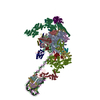
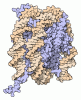
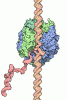
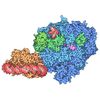
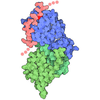
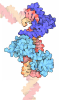
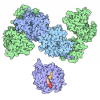
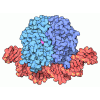
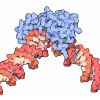
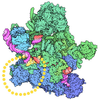
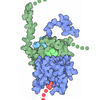
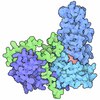
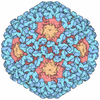
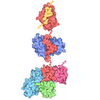
ジャーナル: Science / 年: 2025 タイトル: Structural basis of H3K36 trimethylation by SETD2 during chromatin transcription. 著者: Jonathan W Markert / Jelly H Soffers / Lucas Farnung 要旨: During transcription, RNA polymerase II traverses through chromatin, and posttranslational modifications including histone methylations mark regions of active transcription. Histone protein H3 lysine ...During transcription, RNA polymerase II traverses through chromatin, and posttranslational modifications including histone methylations mark regions of active transcription. Histone protein H3 lysine 36 trimethylation (H3K36me3), which is established by the histone methyltransferase SET domain containing 2 (SETD2), suppresses cryptic transcription, regulates splicing, and serves as a binding site for transcription elongation factors. The mechanism by which the transcription machinery coordinates the deposition of H3K36me3 is not well understood. Here we provide cryo-electron microscopy structures of mammalian RNA polymerase II-DSIF-SPT6-PAF1c-TFIIS-IWS1-SETD2-nucleosome elongation complexes, revealing that the transcription machinery regulates H3K36me3 deposition by SETD2 on downstream and upstream nucleosomes. SPT6 binds the exposed H2A-H2B dimer during transcription, and the SPT6 death-like domain mediates an interaction with SETD2 bound to a nucleosome upstream of RNA polymerase II.
 ムービー
ムービー コントローラー


 データを開く
 基本情報
基本情報
 マップデータ
 試料
試料 キーワード
キーワード 機能・相同性情報
 Homo sapiens (ヒト) /
 Sus scrofa (ブタ) /
  Xenopus laevis (アフリカツメガエル) / synthetic construct (人工物)
 データ登録者
 米国, 4件
  引用
引用 構造の表示
構造の表示
 ダウンロードとリンク
 emd_48044.png
 http://ftp.pdbj.org/pub/emdb/structures/EMD-48044








 Z (Sec.)
 Y (Row.)
 X (Col.)


 試料の構成要素
 Trichoplusia ni (イラクサキンウワバ)
 Escherichia coli (大腸菌)
 解析
解析 電子顕微鏡法
 FIELD EMISSION GUN
